
 
     |
| Future Farmers of America (Page 3/6) |

|
Patrick
|
OCT 15, 08:40 PM
|
|
| quote | Originally posted by 82-T/A [At Work]:
"Thorough" should not be taken as tense. I'm almost always, very calm. I have not been tense with any of my posts in the past several weeks.
|
|
Seemed tense to me. 
| quote | Originally posted by 82-T/A [At Work] Here:
**** you if you think I'm out of touch with reality.
|
|
Just for context, this is what you were referring to....
| quote | Originally posted by Patrick Here:
Todd, I enjoy kidding around with you about cars or critters or video etc... but you are SO out of touch with reality when it comes to people and/or to their motivations in life.
|
|
So maybe now you understand why I posted what I did in this thread...
| quote | Originally posted by Patrick:
Todd... relax, I'm not criticizing your last post above. I'm just trying to figure it out...
|
|
|
|

|
82-T/A [At Work]
|
OCT 16, 07:47 AM
|
|
| quote | Originally posted by Patrick:
So maybe now you understand why I posted what I did in this thread...
|
|
Sight, Patrick... you've again derailed yet another thread. Is it really necessary to carry your problems from one thread to another? You now have three posts in here about this... ruining an otherwise perfectly good post. Seriously, what is wrong with you?[This message has been edited by 82-T/A [At Work] (edited 10-16-2023).]
|
|
|
|
maryjane
|
OCT 16, 08:22 AM
|
|
Alright you 2, don't make me come back there!!
Generally speaking, back in the day 4H was mostly female and consisted of things closer related to what went on inside a farmhouse. Quilt making, how to prepare country style meals, small animal raising (poultry mostly) ... stuff a farmer's wife might have to do. But now, it's different. 4H is now both male and female and there are lots of 4H girls raising calves, and lots of girls most places in FFA too.
Todd, I don't know If I've ever read where you were born but obviously Fla is at least your adopted home state. If you didn't already know it, cattle have beena part of Florida's history long before the big ranches began in Texas. There is a breed (type) of cattle still there today called Cracker Cattle and they were introduced there when the Spanish owned Florida in the 1500s. They almost went extinct when so many ranchers switched over to English breeds (Hereford, then Angus) and continental breeds like Limousin and Charolais. The Spanish cows were/are perfectly suited to Florida. They eat just about anything, insect and heat resistant, adequate milk for calves and pretty docile, and resistant to a type hoof rot meaning they can do well in wet regions other cattle breeds would not.
They are beginning to make a comeback now. I'll let you look into it to satisfy your own curiosity, but you need to understand that they were one of the few earliest beef cattle introduced to the new world, well before (about 200 years before ) the first Hereford ever came here and certainly before Angus arrived, which was after Herefords came here.
Fla is ideally suited to agriculture because both livestock and crops are grown according to Latitude, and not so much longitude, at least East of the Rockies. If you can grow it in East Texas, Ga, Miss or La, you can grow it in Fla.
The problem with farming in Fla nowadays, is much like everywhere else...the price/value of land. It reaches (has reached) a point, where the value of the dirt itself is more than what can be produced on it easily. This is especially true with older farmers/ranchers (myself included) . Every business has an exit strategy and one day it occurs to ya (if you don't have children interested in taking over the family farm) that it's time to sell and take the $$ and run. A man might make 6 figures/year farming (and it's HARD never ending work to do so no matter STO or BTO) but can sell that several hundred acres of land for $7000-20,000 an acre, when it was bought for just a couple of hundred/acre 50 years before. Even on the low end, a 150 ac place is worth 1 mil $. That kind of return is hard to resist when you're old and wore out.
So, why is there usually an uptick in the # of small farms nationwide? Because notwithstanding the number that disappear due to attrition of age, as the decades go by, there's still enough big parcels get divided into smaller parcels for a farmer/rancher's kids, then subdivided again the next generation.
Quickly coming to a base line tho, as many young ones today want an easier life than farming. No days off. In 20years, my wife and I took exactly ONE vacation and even then, didn't wander too far away. Spent it down in Corpus and had to cut it short because our house/farm sitter got scared one night and left. 
We have still, some really biig ranches in the US. Texas, Wyo, Neb etc and up in the Dakotas and PacNW but if you want to see some really BTOs, look at Canada.
I speak to a couple of ranchers up there on internet several times/week and they're running thousands of head of beef cattle and they aren't even in the really big scope of things. Really nice folks too, that NEVER talk down to STOs. One has invited me up several times to spend a couple of weeks but I just can't do the cold, or the mosquitos. The Great White Cowboy might help round the cows up off the mountain sides each fall but he has to be a ***** to work in during the winter.[This message has been edited by maryjane (edited 10-16-2023).]
|
|
|
|
82-T/A [At Work]
|
OCT 16, 11:19 AM
|
|
| quote | Originally posted by maryjane:
Todd, I don't know If I've ever read where you were born but obviously Fla is at least your adopted home state. If you didn't already know it, cattle have beena part of Florida's history long before the big ranches began in Texas. There is a breed (type) of cattle still there today called Cracker Cattle and they were introduced there when the Spanish owned Florida in the 1500s. They almost went extinct when so many ranchers switched over to English breeds (Hereford, then Angus) and continental breeds like Limousin and Charolais. The Spanish cows were/are perfectly suited to Florida. They eat just about anything, insect and heat resistant, adequate milk for calves and pretty docile, and resistant to a type hoof rot meaning they can do well in wet regions other cattle breeds would not.
They are beginning to make a comeback now. I'll let you look into it to satisfy your own curiosity, but you need to understand that they were one of the few earliest beef cattle introduced to the new world, well before (about 200 years before ) the first Hereford ever came here and certainly before Angus arrived, which was after Herefords came here. |
|
I suppose I've lived the greater part of my life in Florida, but I was born in Chicago, moved to Northern Virginia, then immediately DC, then to Richmond, VA, then to MA for the school year and CT for the summer and winter, and then back to Northern Virginia, and I didn't move to Florida until I was 18 in 1996.
I left again in 2011, having spent my entire time in South Florida during those 15 years (outside of vacations and visiting family). But I didn't venture out much to the rest of Florida until I came back in 2014. I'd always seen a lot of cow pastures, but I had so little knowledge of farming that I just assumed everyone who had a cow pasture in Florida, did so to an extent so they could get the agricultural tax breaks while they waited for the land to increase in value. That's probably somewhat true for a lot of South Florida since they only had a couple of cows on the land at any given time... but when I was married, and especially when my daughter was born, we traveled all over Florida to expose her to as much as we could, and constantly saw big cow pastures and farms in the northern and central parts of Florida.
Very cool to learn about that specific breed, Cracker Cattle:

When I was trying to figure out what kind of cow my daughter's school has, I ran into all of those names you mentioned above. I had no idea there were so many different breeds of cows.
| quote | Originally posted by maryjane:Fla is ideally suited to agriculture because both livestock and crops are grown according to Latitude, and not so much longitude, at least East of the Rockies. If you can grow it in East Texas, Ga, Miss or La, you can grow it in Fla.
The problem with farming in Fla nowadays, is much like everywhere else...the price/value of land. It reaches (has reached) a point, where the value of the dirt itself is more than what can be produced on it easily. This is especially true with older farmers/ranchers (myself included) . Every business has an exit strategy and one day it occurs to ya (if you don't have children interested in taking over the family farm) that it's time to sell and take the $$ and run. A man might make 6 figures/year farming (and it's HARD never ending work to do so no matter STO or BTO) but can sell that several hundred acres of land for $7000-20,000 an acre, when it was bought for just a couple of hundred/acre 50 years before. Even on the low end, a 150 ac place is worth 1 mil $. That kind of return is hard to resist when you're old and wore out. |
|
100%... this has been the biggest issue with Florida real estate and land. To the point that it's a rare area that politically everyone has agreed to try to protect certain areas of land from development... not the least of which is the Everglades. Lots of national and state parks, and especially NWR sites have popped up in Florida if for no other reason than to protect the land. I've personally seen this as well... my home in South Florida is in an area that is WEST of Fort Lauderdale. My home was built in the late 80s, and actually sits on an old cow pasture. This was during a time when they didn't scrape the soil and replace it with crap fill... so almost quite literally, anything I stick in the ground starts to grow. But when I moved there in 2003, there hadn't been huge expansion yet, and all the surrounding areas were all cow pastures still... lots of cows. It's all been replaced now with neighborhoods, strip malls, a Target, grocery stores, big churches, etc. All the towns are similar... and they've all grown and filled-out the spaces in between so it's one giant mega-suburb.
Oddly enough, the history isn't lost on Florida. The town of Davie, even though it's totally surrounded by urban sprawl, still has a Rodeo (Burgeron Rodeo Grounds), and even the Mc.Donalds (at the time) had a "horse through." That McDonalds has been shut down (because it was so old) and they built a new one a few miles down the street. There used to be tons of TACK and FEED places, and smaller farms, but most of them have turned into boutique stores and there's not much there beyond a "theme." Think ChinaTown in downtown Washington D.C.... it's more of a theme than there are actually any Chinese people still living there.
| quote | Originally posted by maryjane:So, why is there usually an uptick in the # of small farms nationwide? Because notwithstanding the number that disappear due to attrition of age, as the decades go by, there's still enough big parcels get divided into smaller parcels for a farmer/rancher's kids, then subdivided again the next generation. Quickly coming to a base line tho, as many young ones today want an easier life than farming. No days off. In 20years, my wife and I took exactly ONE vacation and even then, didn't wander too far away. Spent it down in Corpus and had to cut it short because our house/farm sitter got scared one night and left.
|
|
Ugh, that's sad... yeah, I know you guys would work your asses off. Lot of manual and back-breaking work... and not for fun, but because there's no one else to do it.
| quote | | Originally posted by maryjane:We have still, some really big ranches in the US. Texas, Wyo, Neb etc and up in the Dakotas and PacNW but if you want to see some really BTOs, look at Canada. I speak to a couple of ranchers up there on internet several times/week and they're running thousands of head of beef cattle and they aren't even in the really big scope of things. Really nice folks too, that NEVER talk down to STOs. One has invited me up several times to spend a couple of weeks but I just can't do the cold, or the mosquitos. The Great White Cowboy might help round the cows up off the mountain sides each fall but he has to be a ***** to work in during the winter. |
|
When I was a kid... I used to imagine that much of the mid-west was huge cow pastures like in the John Wayne movie, "The Cowboys." Haha. I'd been to Dallas/Addison many times for work, but never much ventured beyond the city limits. When I was in SA, I made it a point to check out as much of Texas as I could... like Palo Duro, the whole Route-66 path, and then coming back down the south near the Big Bend and Marfa. But one of the coolest things was seeing those bulls at the Johnson family home. They came right up to the fence... and holy **** MJ... the horns on those suckers were as wide as the bulls themselves are long. I'm amazed at the very least that they're able to navigate without having the horns hit things...
|
|
|
|
Patrick
|
OCT 16, 08:24 PM
|
|
| quote | Originally posted by maryjane:
Alright you 2, don't make me come back there!!
|
|
Sorry Don. Out of respect to you, I'll let it go.
| quote | Originally posted by maryjane:
...but if you want to see some really BTOs, look at Canada. I speak to a couple of ranchers up there on internet several times/week and they're running thousands of head of beef cattle and they aren't even in the really big scope of things.
|
|
Would this be in Alberta?
[EDIT] I wasn't really sure what BTO or STO stood for. I was pretty sure you weren't referring to this BTO... but I found an excellent thread here... BTO and STO lingo.  [This message has been edited by Patrick (edited 10-17-2023).]
|
|
|
|
ls3mach
|
OCT 17, 12:19 PM
|
|
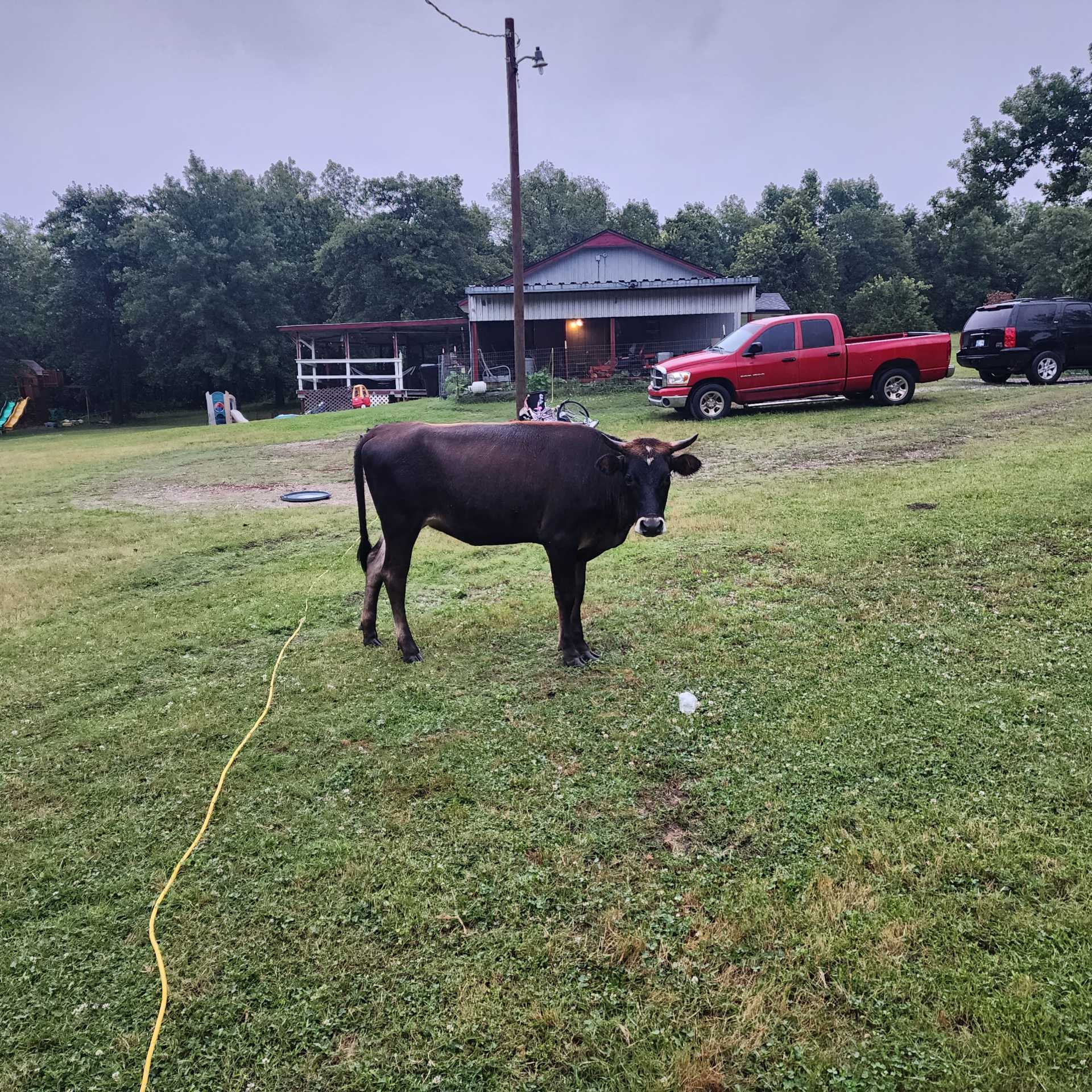 I was working as skilled labor for the fair grounds (Oklahoma City)one year and we had a youth expo. Mostly goats. They take pride in cleaning and working with their animals. The labor force behind the scenes free and paid is incredible for just a week long event. A lot of money in the whole thing. 100k+ trucks towing not only the livestock, but many had their RVs or whatever to stay on grounds during the show. I wouldn't show my ignorance by guessing how many millions, but it's a huge part of the economy. It turns into a whole city overnight. Equestrian shows were also really neat. Lots of beautiful well tended animals. I was working as skilled labor for the fair grounds (Oklahoma City)one year and we had a youth expo. Mostly goats. They take pride in cleaning and working with their animals. The labor force behind the scenes free and paid is incredible for just a week long event. A lot of money in the whole thing. 100k+ trucks towing not only the livestock, but many had their RVs or whatever to stay on grounds during the show. I wouldn't show my ignorance by guessing how many millions, but it's a huge part of the economy. It turns into a whole city overnight. Equestrian shows were also really neat. Lots of beautiful well tended animals.
I met a girl online years and years ago from Craigslist. She was moving here from NY. She had never driven a car before and that was part of first dating. She really believed we rode houses to work and such. This was 2007 maybe? I had no idea what the heck she was even getting at. I guess it's still a common misconception lack of knowledge.
My cousin has one on his homestead. What kind Don?
Wasn't logged in. Had to add the photo.[This message has been edited by ls3mach (edited 10-17-2023).]
|
|
|
|
maryjane
|
OCT 18, 10:06 AM
|
|
My guess would be a that is a Corrientes/Jersey cross steer but may be Corrientes. A steer, because it's too fleshy to be a heifer--too filled out and the hooks and pin bones (hip bones) are barely visible.
Patrick, Small, big and huge Ranches are all over Canada. BC, Saskatchewan, Aberta.
I knew the focus of this non-fiction book as Idaman from another forum. He told his story there and his family compiled the book partly from a VERY long thread on that forum, after he suddenly died. It's very good read.
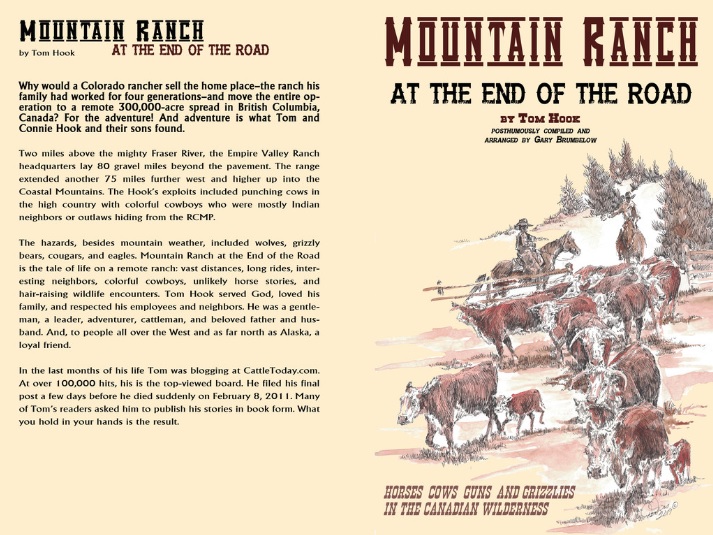
I mentioned The Great White Cowboy. In the US Pacific Northwest, the Rockies, and up in Canada, the ranchers don't have to go up into the high country to gather cattle in the fall. Cattle are pretty smart and have good memories. The first snowfall is the great white cowboy and the cattle start moving down to the valleys on their own as soon as first snow takes place because they know that is where the hay will be fed.
Todd you are correct. The tax exemption on ag land is significant most states. It cut my property tax by nearly 70% back in East Texas. In Texas you only need 15 acres for cattle (in varies county to county) and even less for hay, goat, and bee production. In E. Texas, you can run successfully 1 pair (cow and her calf) on 2 1/2 acres. Out here where I'm at that gets lots less rainfall, you would probably need 7-10 acres/pair. Some places farther west you may need 20acres or more per pair and the county appraisal district's ag advisory board sets the qualifications. You don't have to own the livestock. You can lease the land to someone that does own livestock and still get the same exemption.
The livestock shows are indeed a big deal, and some, like Houstoon, DFW, and places like KC, OK City and The National Western shows are HUGE deals, with the winners selling for high 6 figures.
I may tell the story of what happened at The Nat Western Show one year..a bit of shennanigans that was hard to believe.[This message has been edited by maryjane (edited 10-18-2023).]
|
|
|
|
82-T/A [At Work]
|
OCT 18, 12:53 PM
|
|
| quote | Originally posted by maryjane:
My guess would be a that is a Corrientes/Jersey cross steer but may be Corrientes. A steer, because it's too fleshy to be a heifer--too filled out and the hooks and pin bones (hip bones) are barely visible.
Patrick, Small, big and huge Ranches are all over Canada. BC, Saskatchewan, Aberta.
I knew the focus of this non-fiction book as Idaman from another forum. He told his story there and his family compiled the book partly from a VERY long thread on that forum, after he suddenly died. It's very good read.
I mentioned The Great White Cowboy. In the US Pacific Northwest, the Rockies, and up in Canada, the ranchers don't have to go up into the high country to gather cattle in the fall. Cattle are pretty smart and have good memories. The first snowfall is the great white cowboy and the cattle start moving down to the valleys on their own as soon as first snow takes place because they know that is where the hay will be fed.
Todd you are correct. The tax exemption on ag land is significant most states. It cut my property tax by nearly 70% back in East Texas. In Texas you only need 15 acres for cattle (in varies county to county) and even less for hay, goat, and bee production. In E. Texas, you can run successfully 1 pair (cow and her calf) on 2 1/2 acres. Out here where I'm at that gets lots less rainfall, you would probably need 7-10 acres/pair. Some places farther west you may need 20acres or more per pair and the county appraisal district's ag advisory board sets the qualifications. You don't have to own the livestock. You can lease the land to someone that does own livestock and still get the same exemption.
The livestock shows are indeed a big deal, and some, like Houstoon, DFW, and places like KC, OK City and The National Western shows are HUGE deals, with the winners selling for high 6 figures. I may tell the story of what happened at The Nat Western Show one year..a bit of shennanigans that was hard to believe. |
|
I would like to hear that story. My wife and daughter really enjoyed the cattle auction... and so we plan to go next year again when they have the Strawberry Festival (as long as we don't miss it). I didn't realize that Florida also had a thriving peanut farming sector as well. This website really talks a lot about it:
https://authenticflorida.co...ut-farms-in-florida/
The first grocery store it mentions is Detwilers... which I could best describe to you as being the "size" of one of the larger HEBs, but carries more the stuff that you would find in HEB's "Central Market" fancy store... just that Detwilers is less fancy, and more K-Mart looking inside if you know what I mean. But the place is fantastic.
There's a couple of farms here that you can visit with tours and stuff... kind of like you would see on Louisiana for the Tabasco Tour on Avery Island... the business side with some fun touristy stuff.
Anyway, my daughter had a Cross Country meet on Tuesday, and it was at this large private Catholic school that competes with the local (and private) schools here in the Tampa area. Apparently THEY TOO also have an FFA / agro component to the school. Theirs was a bit more "defined" if you will than what my daughter's school had. Her school seemed to have what looks more like a traditional farm / ranch. This school had neatly organized pens with animals almost to make it seem like a petting zoo, but it was set up for FFA students. This is one of the cows they had... the girl was really nice, came right up to the fence and we pet her on the head...
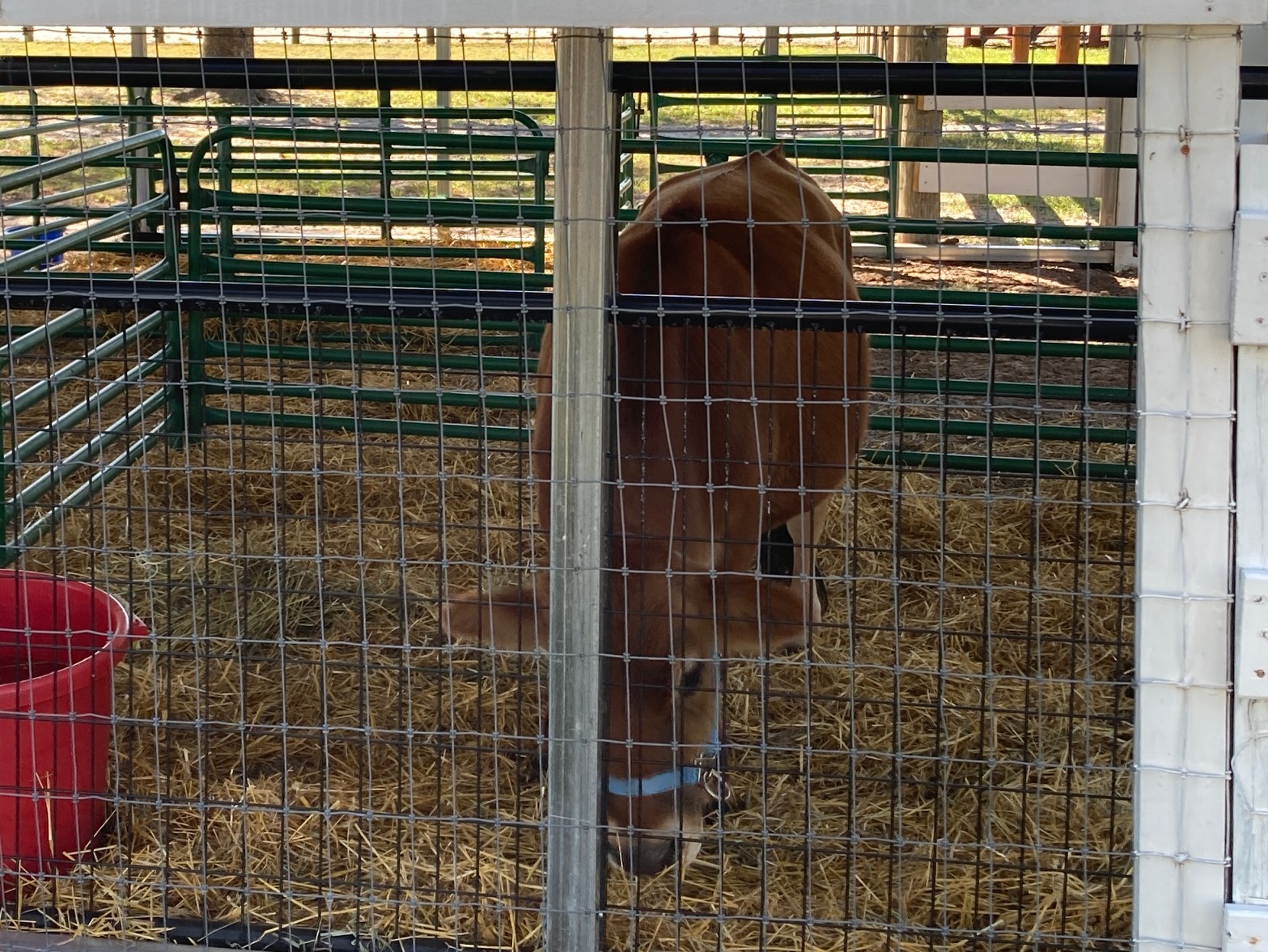
They had a ton of goats (one of them kept screaming) and chickens and whatnot.
This is a link that I found for the Canada book: https://www.amazon.com/Moun...d-Road/dp/0888390564
|
|
|
|
Patrick
|
OCT 18, 04:42 PM
|
|
| quote | Originally posted by maryjane:
Patrick, Small, big and huge Ranches are all over Canada. BC, Saskatchewan, Alberta.
|
|
Don, I thought of Alberta first, as Alberta Beef is highly promoted... but of course, I didn't even think of the massive ranches right here in BC. Living on the coast, it's easy to forget what the interior of the province is like. My dad had mentioned The Gang Ranch to me when I was a kid.
| quote |
They settled and developed land forming the Gang Ranch, a ranch that, at one time, was considered one of the largest and most famous ranches in the world, controlling over four million acres of land and thousands of cattle and horses.
|
|
Wow!  [This message has been edited by Patrick (edited 10-18-2023).]
|
|
|
|
blackrams
|
OCT 18, 08:36 PM
|
|
| quote | Originally posted by maryjane:
Generally speaking, back in the day 4H was mostly female and consisted of things closer related to what went on inside a farmhouse. Quilt making, how to prepare country style meals, small animal raising (poultry mostly) ... stuff a farmer's wife might have to do. But now, it's different. 4H is now both male and female and there are lots of 4H girls raising calves, and lots of girls most places in FFA too.
|
|
Don,
Not to argue the point because you may in fact be correct in your or some locations but, as a 4H member in my youth, I honestly don't remember any farmhouse type of classes being taught in my specific club. That's not to say it wasn't present in other clubs because at the County fair, there was some being judged and on display in the larger buildings but, the primary Ag thing was cattle (beef and dairy), pigs, horses and as I remember, a few other animals like lamas. I don't remember any grain crops ever being shown or judged but, I wasn't looking for such things.
Rams
|
|
|
|