Also, I though about putting this under the 'Politics and Religion' heading, but the information I'm trying to make available is mostly apolitical, and is more technological.
I've been watching all the news about the sometimes mandated coming transition to electric cars, and most outlets, regardless of where they fall in the political spectrum, fail to address many factors required to produce, and especially support, a transition to a majority of personal vehicles in the US to EVs. The biggest part of the problem, IMO, is the lack of understanding and knowledge on the part of the general population, from lawmakers to media to the guy on the street.
Besides my lifelong interest in cars, I'm in the electronics industry, so when the IEEE (Institute of Electrical and Electronics Engineers) published this free e-book
I was very interested. It seems few in the media (or academia) have considered in any detail the primary and peripheral impacts of large scale EV adoption. This publication does that. I'm posting here to spread information this around in the hopes that more people will understand the overall situation. Just as an example, my sister and brother-in-law bought my parents' house in an upscale neighborhood that was built in the mid-60's. Then they bought a Mustang Mach-E. They can charge it at home, but unless they upgrade their electrical service from the street inward, the best rate they can charge the Mach-E from 20% to 100% is 100 hours (maybe they should've done a little more homework).
Just so we all know what we're getting ourselves into, and how long it could actually take.
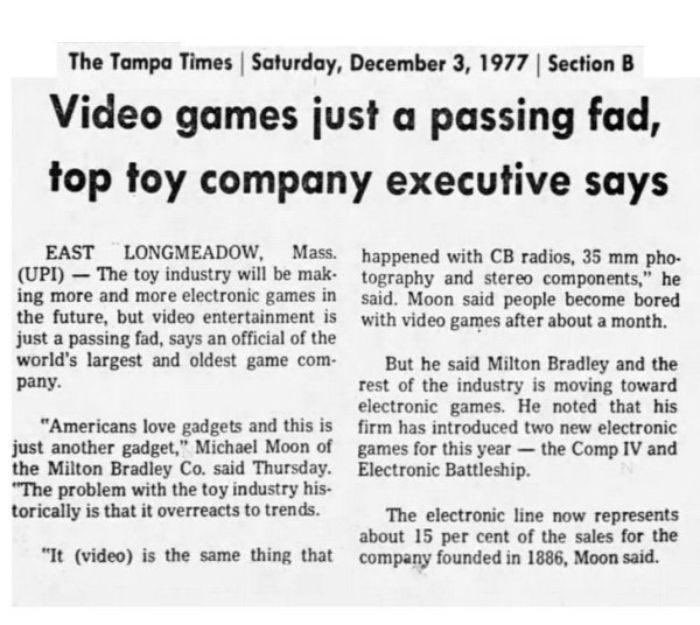
I also think the complete takeover of EV's is overblown. However in my opinion EV's will be widely adopted along with wider use of hybrid/plug-in hybrid vehicles. EV's are not a one size fits all, rather they are a "one size can fits most".
What will win, or should win, is the vehicle powertrain that meets the users needs/requirements.
Honestly the government/EPA/CAFE rules are severely handicapping "traditional" auto makers. With CAFE rules for light trucks using a combination of wheelbase (length and width) to develop a MGP rating for the vehicle to meet, forces automakers to build bloated SUV's and pickups to no get fines. This is my no one makes a small truck (S10/ranger, etc) with a regular cab and short bed for a DYI homeowner.
It seems to me that all automakers build cars to beat CAFE standards, and cars that I as a consumer want. Call me crazy I would rather than a small V6 instead of a turbo four cylinder...but there are VERY few V6 cars left on the market (if any).
I unfortunately live in California. My first car is a fiero still own it now. Im 44. If i plan on bringing the fiero to California from illinois it will need to pass smog something it has really never done since it was built. Parts can be found but most are nonexistent. So looking at what to do. i could swap it to a newer motor. I have done this on other fieros a 3800, 350, NorthStar, even lt1. All are fun to drive but i don't really want to be in a situation where in the next 10 years in California gas could be $10 a gallon. My fiero is a fun car and i enjoy it. So, the only options are really electric or hydrogen. There are no conversions yet anywhere for the hydrogen power plant. And i feel it would be 80-100k to make that a reality. It's just not feasible. So, its electric. I am afraid with electric that i will need to redo the conversion about every 10 or so years due to needing replacement batteries or a component that i have is nonexistent from any supplier. Everyone has gone to unit level replacement of parts and not down to the components. There is a documentary on the tesla roaster that is very interesting to what auto makers are doing to older version of the cars. They are not supporting it. So when all the gen 1/2/3 tesla or other manufacturers parts are over 10 years old they dont have to support it. So then the entire power plant becomes a throw away again. I dont know what to do. I enjoy the car but have reservations to put 30-40k into a car with a monetary value of 10k. (1986 black automatic gt) a run of the mill non special fiero. i just dont really know.
Ford announced that 2024 will be the last production year of the Mustang with a V8 engine. End of times.
I also live in an older house that will need a lot of work before it will support an electric car. For that matter even replacing the gas appliances is going to be expensive.
On to EVs, wasn't the idea behind the hydrogen car, hydrogen would be used to make electricity and power an electrical motor. Upside they only take a little longer to fuel then a gas car. I have not heard much more about them. Does the book discuss hydrogen fuel cells?
I really liked the GM Mild-hybrid trucks they built approx' decade ago; V8 with a combo Starter/generator/flywheel- but eliminating the individual parts.
What I think would work well for a hybrid system is a 2 valve PR V8 approx' 4 liter, with cylinder deactivation, then the combo starter/alt/flywheel setup with braking regen....The small V8 would run smoothly on 4 cylinders, would generate approx' 280 hp (And 300 torque) and with regen-braking would get good MPG around town.
I could see a medium-size truck getting 30+ on the highway, and 25 around town.
(Note- I know a lot of people will not believe this, but 2-valve PR engines actually burn fuel more efficiently than 4 valve zinger engines...Those engines make more HP per STATIC displacement. Think of a 6L engine turning 3000 rpm vs a 3L engine turning 6000...They are (Basically) processing the same amount of air/fuel)
[This message has been edited by cvxjet (edited 08-01-2023).]
I've been playing around with EV for a couple years now. Motorcycle, scooter, ebike mostly.
They are fie for what they are, but the #1 limitation to ANY of them, from trucks on down is range. Some of that is temperature related. Batteries are fin in moderate temps, but extreme heat or cold flatten the output drastically.
The only viable solution I can see to that problem is to carry/tow a generator either to run the motor, or on-the-fly mobile recharging.
<edit>
Oh, and as I have learned the hard way. Building an electric motorcycle out of a bicycle frame and parts really isnt that bright an idea. Bike stuff was never designed or engineered for the weights and speeds involved. Yes it can be done, yes it goes fast, but if you think a Fiero can be a maintenance nightmare, try one of those. . If you are gonna do it, start with a motorcycle frame and wheels.
[This message has been edited by MidEngineManiac (edited 08-01-2023).]
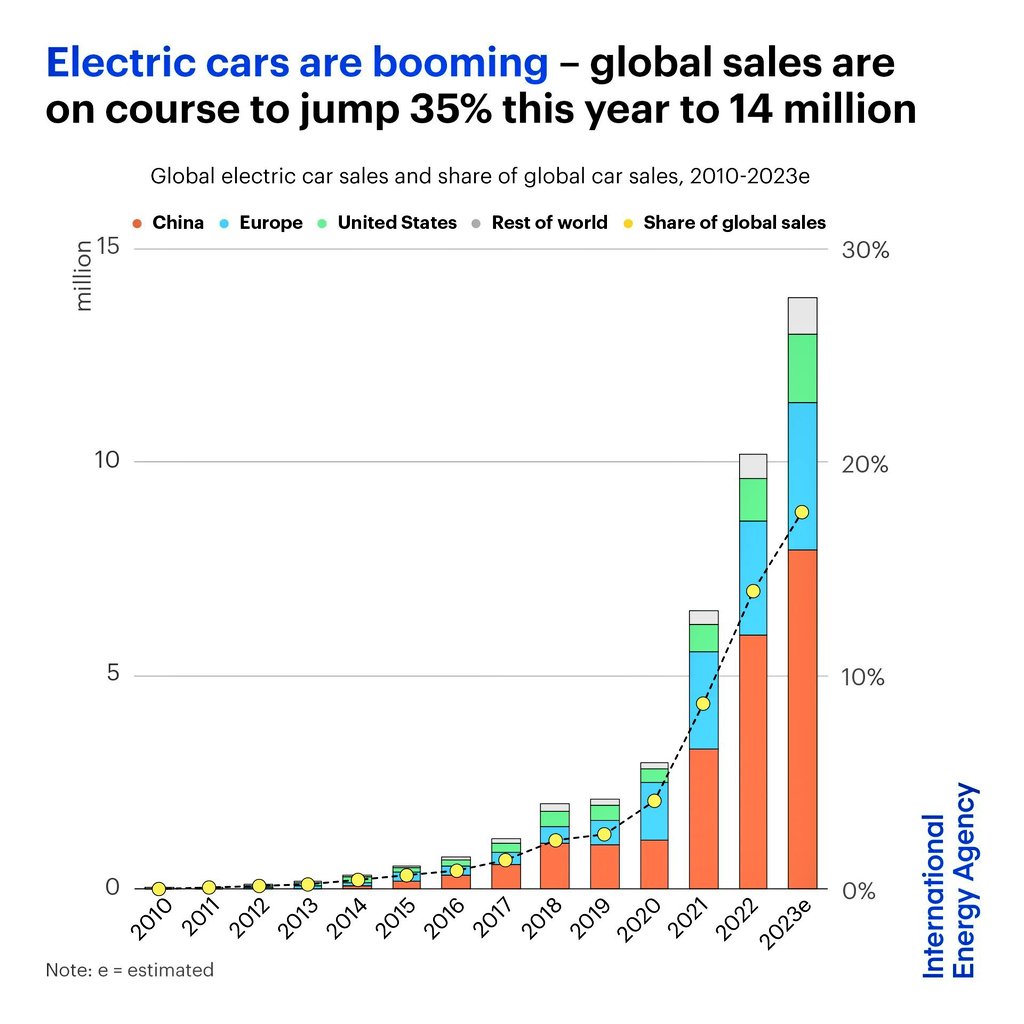
How many EVs do you come across on your typical day? We started casually counting, and its around 20%. which is kinda mind-blowin'. 1 out of 5. At the local mall, it was 1 out of 10.
Originally posted by Hank is Here: EV's are not a one size fits all, rather they are a "one size can fits most".
No... they are a "one size can fits very few." Many buyers only find out they don't fit their needs After buying and now stuck because of finance and tax reasons.
While Fleet Operations can and have use EV and more because all location @ end of day is same place so charging or fill w/ "odd fuel" is not a problem. Local Power Co had CNG vehicles Decades ago exactly because of that and connected to high pressure pump overnight so Vehicle tank and other parts didn't get hot as pump compresses Nat Gas. Plus they know who drives how much to assign the vehicles so doesn't drive "out of gas" very often costing recover of that vehicle.
Most can't use Home Charging, Level 1 plugin to "standard" 120v/240v outlet depending on country, Level 2 240v to 50a, or both for many reasons like... Most Rental homes. Most require street parking only.
Many "public" chargers are often constantly broken or wrong type for vehicle because US allows Tesla Only Chargers etc. Outside of "cities," many areas will never get "public" chargers build for same reason can't get Cable/Fiber wide band Internet even when the Fed's push companies to build more and jack prices for that fee.
... and here I was starting to think we needed to have layoffs at the Nuclear Regulatory Commission for lack of purpose.
As far as I know, this is at least a Gen-3 plant... maybe (???) a Gen-4. But either way, it's wildly more environmentally friendly. We need to see a lot more of these being built so that we can support the increased power demand.
Originally posted by 82-T/A [At Work]: States need to start building more power plants to support the demand that EVs are going to create (and have created).
Problem is much deeper then making power or even the Main Grid w/ huge problems...
Just the "Last Mile" Power to Home in most places can't handle many L2 chargers running over night, worse for day time. This is why often need permits to install them & in some places now hard to very hard to get the permits required and/or have "smart charging" controlled by Power Co to allow you change at given time. Many DIY Install L2 charging can bite them hard because "Smart Meters" show their On for Hours and Code Enforcement or Power Co can order you to remove them and cause other expensive problems.
For that matter... Even if homes have private driveways: Many homes have 100 Amp service or less that can't handle L2 charging even when dialed down to minimum. Most homes that have External Outlets to use L1 chargers pulling 13A max but have them on same breaker/fuse as Internal outlet that shares power MW and Toaster Ovens, refers/freezers, and more that sucked 10-13 amps that blow fuses or repeatedly trip breakers that will die fast and hope doesn't cause a fire.
X Amp Service/Circuit only allows ~ 80% total load to be On full time. Is Why most products only pull 13A max because expect 15A breaker on 14awg wire to the outlet. Even that often trips breakers because someone turns On Toaster Oven and Coffee Making on same circuit @ same time.
The newly "online" plant is Unit 3. Unit 4 will be brought online in 1st quarter of next year. They're fueling it, now.
The transmission and distribution systems must be built out to accommodate EVs, as has already been discussed. I believe Georgia and probably Alabama will be in good shape for this. Other places? Well... some places can't even keep the lights on 24/7/365, even now.
[This message has been edited by Raydar (edited 08-03-2023).]
Granted, this is a Foxnews article, and so has that slant to it, but some of the EV truck owner's experiences and complaints are valid and illustrate why, regardless of what the White House, Gavin Newsom, or my home state of Colorado say, this is not going to be anywhere near as fast, or easy, or economical as they want everyone to believe. Not necessarily a bad idea, but one that is far from simple, and no amount of regulation can change that.
In reference to the above article - I would think most people know that taking a long road trip with an EV right now is much more difficult than with a gasoline vehicle. Sounds like he was trying to test the limits of long range usage and failed.
[This message has been edited by Fiero_Adam (edited 08-11-2023).]
The newly "online" plant is Unit 3. Unit 4 will be brought online in 1st quarter of next year. They're fueling it, now.
The transmission and distribution systems must be built out to accommodate EVs, as has already been discussed. I believe Georgia and probably Alabama will be in good shape for this. Other places? Well... some places can't even keep the lights on 24/7/365, even now.
Is the problem that the neighborhood lines cannot support the increased load that's demanded by all the devices in modern homes along with EV chargers? That's the "last mile" I guess we're talking about, like going from a telephone local loop to the home.
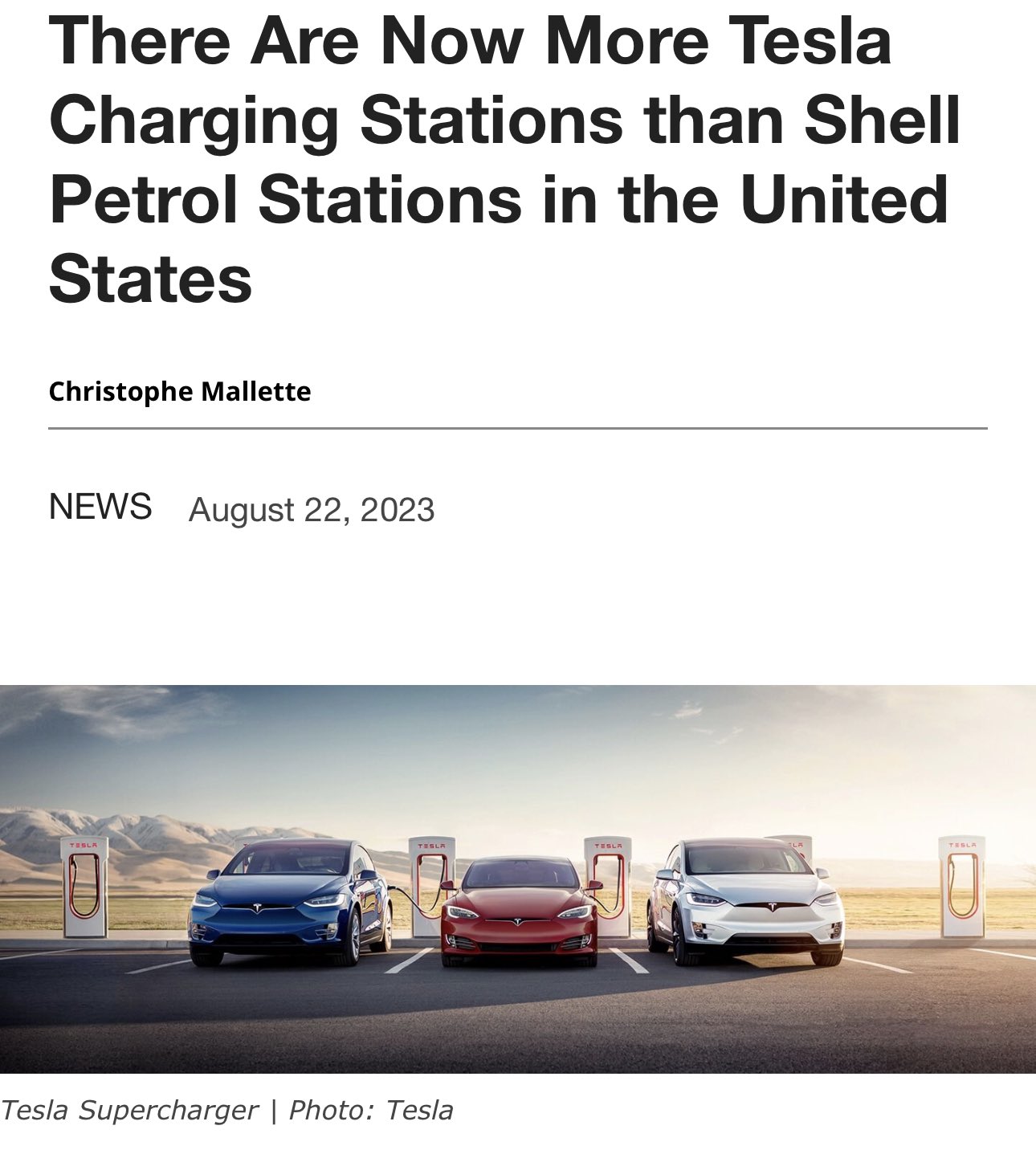
That's because there are more needed and, major brand gasoline stations are a fading thing and have been for decades, with convenient store non brand stations being more common than Shell-Exxon-Exxon-Mobil-Texaco-Chevron etc.
1. every charging station only have a few spaces @ best. And can't charge as many cars as just 1 gas pump per hour and nearly no gas station only has 1 pump.
Wawa, Royal Crown, and many others have 10 to 20 or even more dual pumps that Fill 2 cars for each unit and in minutes.
Again, Fast charge battery only gets you to 80% charge and takes way longer then buying gas and better hope that gets you to next Fast Charge or destination and that has any charging.
People run out of gas & often then call AAA or anyone else can deliver 1 5 or more gallons and be gone in minutes to maybe hour depend just where you are. No charge them most areas the Only Option is to Tow and cost you Big $ every time and wait for the tow then more time to charge.
And if you/others think Gas stations are going away... Why does Wawa, Royal Crown, and many others are Building New High Volume Stations w/ a lot of Dual Pumps every year? Because They and the banks paying for this know is not going away in Decades.
In many areas is these companies that are "killing" smaller stations including some brand stores own by X co or more likely owned or operated by a Franchisee of X. Plus more areas are forcing stations to install new tanks and more forcing small station to close because not enough sales. Decades ago in many places you can't bury gas/oil tanks w/o extras to stop leakage etc. And can't just remove old tanks & related w/o very costly cleanup. Why many stations get "abandoned" by owners and sit closed often for many years. Real abandon or just cheaper to pay taxes etc on closed station and right off for other taxes vs replacing old tanks.
Originally posted by 82-T/A [At Work]: Is the problem that the neighborhood lines cannot support the increased load that's demanded by all the devices in modern homes along with EV chargers? That's the "last mile" I guess we're talking about, like going from a telephone local loop to the home.
So... everything beyond the substation basically?
Yes and more. Read my post above again.
Example: I have 150A Service only because PO had an electric fire required a new load panel & related equipment & wiring. And remember you only allow ~ 80% load on X amp Service. Many others in this area only have 100A service or less because have Gas Service for Heating, cooking, and other things that would need way more power if all electric. You can't install Level 2 charger pulling 30 to 50+ amps in homes like that. Not sure even 150A Service can take L2 @ 50+ amps in many homes either. So if you want L2 charging then have to Upgrade the Service too and cost hundreds to thousands more over the cost to install the charger. That even if you get Permits from City etc to do that because any or all parts from you home to the substation may not allow more people to have 200A Service.
Say you have 150A to 200A Service on even a small home but no gas/oil to heat etc. Just a "basic" E-range for cooking draws 40+ Amps if fully on. E water heater pulls 30+A. Heating can easy pull 100+A. (And Air/Air Heatpumps often have "backup" heating On a lot in many places & many are Resistive Electric heaters.) Then try to add L2 charging pulling 30 to 50+ amps for Many Hours... Can easy violate the "80% rule" and cause huge problems w/ Insurance Co and more. Power Co in many areas now know exact amps draw in a home because of Smart Meters and flag any pulling too much for Service to them.
[This message has been edited by theogre (edited 08-24-2023).]
By far the biggest limiting factor with EVs is range...Around town, short commutes, they work great. Any long distance trips are basically off the board.
I did a trip looping around Lake Powell in Southern Utah (I highly recommend this trip).....7-8 hours driving each day- approx' 350-600 miles each (Travel) day...No EV could accomplish that. We need new and much-improved batteries...and more efficient motors, etc.
Think of what technology for IC engine was like just 50 years ago...We had been developing ICs (In a proper COMPETITIVE market) for 75+ years....yet the engines back in the late 60s and early 70s were not very good- especially efficiency...
Back in 1980, a friend and I were talking- he stated "I wish I was born earlier- So I could have >>Driven<< through the muscle-car era!"
I told him, "We will have more powerful cars soon"
And he replied "Smog controls, fuel economy standards....there is no way to have powerful engines ever again"
I had just read an article on smog control/clean-burning engines, so I replied, "How do you get better fuel economy- make the engine more efficient. How do you make the engine more powerful- make the engine more efficient. And how do you make the engine burn cleaner....Make the engine more EFFICIENT!"
Two years later (1982) the Mustang came out with the high-output 302 V8 (A "staggering" 157 hp) The HP started going up then and has continued.
Now we have 400 hp engines in "Cheap" cars.....Un-freaking believable! (Go back to 1980 and try telling yourself that in 40 years 400 hp will be common in production cars)
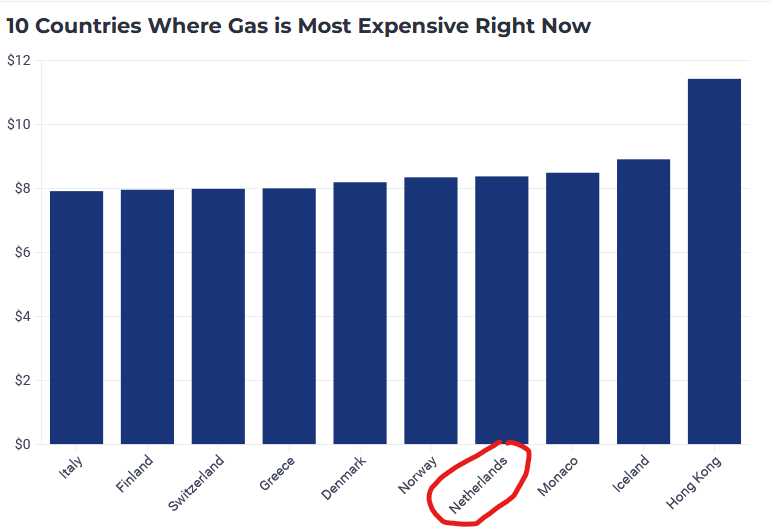
Even w/ the US taxes in the price I paid < $ then that for gas this week.
Also Unlike US w/ mostly have Fix Fuel Tax from Fed and State level, Many EU and other countries many Taxes are % based so Fuel/Road Taxes & VAT raise or falls when Retail Fuel Price changes. (In super short, VAT, Value-Added Tax, is Equiv to Sales Tax in most of the US.)
Note that the link story and most others ignores Taxes on the "back end" for Refiners etc that they just raise the Retail Price to make up the lose. IOW same scam PA pushed Taxes on Refiners etc ~ 10 years ago that just pass down to Retail buyers on top of High State Fuel/Road taxes at the pump. But PA buyers don't get a "Double Whammy" as state and fed Fuel taxes are fixed.
To mine lithium you need to find it first and to get it destroy water tables. Politicians say things for votes only when everyone is freezing or stuck they will realize last generation were better off. The people buying electric cars lease them and turn over cars every few years they aren't fixing grandads 27 Buick keeping the carbon footprint down. The term invented by oil company to spread out the blame. If climate change is the new religion, then why lease an EV when you supposed to hold hands singing we are the world and keep it forever.
Direct Lithium Extraction or "DLE"... more lithium without lowering the water table? It's a possibility.
quote
Projections for lithium demand in support of energy transition efforts have made discussions about likely shortages ubiquitous. Such shortages would be a potential limiting factor for batteries for electric vehicles, wind turbines, and energy storage, among other uses. The International Energy Agency’s (IEA) analysis of critical minerals estimates that (in some scenarios) the demand for lithium may increase 40-fold by 2040. At the same time, IEA warns that we could see lithium shortages as early as 2025.
Today, most conventional lithium mining is done by means of lithium brine extraction—whereby drilling into salt flats and letting the brine evaporate in ponds can take months to years—or hard rock mining—which is overall much more energy intensive and costly. There is only one, relatively small, operational lithium mine in the United States, in Silver Peak, Nevada. The mine, owned by Albemarle, uses a lithium brine extraction process.
But oil and gas companies are exploring a relatively new approach that could cause lithium mining to take off: direct lithium extraction (DLE). DLE takes the extracted lithium brine into a processing unit, which filters out lithium and then reinjects the brine—without the lithium—back into the aquifer. This technology shortens the lithium extraction process to only a few days or even hours. Potential DLE areas in the U.S. include the Smackover Formation (Arkansas), the Salton Sea (California), the Great Salt Lake (Utah), and Permian Basin.
Although there are pilot projects in both China and Argentina, large-scale DLE is still largely an unproven technology. Yet its potential is promising. Goldman Sachs likens the impact of DLE to that of fracking on oil extraction and calls DLE “a potential game-changing technology.” (We like the analogy!) DLE is hotly anticipated for its increased efficiency, including decreased energy rates, higher recovery rates, and conservation of 98 percent of extracted water. The technology can be applied to spent oilfields.
Like any new technology, DLE has some obstacles to overcome. It needs additional pilot studies to ensure true functionality, quantification of the full process’s energy consumption, and increased environmental and general monitoring guidelines. In addition, to maximize lithium mining’s full potential, the process could be used to extract other useful minerals.
Exxon has recently purchased drilling rights for 100,000 acres in the Smackover Formation and foreshadowed drilling for lithium in the coming months. Oxy Low Carbon Ventures created a partnership with All-American Lithium to form Terralithium; the subsidiary combines DLE and direct lithium hydroxide conversion to develop a “cost effective and more responsible lithium hydroxide production approach that’s easier on the land and natural resources.” We expect smaller companies to either participate as junior partners or wait and see before jumping in.
"Right On" Jack... uh, Wichita. And it's the Inflation Reduction Act which I signed into law just over a year ago, along with some of the other Biden and Democrat-backed federal legislation and funding, that is playing a major role in making this relatively rapid electrification of America's passenger and light duty road vehicles a reality.
Here's some of what my friend Paul Krugman had to say exactly two weeks ago in an op-ed column for the New York Times:
quote
A year ago, defying predictions that President Biden’s agenda was dead in the water, Congress passed the Inflation Reduction Act. The I.R.A. is sort of the Holy Roman Empire of legislation—as in being neither holy, nor Roman, nor an empire. That is, it isn’t actually about reducing inflation; it’s mainly a climate bill, using tax credits and subsidies to encourage the transition to a low-emission economy.
And it’s a big deal. Along with the CHIPS Act—Creating Helpful Incentives to Produce Semiconductors—the federal government is suddenly engaged in large-scale industrial policy, promoting particular sectors as opposed to the economy as a whole. . . .
[This] new industrial policy has already generated a huge wave of private investment in manufacturing, even though very little federal money has gone out the door so far. Why?
A new blog post from Heather Boushey of the Council of Economic Advisers argues that Biden’s industrial policy helps solve what she calls the “chicken and egg problem,” in which private-sector actors are reluctant to invest unless they’re sure that others will make necessary complementary investments.
The easiest example is Electric Vehicles: Consumers won’t buy EVs unless they believe that there will be enough charging stations, and companies won’t install enough charging stations unless they believe that there will be enough EVs. But similar coordination issues arise in many other areas, for example in the complementarity between battery and vehicle manufacture.
Even before seeing Boushey’s post, I’d been thinking along similar lines. In particular, the ongoing investment surge reminded me of a once-popular concept in development economics, that of the Big Push. This was the argument that you needed an active government role in development because companies wouldn’t invest in developing countries unless assured that enough other companies would also invest. . . .
Picking up where I just left off, this is what Krugman means when he talks about "Biden and America's Big Green Push."
"Ford to build $3.5B Michigan battery factory with Chinese [technology]"
quote
[Even amid] growing US-China tensions, Ford will build a $3.5 billion Michigan plant [using] technology from China-based Contemporary Amperex Technology Co. Limited (CATL).
quote
"It's really important to understand that Ford controls the plant," Lisa Drake, VP of EV industrialization at Ford, told The Washington Post. CATL personnel will help set up, but "we will operate the facility. It will be a Ford plant manager," she said.
quote
Ford will soon offer two EV battery chemistries, each with unique benefits: the lower-cost LFP offers more durability and charging tolerance, while nickel cobalt manganese (NCM) provides more energy and power, and performs better in cold weather.
Also, I though about putting this under the 'Politics and Religion' heading, but the information I'm trying to make available is mostly apolitical, and is more technological
And yet, some people jump at the opportunity to turn this into yet another political debate... 🙄
Here is a return trip I used to make twice a week. Fossil-fuel, no problem.
EV would get me there but I am not coming back the same day, and not making many stops while I am there. Making an EV totally useless.
Now look up the sheer traffic volume on that corridor. people doing trips like that every day. (Windsor-Toronto is the same). My longest overnight runs (not that often) were a full day drive each way. It could all be done in 2 long days. Switch to EV and it would take a week to get the same work done. Who wants to pay 2 1/2 times as much for the same thing (service/product ect) ? Because for me to work 2 1/2 times as long is going to take AT LEAST 2 1/2 times the pay, and same with everybody else.
Thats just one area and route. There are hundreds if not thousands like that in North America.
EV's might be fine in large parts of Europe, and inside some North American mega-cities, but for the rest of us it just aint-a-gonna happen short of building 15-minute cities 15 minutes apart. I dont see that happening very soon either.
[This message has been edited by MidEngineManiac (edited 08-31-2023).]
I am going to project a MidEngineManiac scenario based on a round trip, starting in Toronto, going all the way to Sarnia, and returning to Toronto.
That's a round trip of 360 miles. Plus that up with an additional 140 miles for side trips, for an even 500 miles total.
I am going to picture him in a light duty electric truck like the Ford F-150 Lightning. I picture him carrying some weight in the pickup bed, but not towing a trailer.
I further project that his light duty electric truck will be equipped with a fast-charging lithium iron phosphate or "LFP" battery using the latest "Shenxing" battery design, as it's being developed by China's Contemporary Amperex Technology Company or CATL—a world leader and a "world beater" in battery technology.
I estimate that he will need two 10-minute hookups at a fast recharging station, one to "fill up" for the trip, and one to "fill up again" when he's driven about 250 of the projected 500 total road miles. He will be able to recharge that quickly in weather that's down to 14F or -10C.
So, perhaps not today, but is it unrealistic to think that this will be a realistic scenario for someone like MEM in the very near future?
"CATL debuts fast-charging LFP battery that adds 248 miles In 10 minutes of recharging time"
quote
Unveiled today in Beijing, CATL's Shenxing battery is expected to enter mass production in China by the end of the year.












 . If you are gonna do it, start with a motorcycle frame and wheels.