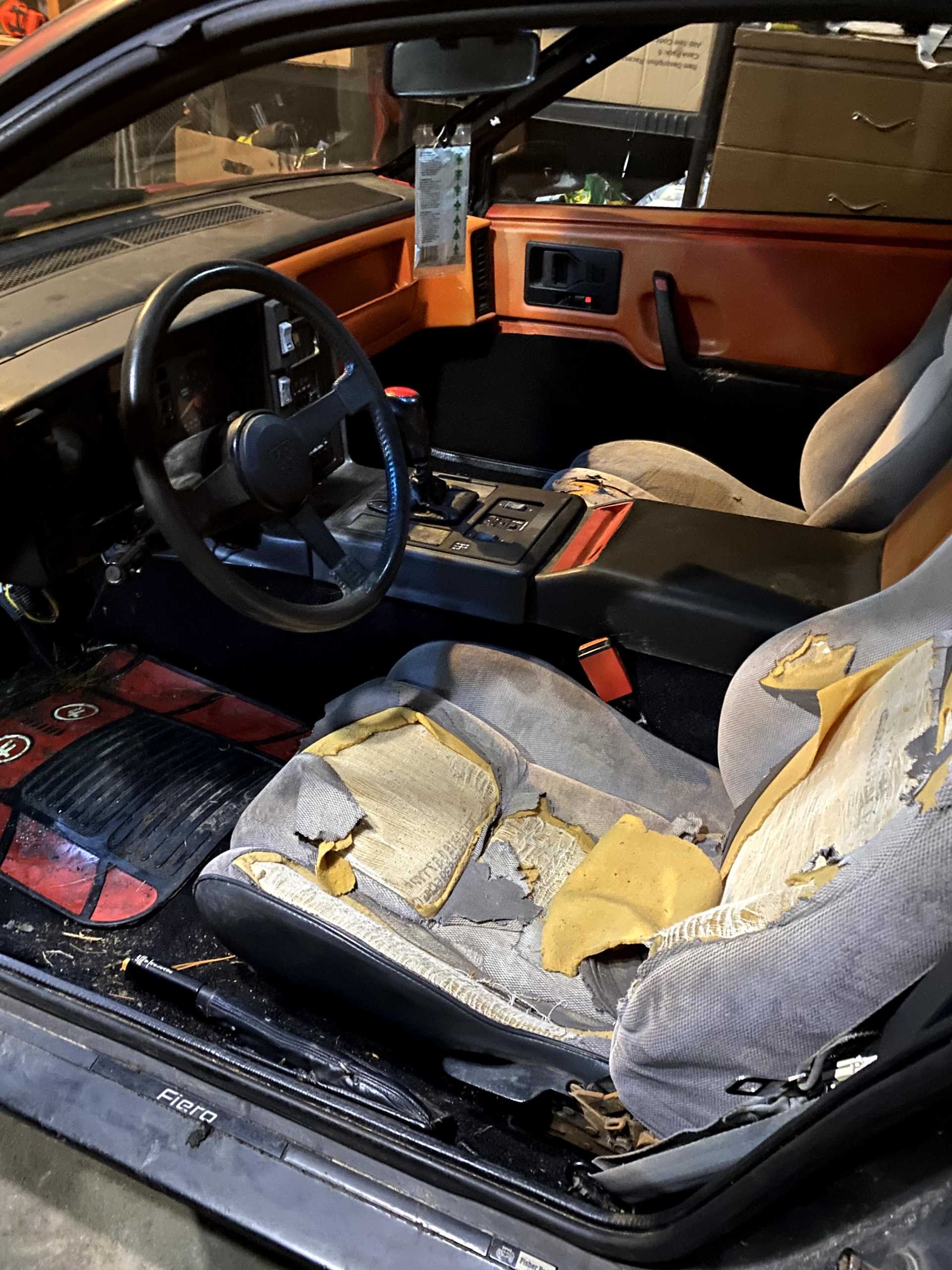
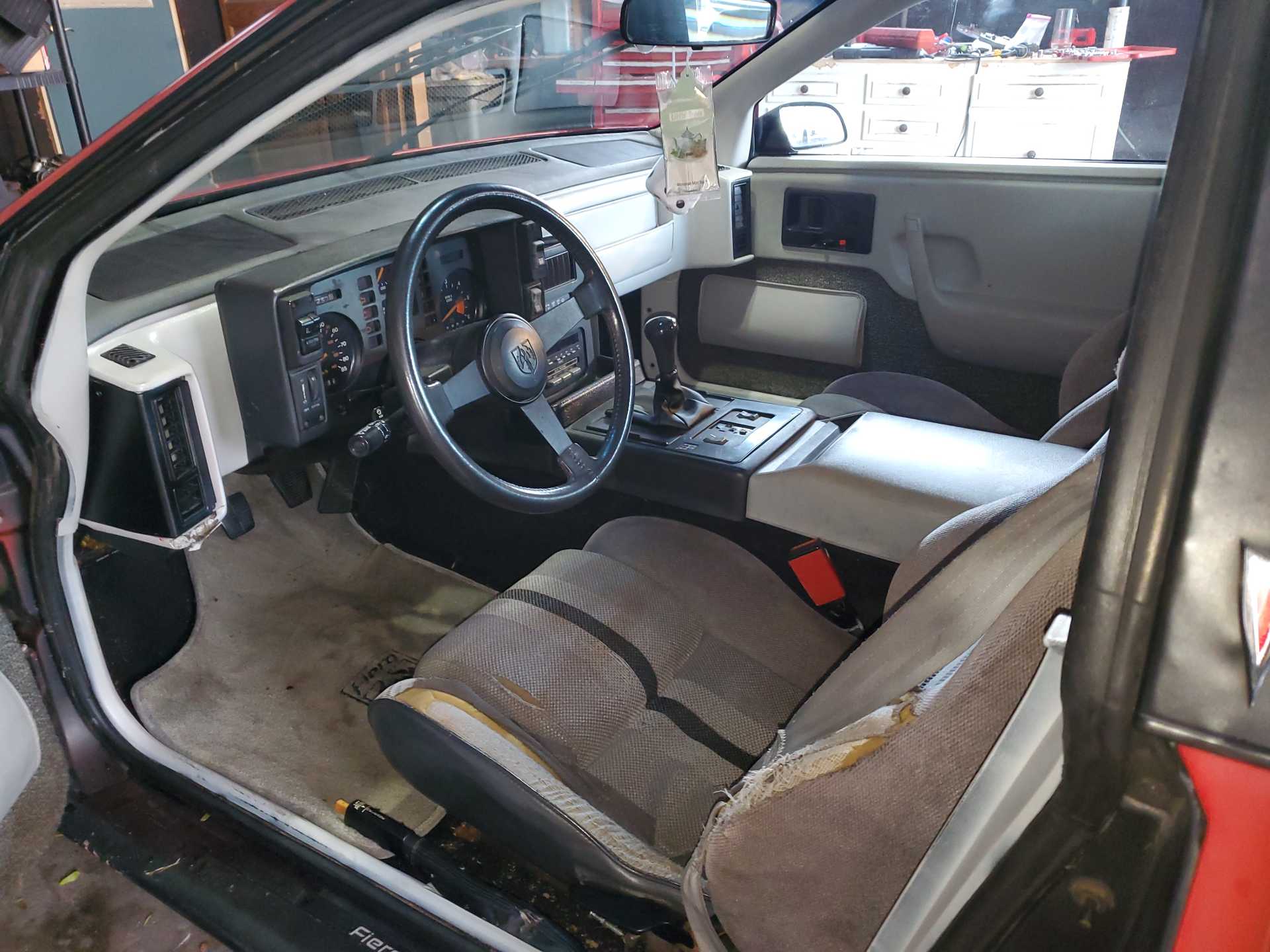
what kind of NR do the fiero Delco radios have? I don't think it's Dolby because there's no Dolby logo anywhere. if I have a tape with Dolby NR on it, and I turn on DNR, it sounds very muffled. It only sounds right (even on tapes with Dolby), if I turn off the NR.
That is Dynamic Noise Reduction which was something used in the 80's and 90's to get rid of "hiss". I think if you tried to use it with a tape that has Dolby Noise Reduction, that is exactly what you would get....a very muffled sound.
To be honest, even back in the day I could never get DNR to work. It always muffled and dropped the volume of my tapes. When you have 500 watts of Ozzy or AC/DC playing, the last thing I wanted was my music more quiet
[This message has been edited by IMSA GT (edited 10-28-2021).]
what kind of NR do the fiero Delco radios have? I don't think it's Dolby because there's no Dolby logo anywhere. if I have a tape with Dolby NR on it, and I turn on DNR, it sounds very muffled. It only sounds right (even on tapes with Dolby), if I turn off the NR.
Funny you would bring this up, I just read an article last week on this, here is a snip that touches on that...
"Unfortunately 90% of decks sold after the mid 80’s are total junk.
Let’s take for example the Tandberg 3014 sold from 1982 to 1985. At the time it was being marketed as a $1,395 cassette deck equality to four grand today.
It has a frequency response of 18Hz to 23kHz, a signal to noise ratio of 75dB. We are able to get such good specs because of what is called analog noise shaping. Otherwise known as Dolby Noise Reduction, and later on improved DBX.
First off it is completely inaccurate to compare analog noise reduction and analog distortion to digital as they work in completely different ways. First let’s talk about analog noise reductions like Dolby. Dolby works sort of like a form of noise shaping. It can be considered a form of compression like how low pass filters are used but a little more complicated than that. I give you this graph that showcases how noise shaping can improve signal to noise ratio.
At higher speeds such as 15 IPS and 30 IPS you have a lot more room before it distorts. A pro recording studio only needed 20dB on a VU meter. However when you slow down the tape to 1 7/8 IPS, your tape now more easily distorts. Since cassettes have much thinner tracks as well the distortion does not sound as pleasant to the ears, so cassette deck manufactures were about to get around this by significantly increasing the dynamic headroom to avoid distortion entirely through the use of noise shaping technologies.
You can see it increases signal to noise ratio and thus increase dynamic range. It increases signal strength of higher frequencies and compensates. DBX and XDR maintain the extraordinary high frequency headroom which Dolby sometimes does not.
Both Dolby and DBX are nonlinear encode/decode processes. When a deck is calibrated properly, decode results in a perfectly linear end-to-end system. In practice, however, small deviations in tape tracking, head alignment and level calibration between decks always exist, resulting in less than perfect operation. The result was often a decrease in high frequency fidelity. DBX works by compressing the dynamic range of the signal during recording process and then expanding by the same ratio on playback. Dolby brings up high frequency during recording and reduces it during playback. For this reason the drawback is that the recorded cassette only sounds good on the deck that was recorded on especially DBX. For that reason many opt not using Dolby on decks that already have good enough signal to noise ratio to begin with for the drawbacks of tapes sounding “lifeless” and the fix is DBX but then it can only be played on the same deck it was recorded on. Great for master tapes though."
quote
Originally posted by Patrick:
Geez, I'm surprised anyone still messes around with audio cassette tapes.
Even CDs are somewhat outdated now, although I still appreciate CD audio quality compared to MP3s (and to tapes).
I do!
Actually, similar to vinyl records the cassettes have better dynamic range, signal to noise ratio, and frequency response than MP3 and CD.
Problem is often times the cassette decks/heads and/or cassettes themselves are junk so they sound like junk.
A good quality deck and good quality tape through good quality speakers sound great.
Occasionally I will record on a quality NOS Maxell tape to play in the Fiero for nostalgia, even though my late 80's UT4 STE deck is average at best.
[This message has been edited by Skybax (edited 10-28-2021).]
Actually, similar to vinyl the cassettes have better dynamic range, signal to noise ratio, and frequency response than MP3 and CD.
Audio tape cassettes... better than CD? Sorry, I don't believe that for a second. Where are you getting your specs from?
Sure, a Nakamichi Dragon may sound pretty good ... but CD audio quality beats cassette tapes hands down. And let's not even discuss the crap quality of commercially made pre-recorded cassette tapes churned out and recorded at double-speed. Absolute garbage!
Audio tape cassettes... better than CD? Sorry, I don't believe that for a second. Where are you getting your specs from?
Sure, a Nakamichi Dragon may sound pretty good ... but CD audio quality beats cassette tapes hands down. And let's not even discuss the crap quality of commercially made pre-recorded cassette tapes churned out and recorded at double-speed. Absolute garbage!
Better than CD? No. I've transferred CD's to metal Type IV tapes on good cassette decks, and they were so good you couldn't tell the difference, but never heard a tape that was BETTER than CD.
That is Dynamic Noise Reduction which was something used in the 80's and 90's to get rid of "hiss". I think if you tried to use it with a tape that has Dolby Noise Reduction, that is exactly what you would get....a very muffled sound.
To be honest, even back in the day I could never get DNR to work. It always muffled and dropped the volume of my tapes. When you have 500 watts of Ozzy or AC/DC playing, the last thing I wanted was my music more quiet
it really sounds awful. I just got this deck working again and was listening to something and must've pressed the button without realizing. I turned it off and it was like a completely different recording of the song.
Actually, similar to vinyl records the cassettes have better dynamic range, signal to noise ratio, and frequency response than MP3 and CD.
Problem is often times the cassette decks/heads and/or cassettes themselves are junk so they sound like junk.
A good quality deck and good quality tape through good quality speakers sound great.
Occasionally I will record on a quality NOS Maxell tape to play in the Fiero for nostalgia, even though my late 80's UT4 STE deck is average at best.
Dolby works quite well in my experience. it does help to alleviate most of the hiss. I just got a nice JVC tape deck. it has Dolby B and C and a bunch of features I've never used before. it's a high end 90s deck I believe. I just enjoy keeping things stock, so I gotta listen to tapes if I want my own music instead of the radio. and I got this fiero deck for free.
here's a before and (not quite) after pic of my interior. previous owner had very bad taste and was also apparently very very dumb (based on all of the janky fixes that barely worked).
[This message has been edited by katie80 (edited 10-29-2021).]
My Fiero still has an Eclipse 4502 Headunit, it was their top of the line cassette deck.
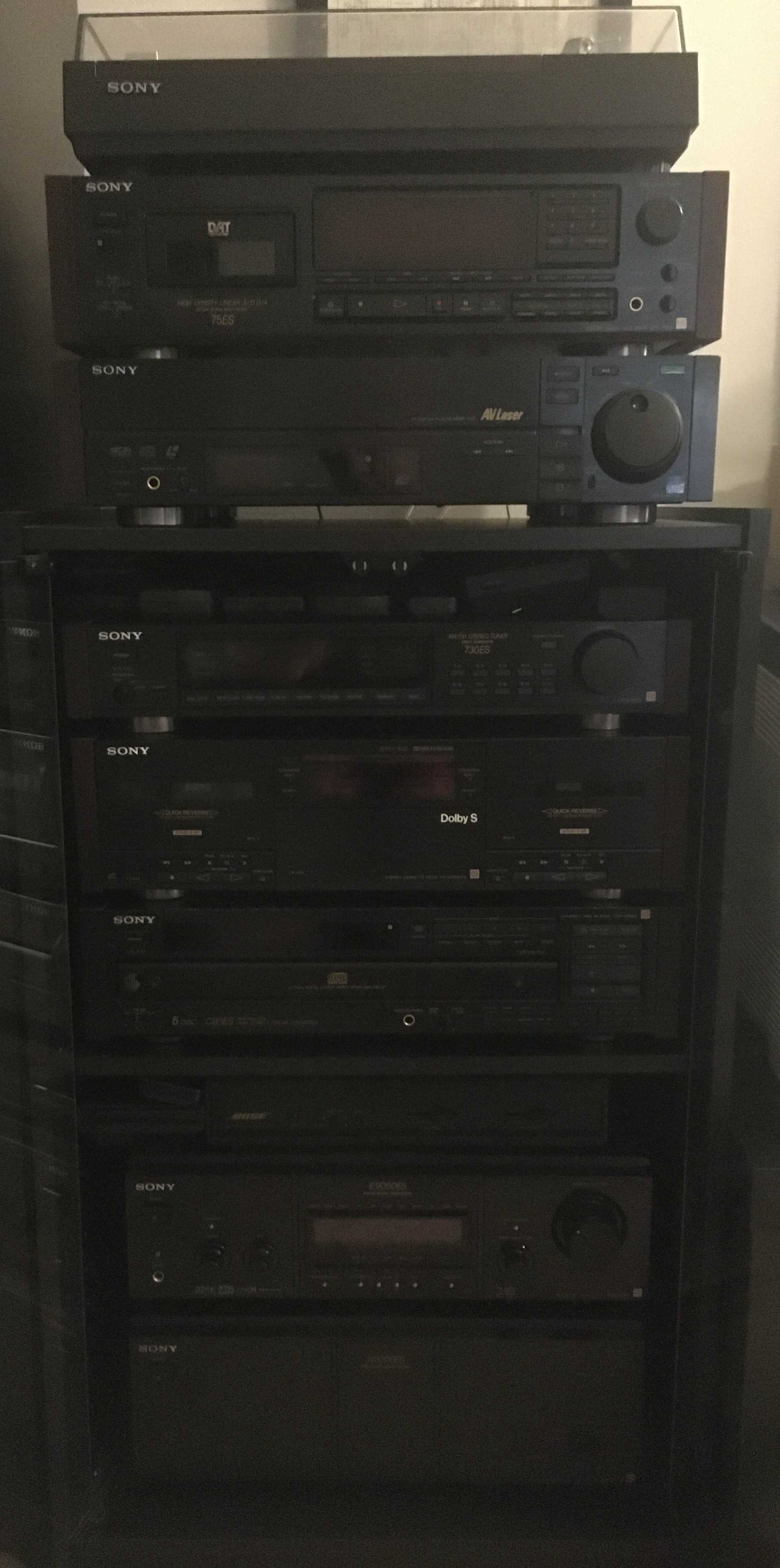
Plus THIS in the house (Sony TC-WR901ES Cassette Deck)
I feel like people listening to tapes is similar to people listening to vinyl. similar tactileness except tapes are significantly smaller and more durable.
Better than CD? No. I've transferred CD's to metal Type IV tapes on good cassette decks, and they were so good you couldn't tell the difference, but never heard a tape that was BETTER than CD.
better than CD sounds like a stretch, yes. type IV tapes can sound incredible though. I think the speed of a cassette probably makes it lose it's potential for better sound.
tapes are more authentic to the fiero than a CD would be.
My ears couldn't care less about the "authenticity" of CDs being played in any of my cars.
quote
Originally posted by katie80:
I think the speed of a cassette probably makes it lose it's potential for better sound.
Yes, that and the fact that the recording area on a cassette tape is rather minimal. Each track (left and right) is a very narrow strip. It's a miracle of late 20th century technology that cassette tapes had the potential to sound as good as they did.
I feel like people listening to tapes is similar to people listening to vinyl. similar tactileness except tapes are significantly smaller and more durable.
They all have their own unique sound qualities. Early good CD players have a 'bright' sound similar to vinyl without the hisses and pops, due to the digital to analog converters used. The later ones are more accurate, but duller. Late 80's/early 90's was the peak of good A/V equipment.
Yes, that and the fact that the recording area on a cassette tape is rather minimal. Each track (left and right) is a very narrow strip. It's a miracle of late 20th century technology that cassette tapes had the potential to sound as good as they did.
well I don't have any upgrades to my stereo system, so I don't need an awesome stereo.
They all have their own unique sound qualities. Early good CD players have a 'bright' sound similar to vinyl without the hisses and pops, due to the digital to analog converters used. The later ones are more accurate, but duller. Late 80's/early 90's was the peak of good A/V equipment.
yes I agree. after the technology had matured but before they started to cheap out on stuff. I had a 70s deck then an early 80s deck and now an early 90s deck and it's crazy how different they each sound.
Audio tape cassettes... better than CD? Sorry, I don't believe that for a second. Where are you getting your specs from?
Sure, a Nakamichi Dragon may sound pretty good ... but CD audio quality beats cassette tapes hands down. And let's not even discuss the crap quality of commercially made pre-recorded cassette tapes churned out and recorded at double-speed. Absolute garbage!
quote
Originally posted by RWDPLZ:
Better than CD? No. I've transferred CD's to metal Type IV tapes on good cassette decks, and they were so good you couldn't tell the difference, but never heard a tape that was BETTER than CD.
Forgot about this post and coming back to it today...
You are both missing the big picture of what I'm saying, and its impossible to explain briefly but I'll try...
Cleaner or clearer isn't the same as having the totality of it all. As a deeply spiritual person one of my hobbies for the last 30 years is understanding the "truth" about the "reality" in which we exist, mostly studies at the quantum level. There is much more to our world than meet the eye, like Nikola Tesla said... "If you want to find the secrets of the universe, think in terms of energy, frequency and vibration"
Much of this falls into sacred geometry, for example where the Fibonacci Sequence is found everywhere in nature, or the 9 Code where so many things around you reduce to the digital root of 9 and you never knew it, like the radius of sun and moon, distance of sun and moon, diameter of sun and moon, minutes/seconds of day/week will always reduce to 9 regardless of leap year, processional cycle (25,920 years = 2+5+9+2+0 = 18 / 1+ 8 = 9), and the list goes on for infinity. So when it comes to music, instruments used to be tuned to 432 (4+3+2 = 9) but was later changed to 440, some believe to get humans "disconnected" for a lack of better term. If you want to learn more about that I recommend my favorite interview with Eric Dollard...
More to the point of what I'm saying, the brain uses Fourier transform similar to the holographic universe in which we exsist. Another one of my favorite interviews on this subject is from the 80's with Michal Talbot and nothing had changed/advanced since (except for the science community has gone the direction of fraud/deception/misdirection)...
This below article kinda brings those points together...
"Sound quality depends on a lot of factors, and it is impossible to definitively state that either analog or digital is fundamentally better. These days, many records are made using playback of a digital file, so vinyl preference cannot be attributed solely to the differences in the way the sound wave is reproduced. But the fact remains that analog captures a physical process whereas digital uses mathematics to reduce the process to finite bits of information. What, if anything, is lost in that reduction is difficult to pinpoint. But the limitations of math in replicating reality may factor in to the difference in listening experiences reported by so many vinyl lovers."
You are both missing the big picture of what I'm saying, and its impossible to explain briefly but I'll try...
I appreciate your post, I really do. You've obviously put a lot of thought into it. So please don't think that anything further I might add is diminishing your words and/or beliefs.
Even if I totally agreed with everything you've stated about the superiority of analog recording and playback (verses digital), the fact remains that even 35 years ago when those Delco cassette decks were brand new, the quality of their music playback was marginal at best. And now decades later, using those same crappy decks to play back questionable quality tapes... well, let's be realistic... the sound will be awful.
That's why I said in my original post... "A good quality deck and good quality tape through good quality speakers sound great" because the noise will be minimal. Yes... crap speakers or a crap head unit will sound like crap regardless the source, and even if you have a high-end head unit and high-end speakers, if the tape itself or recording is crap it will sound like crap.
All of the equipment has to be high quality in order for analog to sound good. The coolness factor comes in when you can hear things that are not present in digital recordings. My home audio receiver is an old silver faced Realistic amp/receiver from the late 70's and it has a feature called Quadravox, which is similar to Surround Sound before Surround Sound, but that's not technically what it is. It has the same small satellite speakers as Surround Sound, but they emit sounds that the normal L & R speakers can't do, so they basically reveal sounds from live analog recordings that you can't hear with a normal L & R channel system or with digital recordings.
[This message has been edited by Skybax (edited 03-27-2022).]
I just finished watching what I thought was an interesting video about audio cassette tapes. Thought maybe this thread would be as good a place as any to link to it.
Interesting topic. I have gone through, and worn out, several cassette decks in my lifetime (so far). Most of them were equipped with Dolby B. Mostly, I recorded my tapes with Dolby B on, and played them back with the Dolby turned off. This made the recordings sound "brighter". In retrospect, I was probably making up for the poor quality of the speakers in my cars.
I never bothered with DBX, except to play back vinyl records. I had, at various times, a DBX 117 and 119. The 119 was more linear, but they otherwise worked very similarly. I used the "expand" function to increase the dynamic range of the playback. At the time, it gave my vinyl albums a "similar" dynamic range to the CDs that had just become so popular.
Backtracking a bit... Something that helped the fidelity of cassettes was the introduction of CrO2 and metal tape coatings. It allowed a much higher level signal to be recorded onto the tape, without saturating the oxide coating. They also needed to be played back with the same setting (I believe it was bias frequency) with which they were recorded, in order to not sound too bright.
The biggest problem that I ever had, personally, with cassettes, is that they were not heat tolerant. If I left my tapes in my car, in the sun, they would tend to "squeal" when played back. (That is, the tape would vibrate or chatter as it moved across the head. At about an 8KHz frequency.) It caused a loud squeal to be reproduced. (If you listened carefully, you could hear the same squeal coming from the tape mechanism itself.) I never found a fix for it, but Maxell UDXL-II tapes seemed to minimize it, while TDK SA tapes were the worst. This only seemed to happen with CrO2 tapes.
[This message has been edited by Raydar (edited 07-17-2022).]
I never bothered with DBX, except to play back vinyl records.
That reminds me... I used a (still have it) little Yamaha MT-100 multi-track cassette recorder back in the 90's (in a home recording setup) which utilized DBX noise reduction during recording and playback. The DBX did a really good job of absolutely minimizing tape hiss without cutting out the high frequencies. It also didn't hurt that the tape record/playback speed was twice what a regular cassette deck would do.
That reminds me... I used a (still have it) little Yamaha MT-100 multi-track cassette recorder back in the 90's (in a home recording setup) which utilized DBX noise reduction during recording and playback. The DBX did a really good job of absolutely minimizing tape hiss without cutting out the high frequencies. It also didn't hurt that the tape record/playback speed was twice what a regular cassette deck would do.
That was a nice piece. I never went for anything that elaborate.












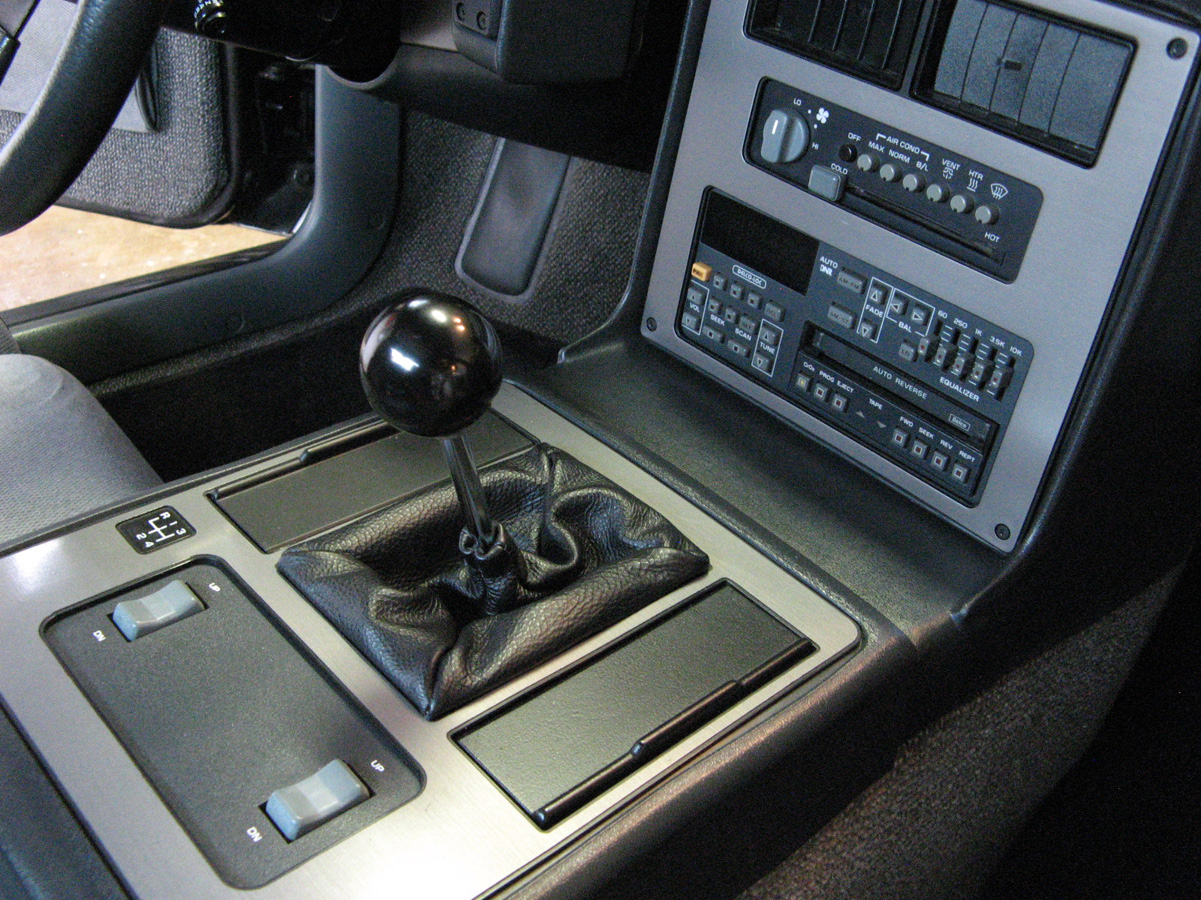


 My Fiero still has an Eclipse 4502 Headunit, it was their top of the line cassette deck.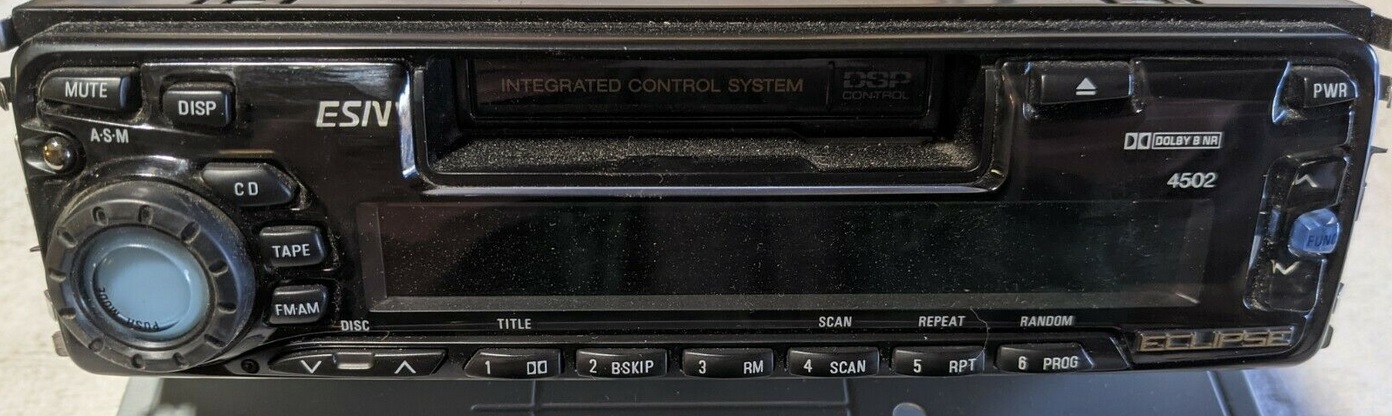

 ... but CD audio quality beats cassette tapes hands down. And let's not even discuss the crap quality of commercially made pre-recorded cassette tapes churned out and recorded at double-speed. Absolute garbage!