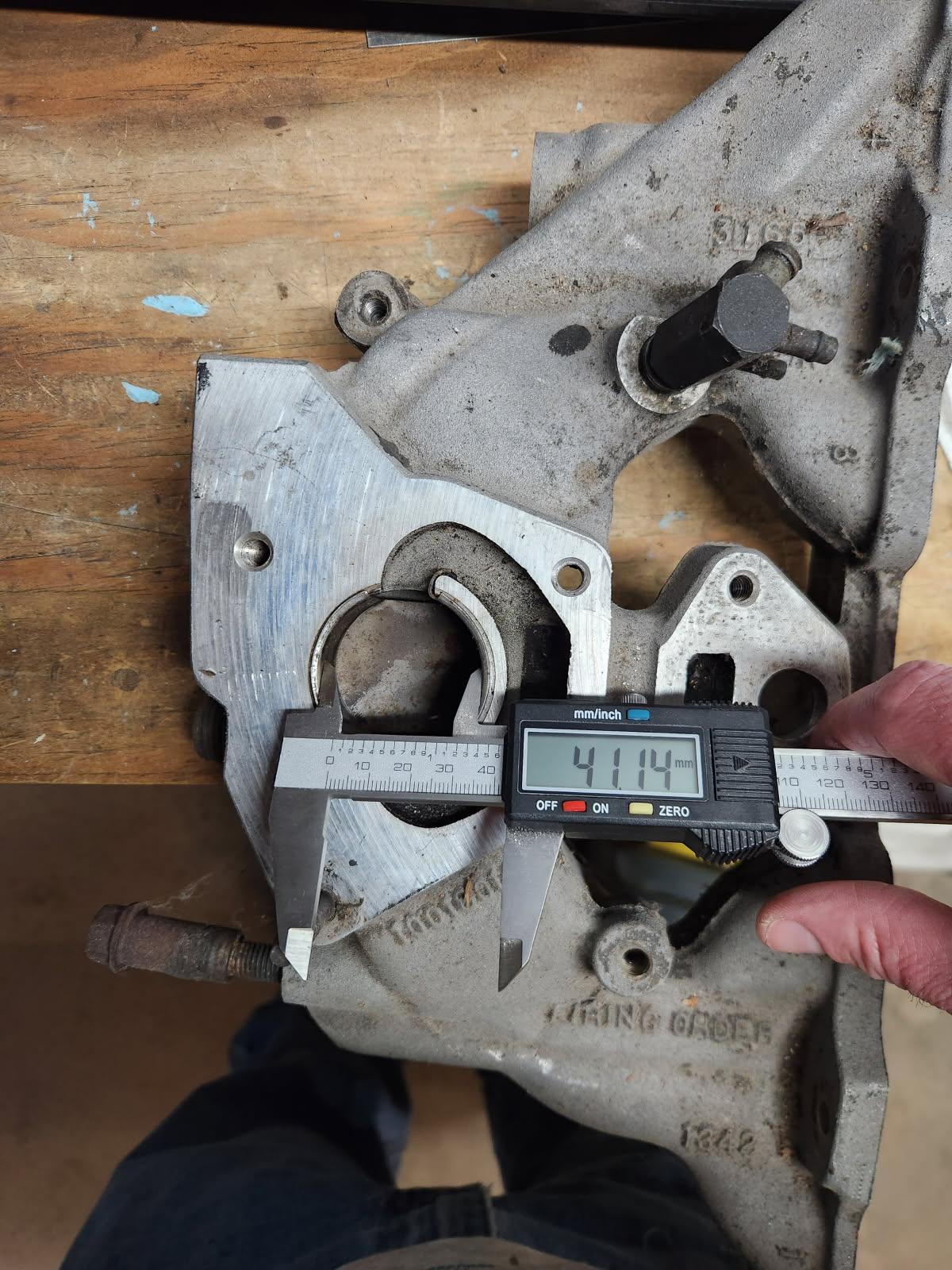
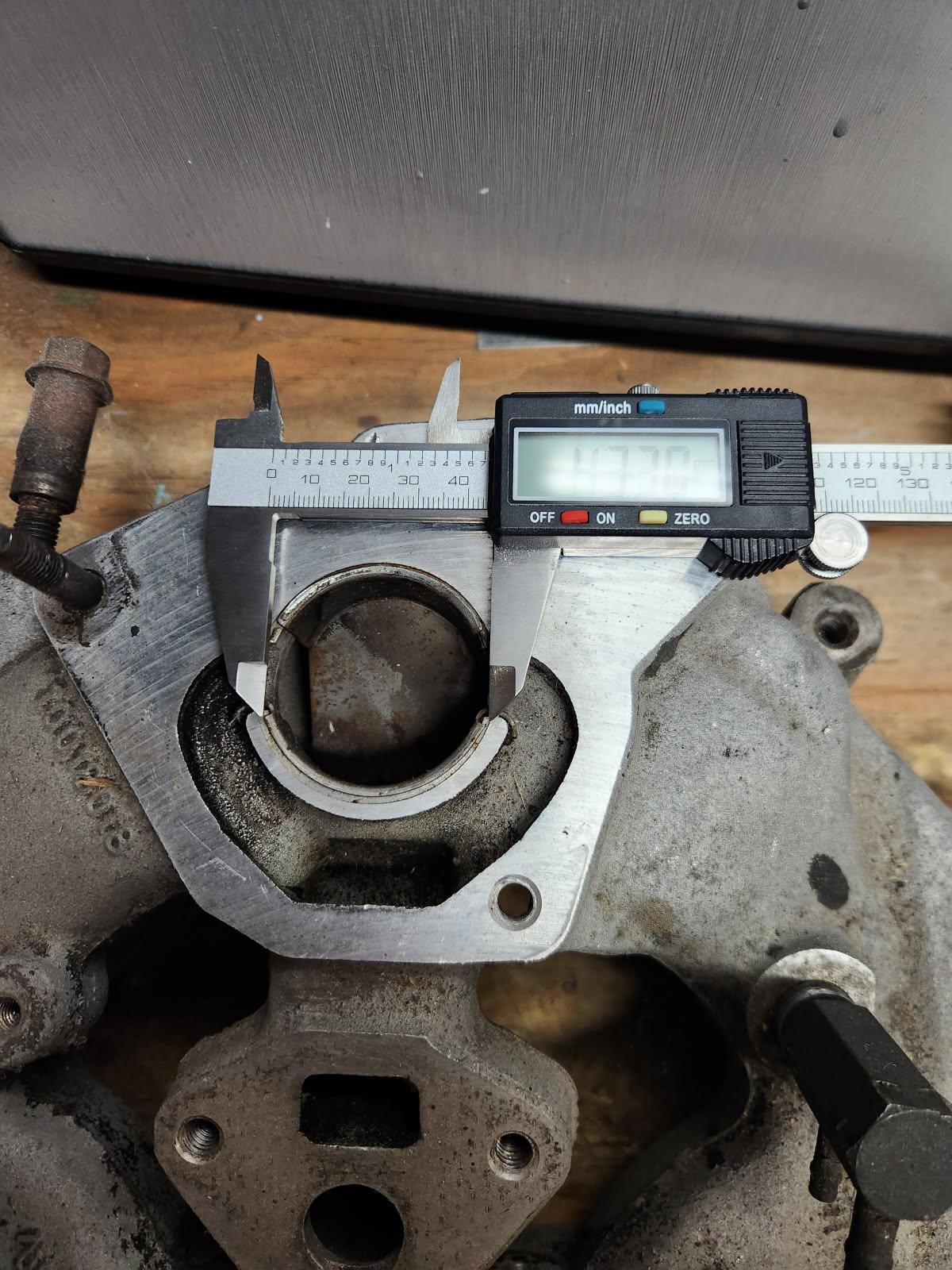
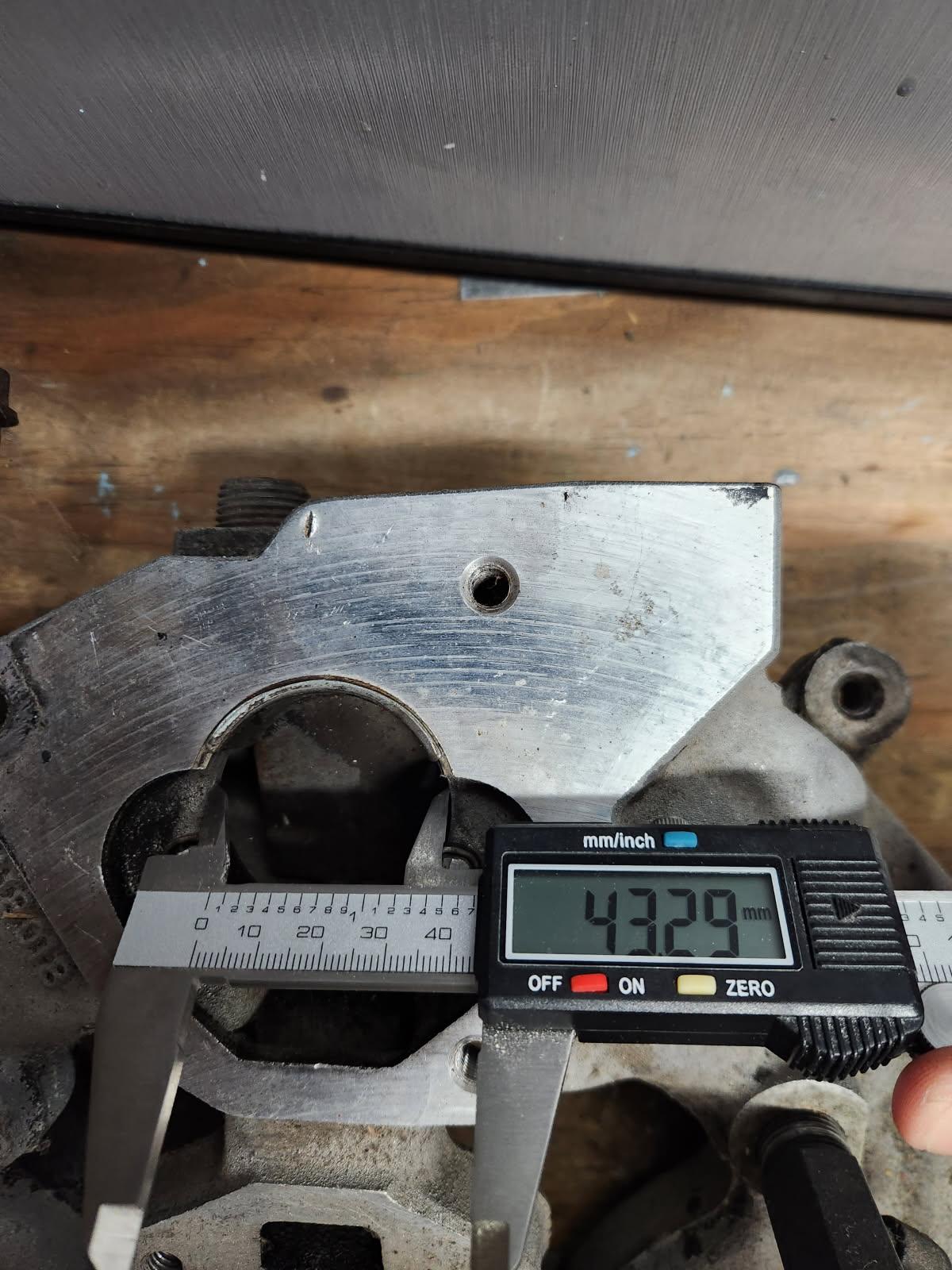
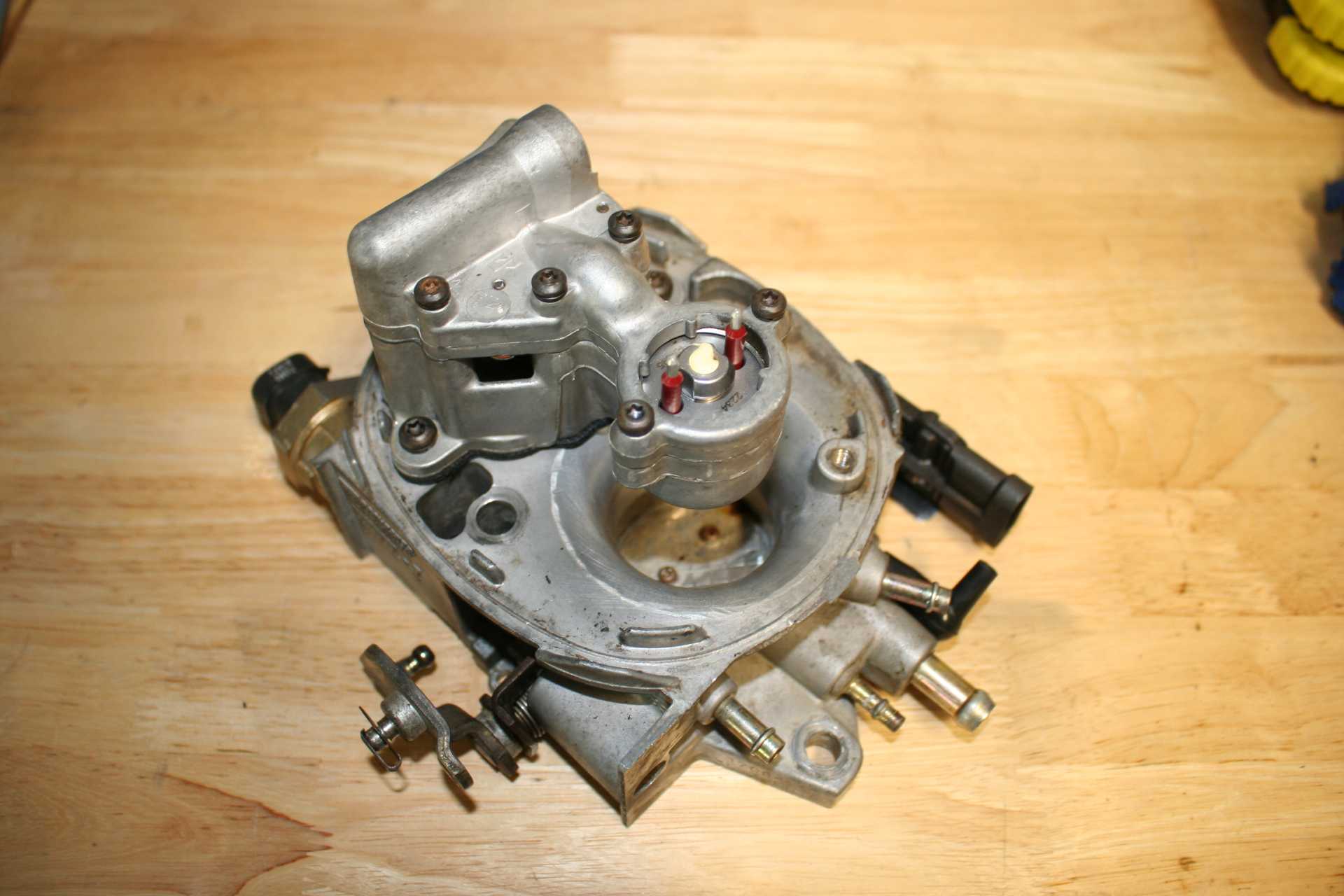
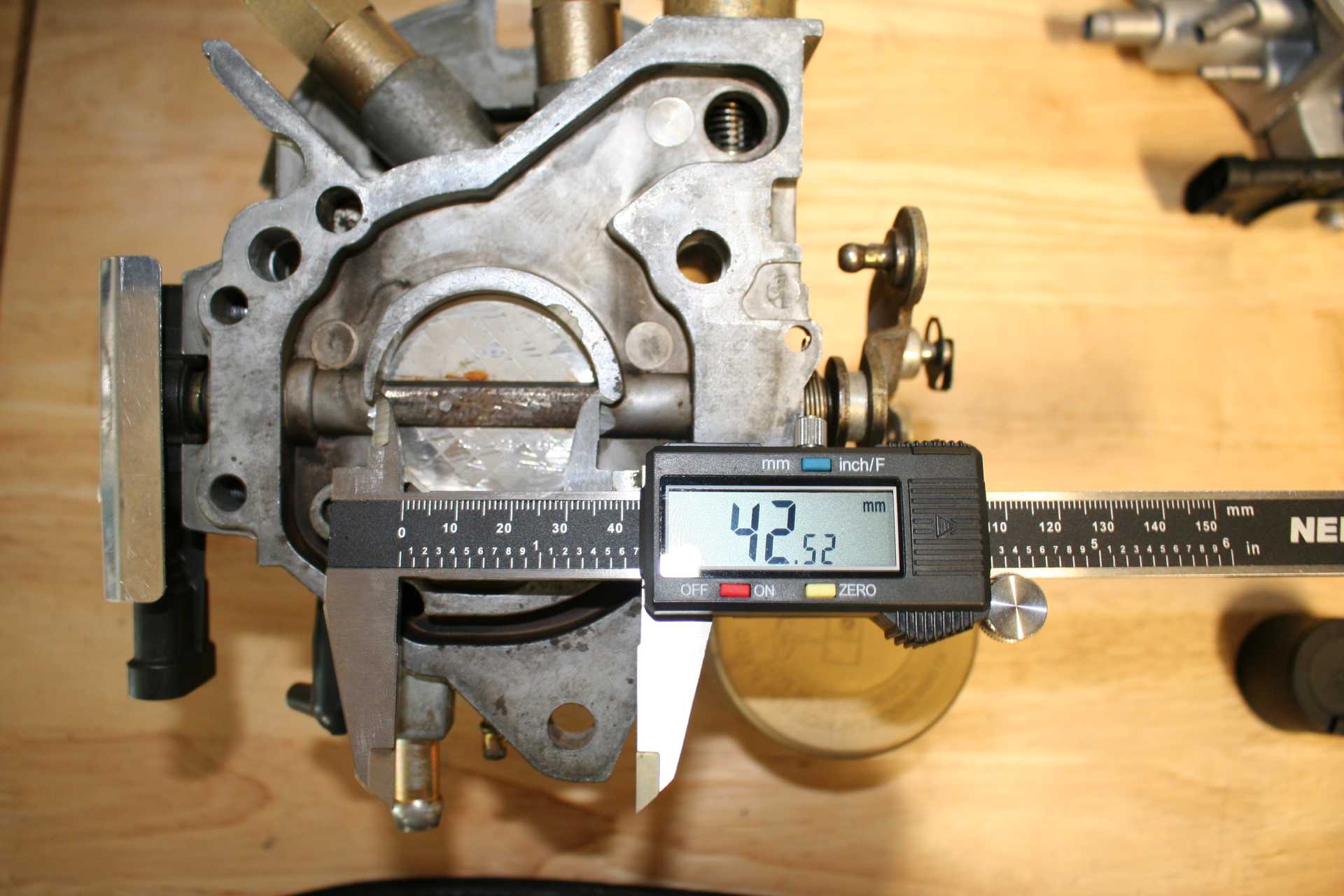
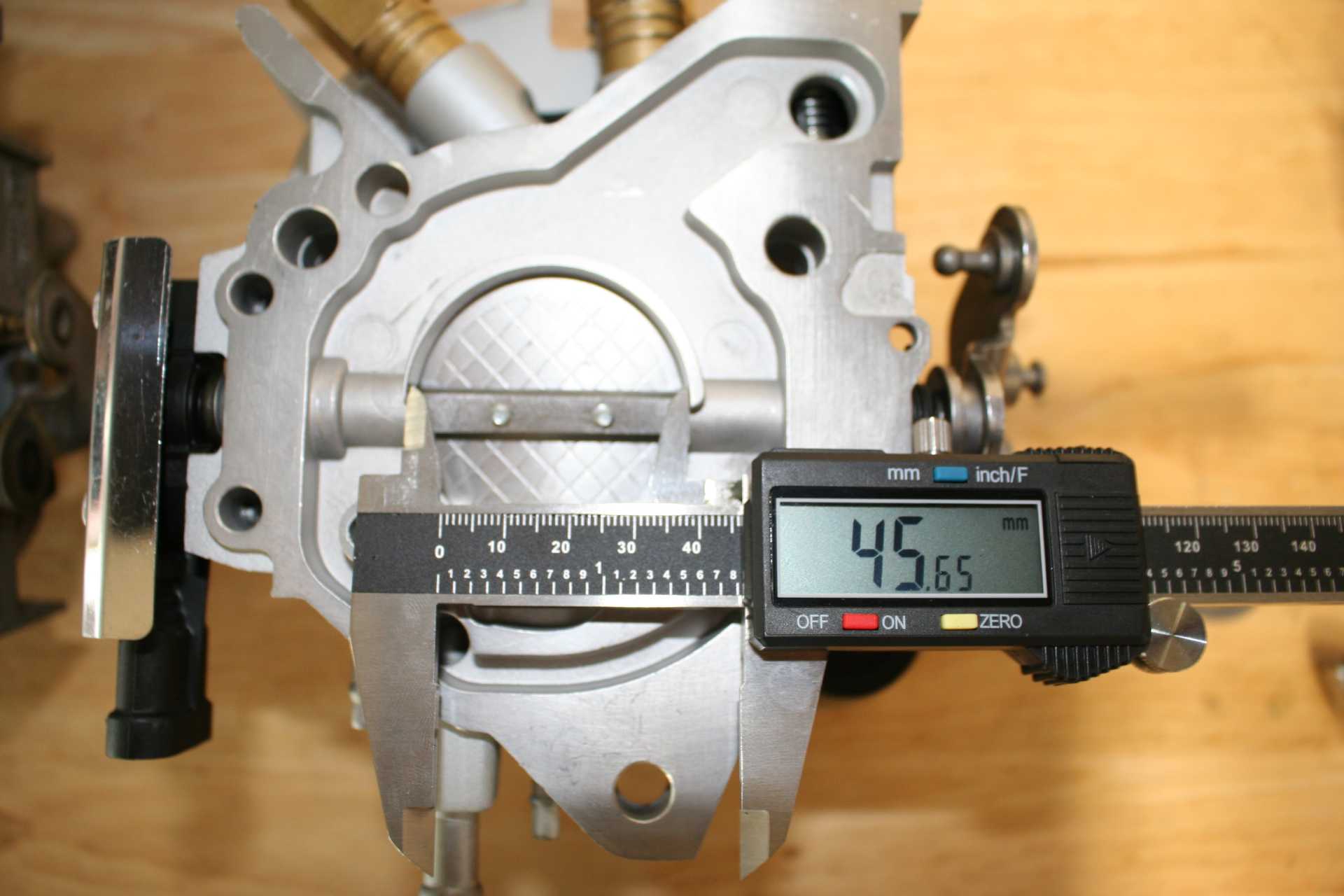
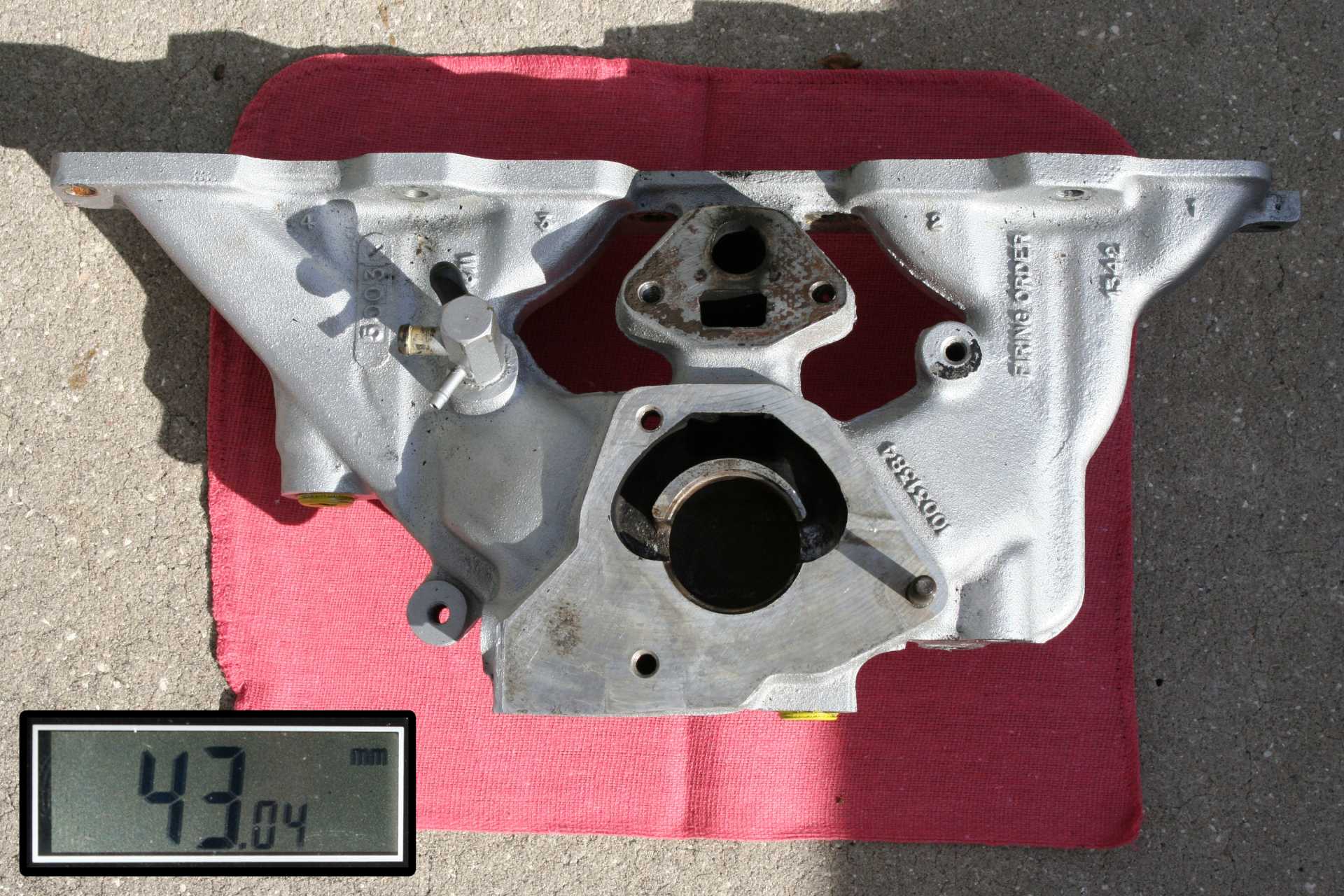
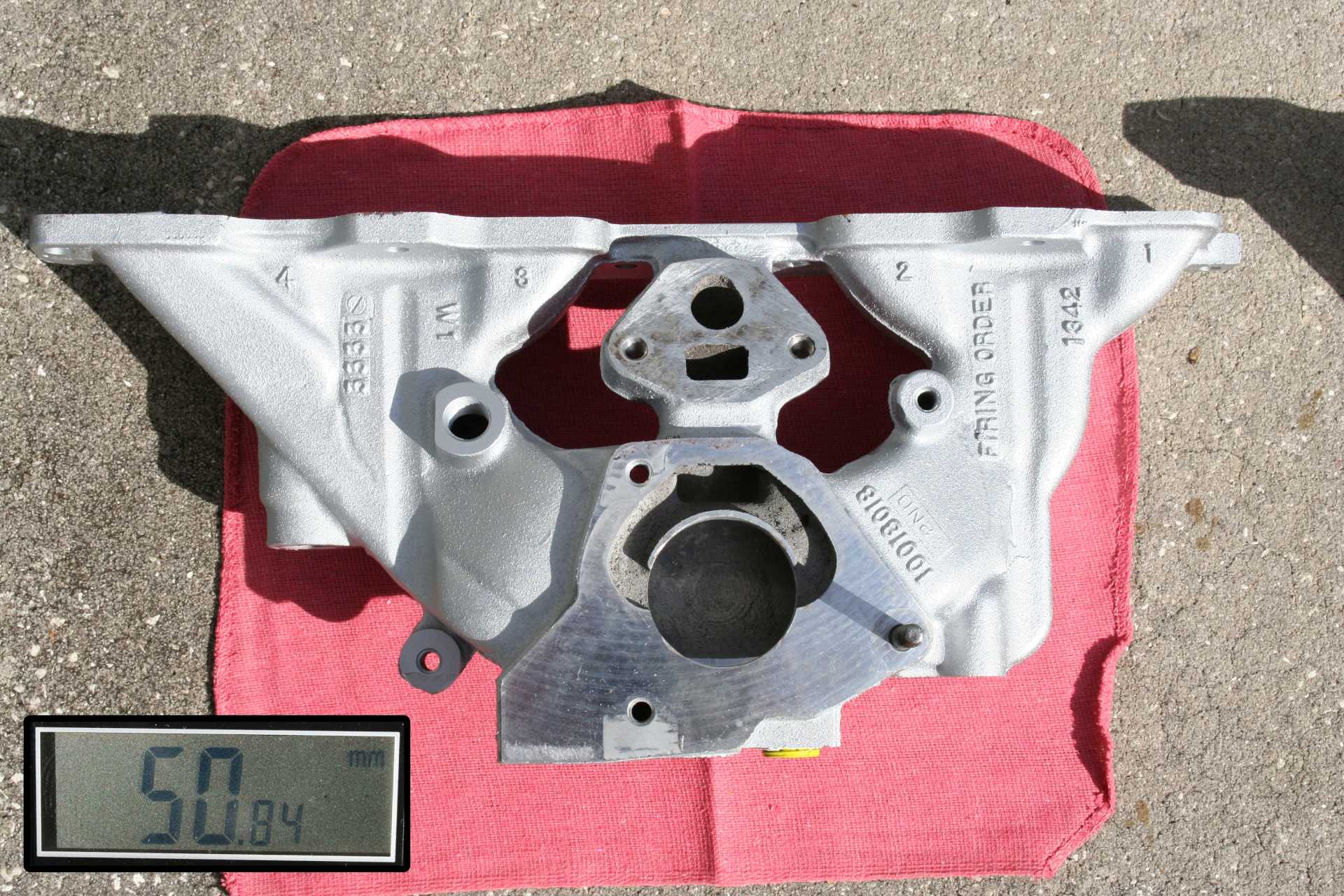
Would someone very much mind measuring the intake opening below the throttle body, of the 1984-1986 Iron Duke intake?
My daughter has an Iron Duke, so obviously I can get at one, but I'd rather not take the air cleaner and remove the throttle body unless I absolutely need to. Just hoping maybe someone has an 84-86 laying around, and they don't mind measuring with a caliper (in MM) the opening on the intake from where the throttle body connects.
Thank you! That page is interesting... particularly because of what it says about the TBI units. I actually have a bunch of them that I've (for some reason) collected over the years, and when my daughter rebuilt hers, we did so with the best of the ones I had. I'm not really sure that page is entirely correct though. The Fiero TBI unit from 1984-1986 is identical... it's called the TBI 300 and is interchangeable between all three years. The one from 1987-1988 is the TBI 700 (both are from Rochester). But that brings me to the next point...
quote
Originally posted by Stingray92:
Here ya go,
... thank you! This really helps.
I wanted to know this because the opening on the TBI unit is exactly the same as the opening on the stock intake.
I recently bought a 1984 Corvette with Cross Fire Injection, and I also have some old parts left over from when I had a 1982 Pontiac TransAm with Cross Fire Injection. On a whim, when my daughter was rebuilding her throttle body, I discovered that the ones on the Cross Fire Injection engine are identical in every way to the ones on our Fiero. The one on the CFI are known as the TBI-400, while the one on the Fiero is known as the TBI-300. There's even a smaller version whith is called the 7-103... which is basically a shitty version of what we have (meant for the 1.8 and 2.0 liter).
But here's the cool thing. Everyone that has a Duke wants that Holley 3730 TBI unit... but they're basically impossible to find. The bore measures at 50mm, while the stock Fiero's bore measures at 43mm (just like the stock intake). Well, the factory TBI 400, which is every bit identical to the Fiero's TBI-300 has a bore of 46mm. All you really need to do is remove the dual-linkage bracket, and replace the throttle shaft with the one from the TBI-300, and everything else bolts up.
Of course, as I see now... the factory intake would need to be bored out 3mm for it to even make a difference... but there are options if someone wants a little bit more horsepower and they're feeling cheap.
She's going to post her next video (which is a "How To w/ Upgrades" for the Fiero throttle body) next Thursday, and I'm helping her do a little bit of follow-up on this.
Just a quick update on this... there's a company that bores 400 TBIs for the 81-84 Corvette, and 82-83 F-bodies that have Cross-Fire Injection. For the most part, you can actually use a 400 TBI in a Fiero, but will have to re-route some of the vacuum lines for things like the ThermAC and such. But the guy offered to bore out my 300 TBI (the one the 84-86 Fieros use) to 45.5mm, which is the factory size of the 400 TBI. My goal is to increase the bore size from the stock ~43mm to ~45.5mm, while using a throttle plate from the 400 TBI, which is identical looking to what's in the 300 TBI. So I'll literally have a totally stock looking 300 TBI that's got a much larger bore, and reasonably provide more air to the engine.
He's charging me about $395, but it comes with a bunch of other things too... he bead-blasts the entire throttle body, cleans everything to like new, installs needle bearings for the throttle shaft, and restores everything on it to "like new." He'll also bore a set of factory gaskets for me to the same bore.
I'm also having a local machine shop bore the intake manifold to 46mm, and will re-use the little fuel foil, with the indent. I choose to have the intake bored to 46mm because unfortunately, the way it is now... (as you can see from the pictures above that Stingray92 posted) with the fuel foil in there, it actually blocks some of the intake... so you don't even get the full 43mm of the stock TBI bore.
In the end, I'll have a true 45.5mm throttle body, that looks 100% stock, and will most certainly provide a bit more horsepower. I realize it's not going to give me 100+ horsepower, probably not even 10hp, but if it gives the car a bit more power and drive ability, while looking totally stock, then it'll be a nice improvement.
He's concerned about 2 vacuum ports, the one that goes to the EGR, and the one that goes to the fuel evaporative canister purge valve. Both of these port into the bore (before the throttle plate... you may not even realize it), but he wants to make sure that boring the TBI out by 2.5mm won't destroy these ports. But I'm willing to take the risk. He says that if the porting goes well, he'll offer this service at a lower price to everyone else... which will support both Fiero owners, and everyone from like Citations to whatever.
I'll post when I get everything back and find out.
Ok... so I wasn't going to post this, and was going to let my daughter make a video of it... (which she will still do). But as you guys know... we suspect either a cracked head or a faulty head gasket. Carter Carbs sold me a basically perfect cyl head which I've sent off to the machine shop to clean up, deck, etc... and we'll install that new cyl head in place of this one. We keep getting compression into the coolant, which is causing seals and everything to blow out in the cooling system. Anyway... since we're going to have the head off... I wanted to see how we might be able to get a little bit more horsepower out of the engine, while at the same time keeping it looking stock and not disrupting how the car responds (it drives really, really nice with the 5-Speed gears we have, and the car is a *sh1t ton* of fun.
Ok, so as explained above... the stock 300 TBI's bore size is 43mm. It's also correctly matched to the intake manifold... though with the fuel atomizer installed, you can see above that the actual measurement comes in at even lower (less than 42mm). Thanks Stingray again for taking those pictures!!!
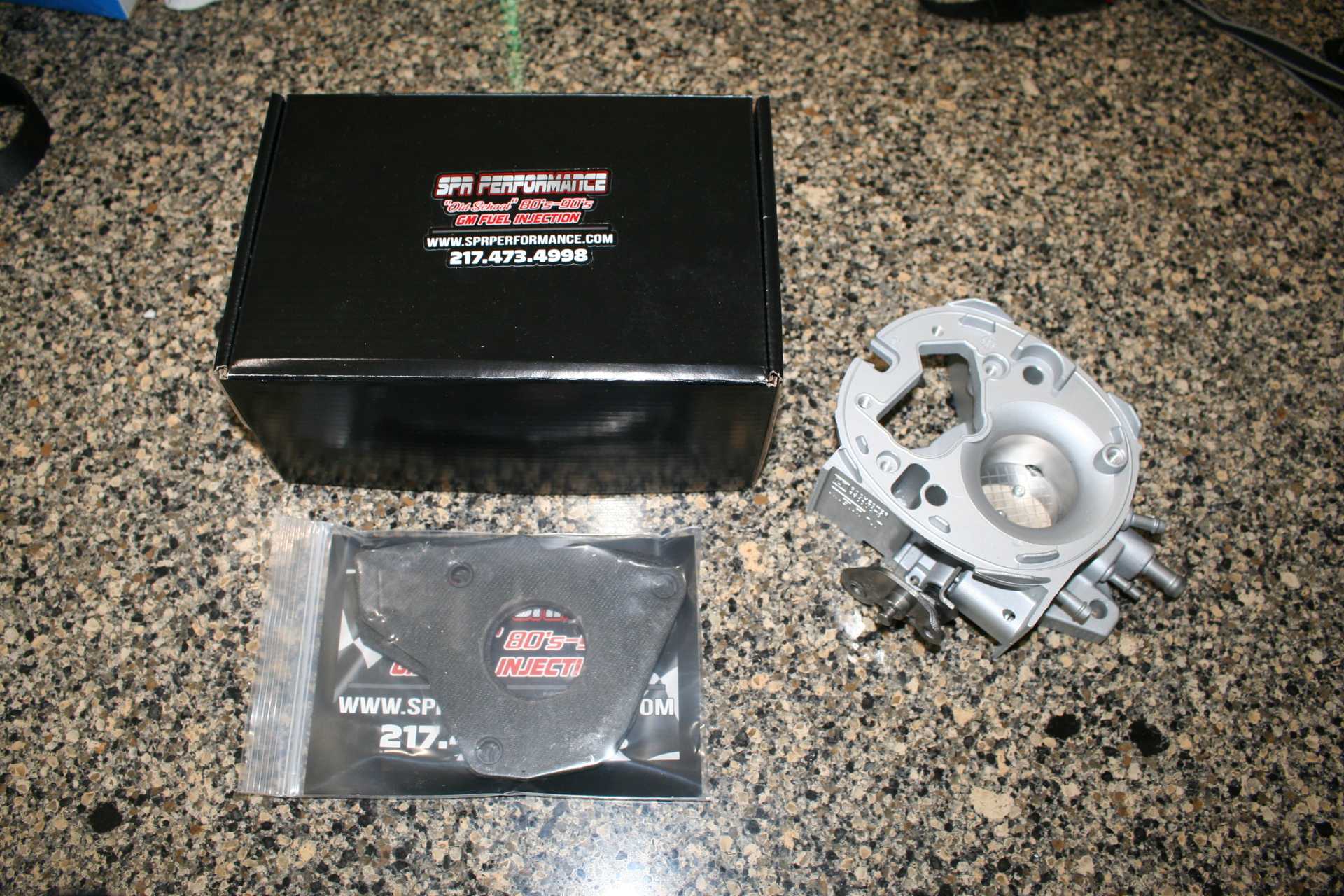
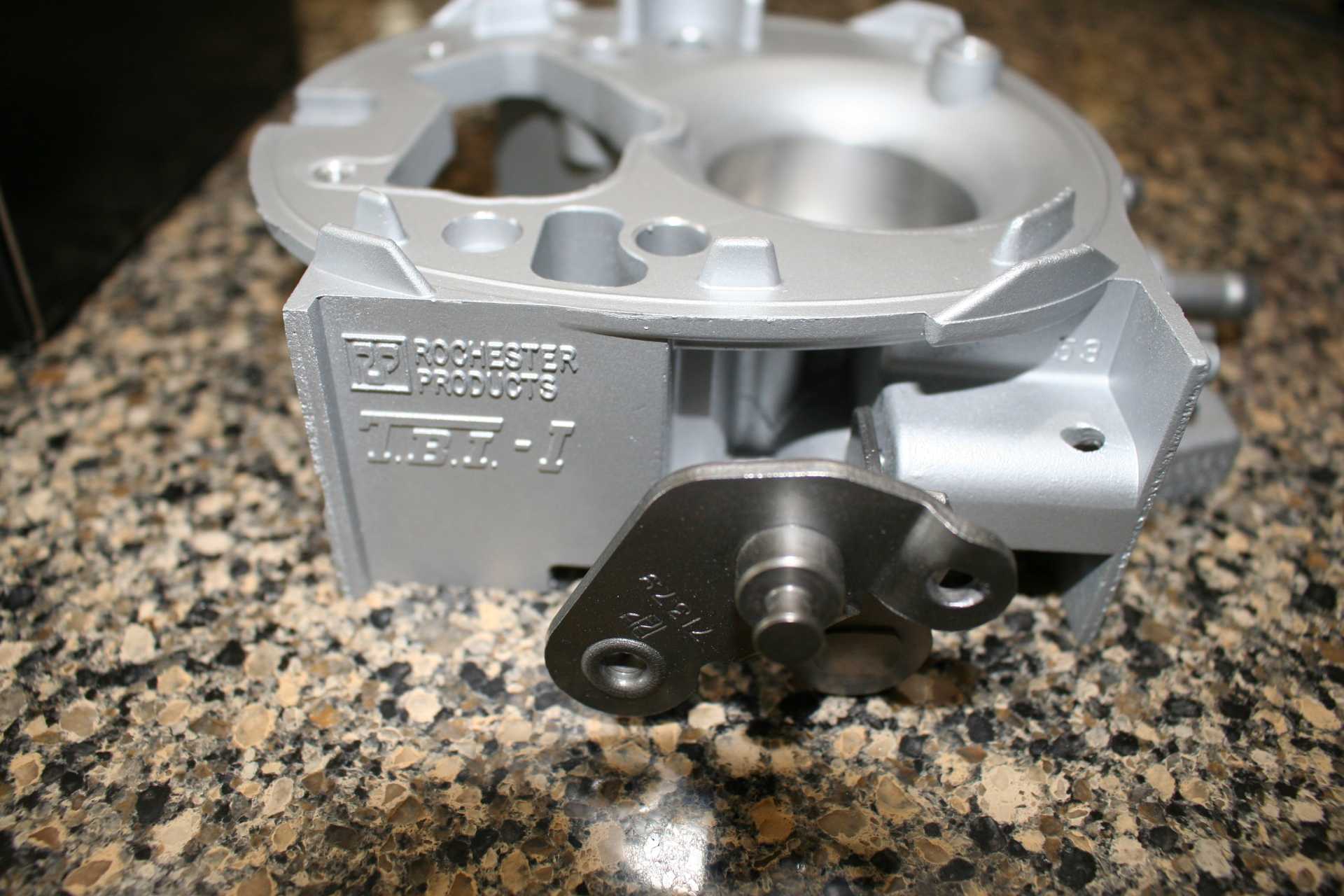
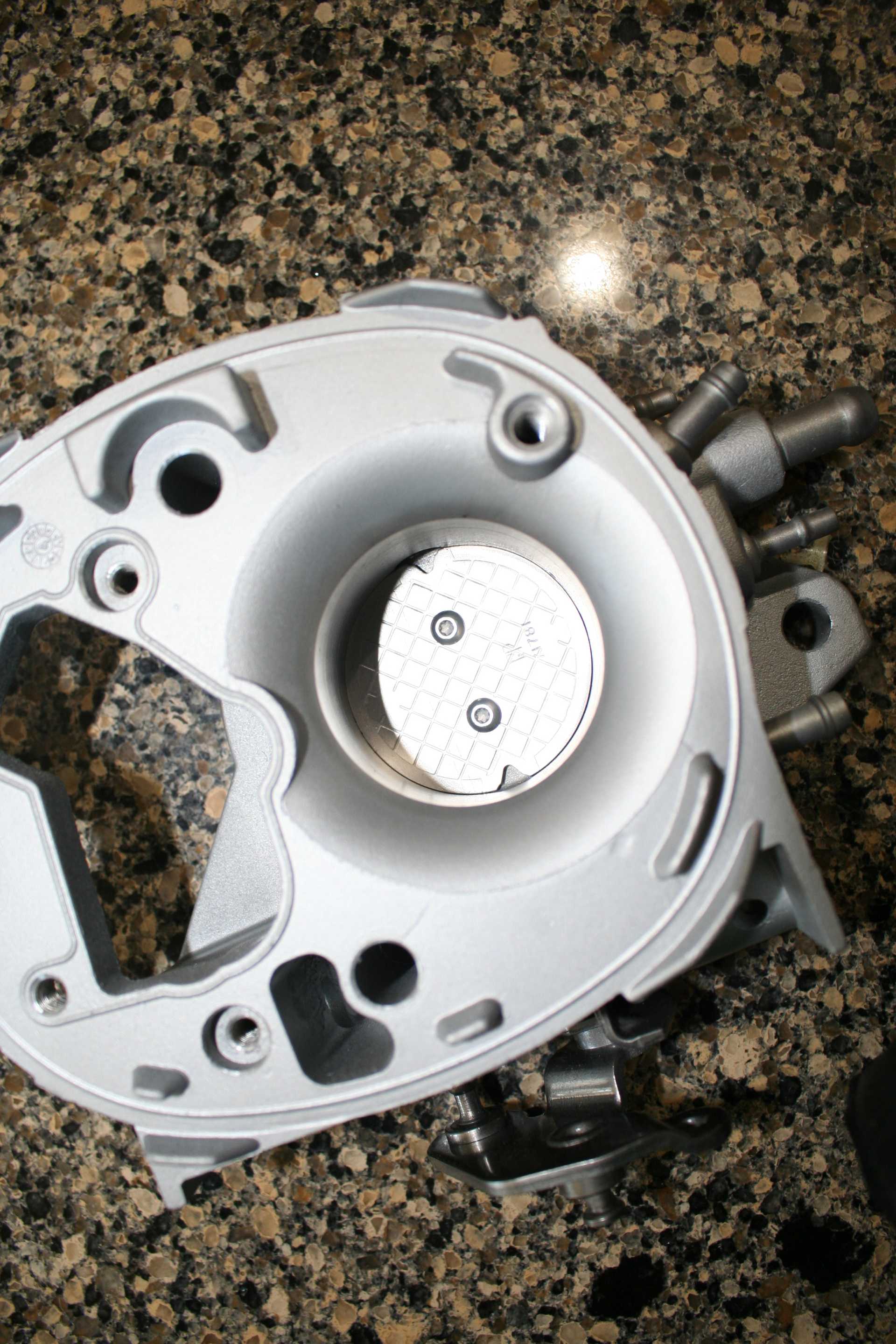
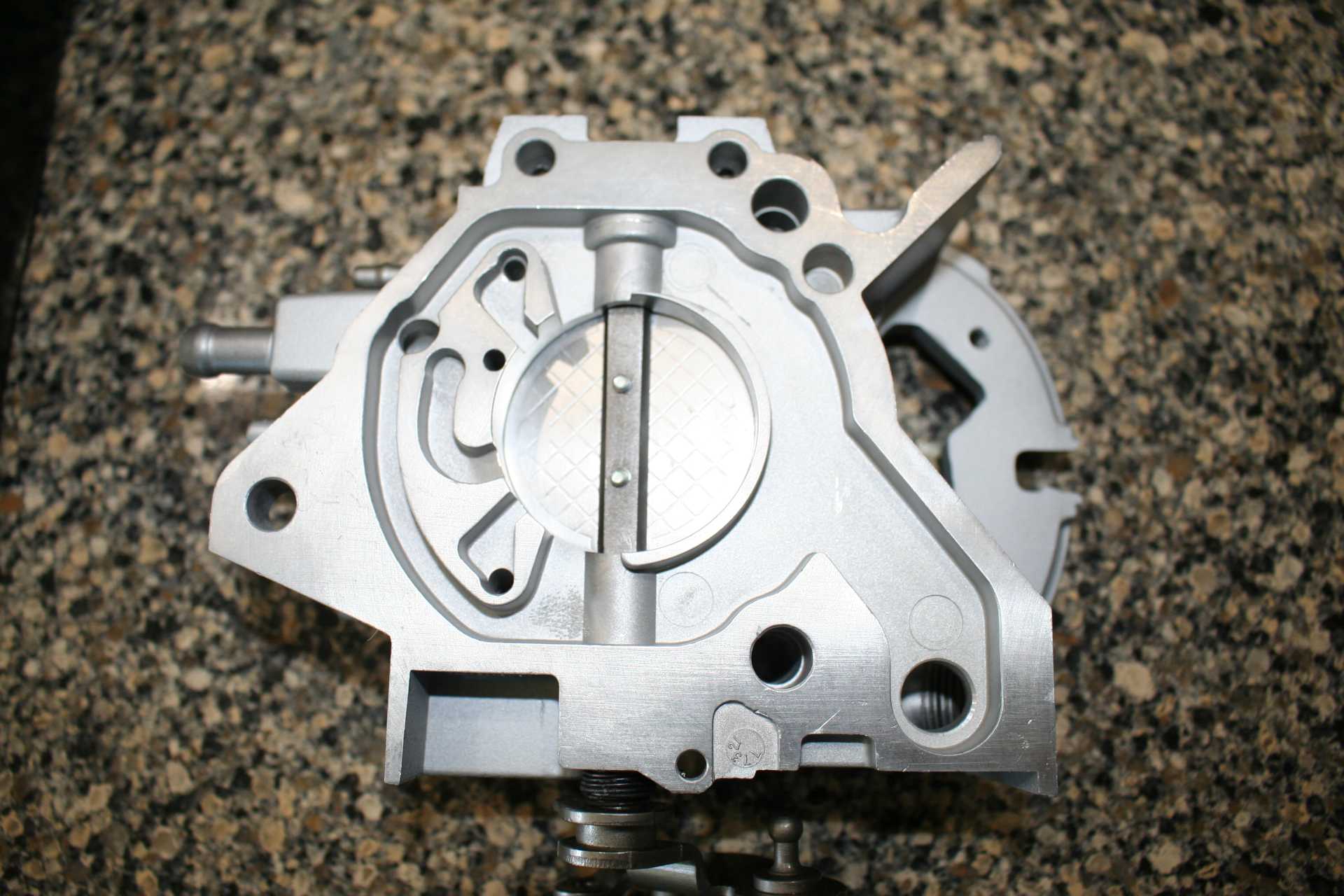
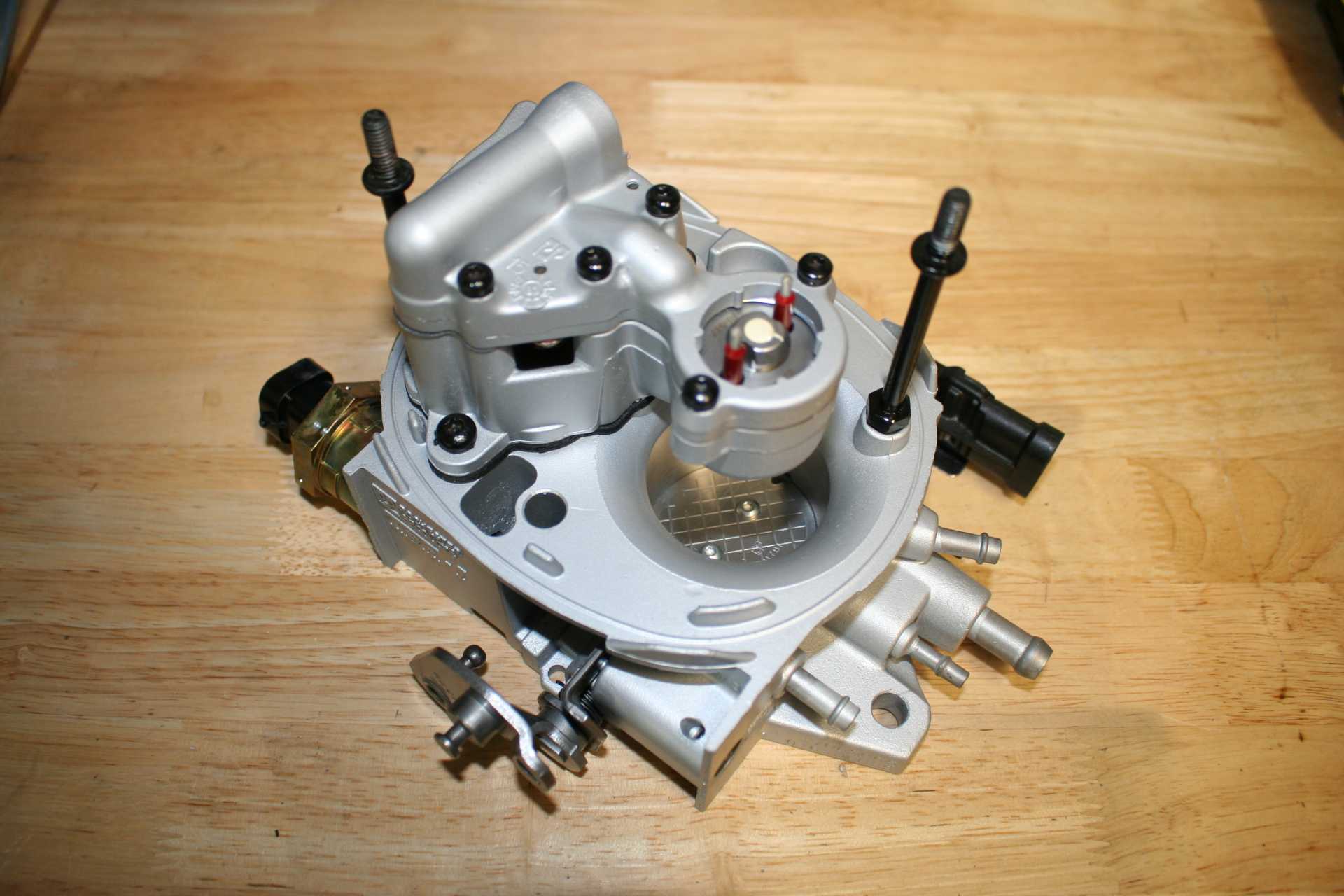
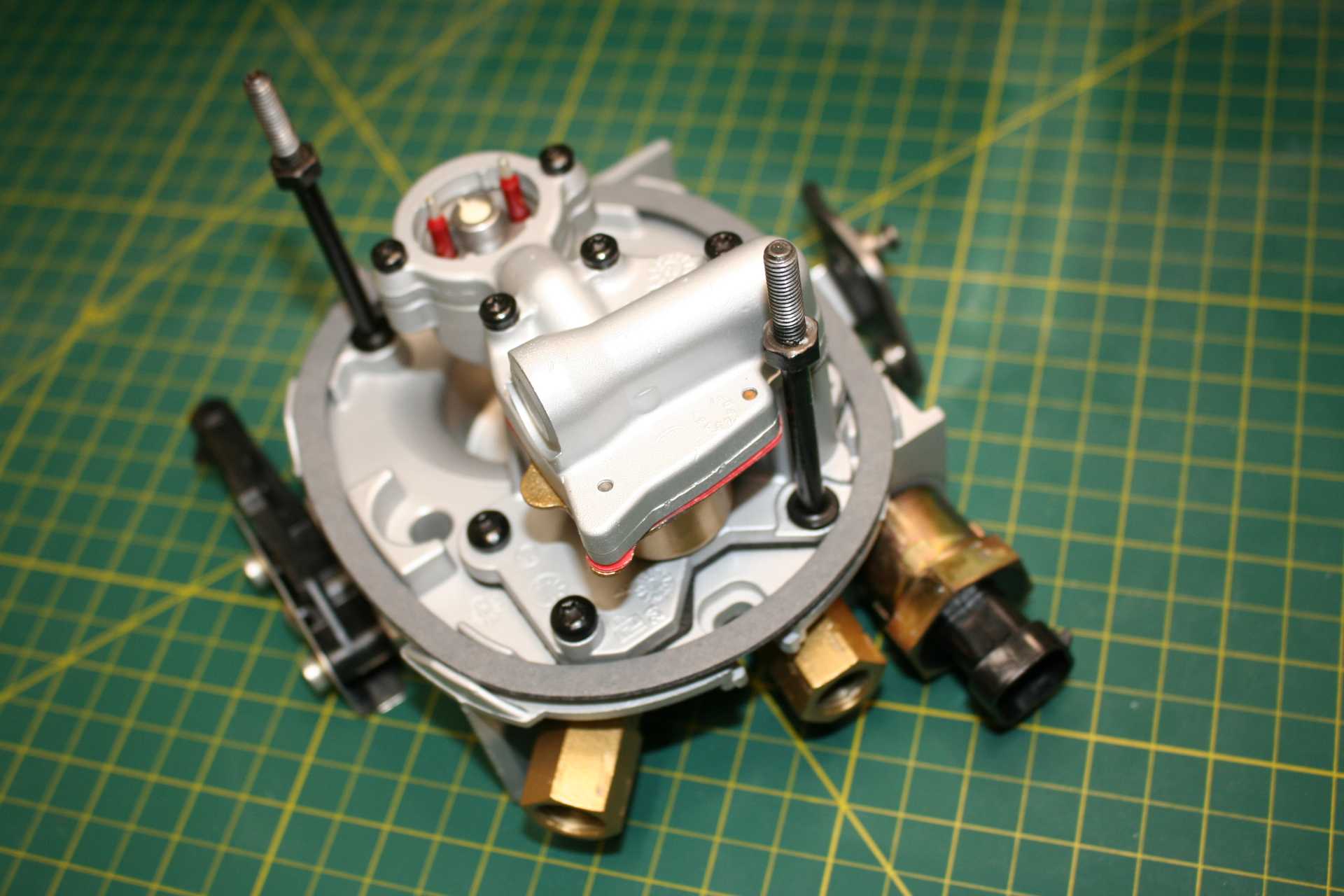
So here's what I did. I know from my cross-fire injection days, that XPS performance does throttle body boring. If you saw the TBI 300 rebuild video my daughter made, the Corvette TBI units are nearly identical to the Fieros. You CAN easily adapt the Corvette TBI unit to the Fiero; however, she wanted to keep the stock 300 TBI because she wanted all the vacuum routing to stay in the correct place. So we shipped off her 300 TBI to XPS performance, and for $440... they cleaned and bored the throttle body. What's really cool too is that... because they professionally bore TBI 400s for Corvettes, they have a plethora of left-over OEM Rochester throttle plates from the Corvette... which are IDENTICAL to the factory Fiero TBI units, but just larger. So... without further delay... here's the picture of what I got back from XPS Performance:
Keep in mind, there is a detailed bulleted list of things that they do. In addition to merely boring it out, he also: - cleaned the TBI housing (glass-bead blasted), - refinished the aluminum, - cleaned and tapped all the threads (mine had a broken TPS bolt in there), - cleaned and re-installed the throttle linkage, and actually installed sealed / greased needle bearings (the throttle action is SO much more smooth now too), - and completely cleaned all the throttle and vacuum passages of all the gunk and anything else that was there.
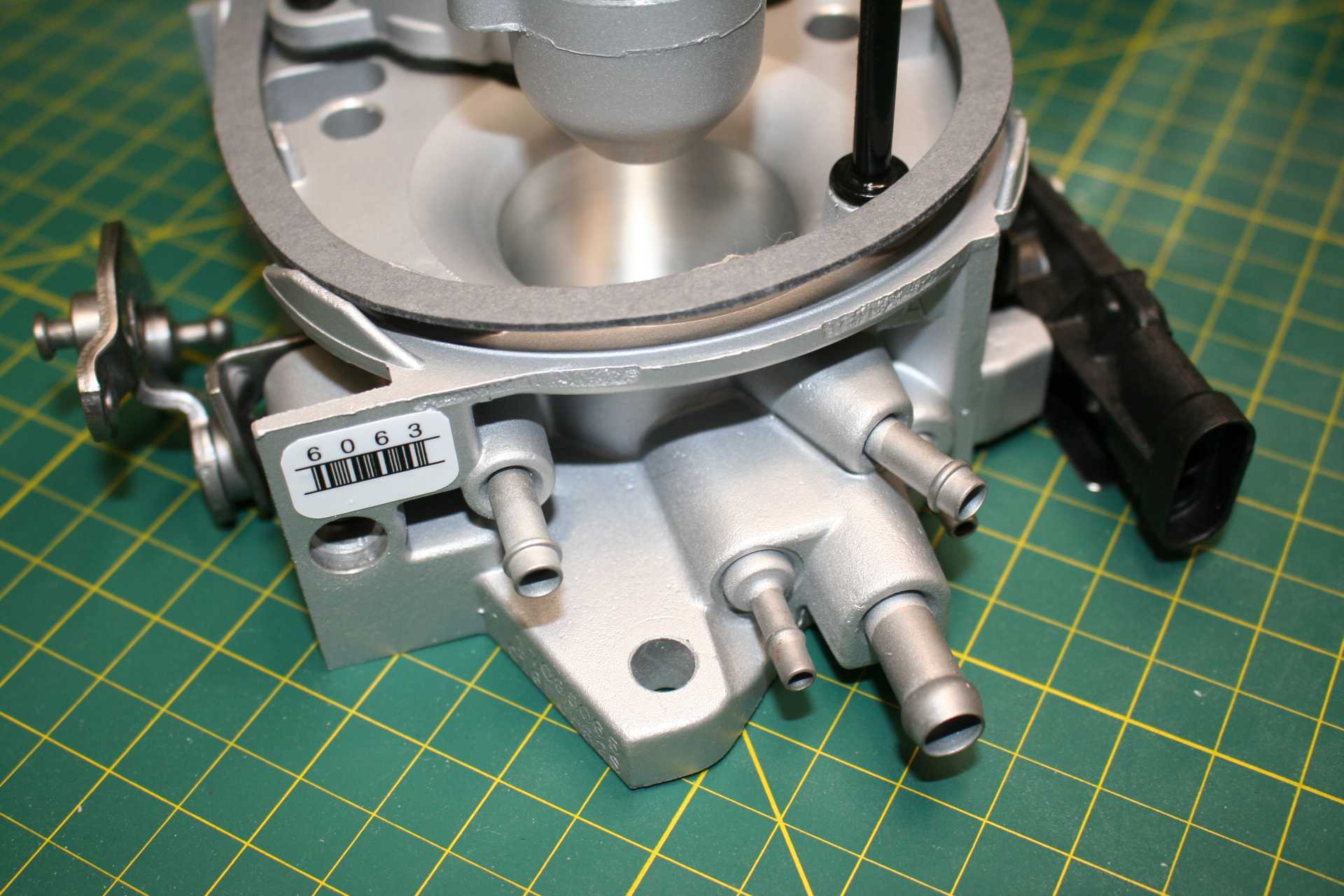
Here are some additional pictures:
A couple of things worth mentioning. You have to supply your own gaskets... and keep in mind, he also bored the gaskets to 46mm, which is now the larger and correct size of the throttle body.
In addition to this, I purchased a spare intake manifold off eBay and I sent that to my local machine shop to have it bored out as well. I don't want to run into the issue of also having that undersized because of the fuel atomizer... so I asked them to bore it to 47 mm, and then I'll be able to expand out the fuel atomizer, and still get the full 46mm bore size from the TBI unit through the intake. There's also a thread (somewhere), which I'll find that talks about how to modify the fuel atomizer to get a bit more flow through there and still have it function properly. Removing it all together usually gives about ~2hp (dynoed) on an otherwise totally stock Fiero. But the fuel ends up pooling and doesn't distribute properly to all four cyls like it should, so you really do want to keep it in there, you just don't want it to really restrict airflow (as it does now).
We also purchased an older ceramic-coated Fiero Store shorty header off eBay for the Iron Duke, which looks almost factory... so we'll install that too. I don't know what kind of power we'll get from the performance exhaust, but I'm estimating she'll probably see around 8-10 horsepower from the modified intake manifold and throttle body... which brings it a bit more in line with the newer Iron Dukes and gets it up over 100 horsepower. I'm being conservative, but it's probably a bit more. I'd love to do a before / after dyno... but probably not worth my time to do a before. I'll definitely look for a dyno after everything is done... since we already know what a stock Fiero's dyno chart looks like anyway.
Another thing to mention... because I'm upgrading to the larger throttle body that came directly from a Corvette... you can use one of the OEM injectors that's meant for a Corvette. It'll fit the 300 TBI neck, and will match the appropriate air flow increase for performance. Keep in mind there are two injectors on the Corvette... one for the front TBI (which produces a little more fuel since some of it trickles back) and the rear one which reinforces it. It's almost a negligible difference, but you'll want to get the front injector I'd suspect. My hope is that this will be a smooth and reasonable matched upgrade, that won't require any tuning to really be effective.
Obviously, there's better options, like the Holley 3739 that's 50mm, and lots of aftermarket intakes (if you can find them). But if you want to get back a bit more performance from the smog police, and have the car look totally stock... this is a fantastic upgrade in my opinion.
[This message has been edited by 82-T/A [At Work] (edited 07-20-2025).]
If you are looking for significantly more power from a Duke engine, a turbo might be the most cost effective way to do it. In 1984 there were two companies HItech turbo and Pfaff turbo, that made turbo kits that added 5 psi of boost and increased the Duke engine power to about 130 horsepower. When 1985 came around the V6 came out and offered 145 horsepower so interest in those two kids faded away. If you decide to add boost more fuel will also be required. I believe those Duke turbo kits came with larger throttle bodies.
------------------ " THE BLACK PARALYZER" -87GT 3800SC Series III engine, custom ZZP /Frozen Boost Intercooler setup, 3.4" Pulley, Northstar TB, LS1 MAF, 3" Spintech/Hedman Exhaust, P-log Manifold, Autolite 104's, MSD wires, Custom CAI, 4T65eHD w. custom axles, Champion Radiator, S10 Brake Booster, HP Tuners VCM Suite. "THE COLUSSUS" 87GT - ALL OUT 3.4L Turbocharged engine, Garrett Hybrid Turbo, MSD ign., modified TH125H " ON THE LOOSE WITHOUT THE JUICE "
If you are looking for significantly more power from a Duke engine, a turbo might be the most cost effective way to do it. In 1984 there were two companies HItech turbo and Pfaff turbo, that made turbo kits that added 5 psi of boost and increased the Duke engine power to about 130 horsepower. When 1985 came around the V6 came out and offered 145 horsepower so interest in those two kids faded away. If you decide to add boost more fuel will also be required. I believe those Duke turbo kits came with larger throttle bodies.
Thanks Dennis... my daughter's goal is to improve the efficiency of the engine, while trying to keep it mostly stock. I reminded her that upgrading to a serpentine belt is not really stock... but that's kind of been her push. So, she's not really looking for real significant power adders, just things that will improve the performance of an already stock motor, while basically looking mostly stock.
We did think about a turbo also... but figured it would change too much in the engine bay.
Ok, while I wait for the intake manifold to arrive, I decided to put together the new TBI unit with some spare parts that I have from previous 4 cyl Fieros, and some Corvette and 82 TransAm TBI parts.
I also discovered what XFire Performance (the ones who bored out my TBI) use to paint the TBI once they finished it. They use AlumniBlast. I won't post too much, because I'll let my daughter make a video out of this. I wanted to have some fun, so I put this together myself and will surprise her. She put together the other TBI unit, but I'm sure she won't mind swapping it out with this one.
Anyway, here is the old and new one:
OLD:
NEW:
Keep in mind, XFire Performance only rebuilds the TBI base. They do not touch (nor do they want you to even send in) the fuel neck or any of the other stuff. So you'll have to rebuild that yourself. As I'd mentioned before, the 84 Corvette has a VERY similar TBI unit. The difference is that it has a larger throttle plate, and has some vacuum ports in different places. Otherwise, there are two of them (each slightly different). But you can use that to upgrade. One of the nice things that the Corvette TBI unit comes with is a factory adjustable fuel pressure regulator. You have to punch out a little metal cap, and then you can access it and adjust it with veritable ease... without having to remove the TBI unit. It looks IDENTICAL to the factory Fiero's fuel pressure regulator, and even uses the same parts to rebuilt it... it's just adjustable (where as the Fiero's FPR is spot-welded in place).
The Corvette has a 5.7 liter, versus a 2.5 liter. So it's more than 100% larger. It's 113% larger. So the fuel has to match that, so the Corvette has a higher output injector, and different FPR spring. I plan to use Paul Romsk's Fiero ALDL scanner, which will be able to tell me if my fuel ratios are off. Either way, with the bored intake manifold, and the bored Fiero TBI unit (plus the matched TBI gaskets)... the Fiero should get some pretty decent improved performance. With the ceramic coated Fiero Store "shorty header," I'm expecting another 10-15 horsepower total between the two. That'll make the car a bit more peppy, and a bit more fun to drive.
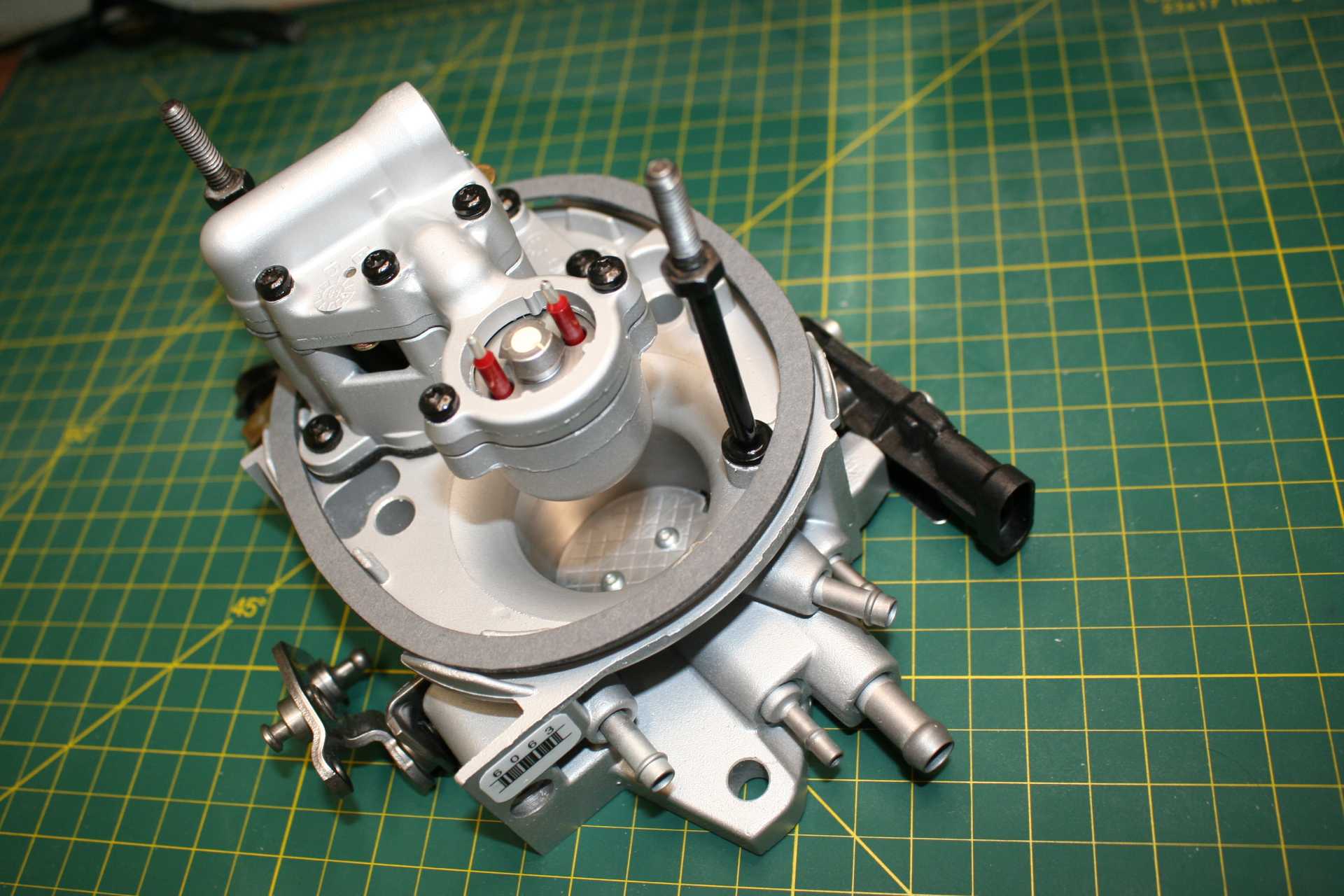
Ok, updated picture, and I also discovered that I had the air cleaner stantions installed upside down... which makes sense because they didn't fit well, so I fixed that (nut side up).
I also went a little nuts... I discovered one of my spare TBI 300s actually came with a little sticker that said 6063 on it... so... I replicated it in MS Paint and made a set of 30 stickers from Sticker Mule and stuck it on the TBI. I know, overkill. It's a shame this isn't a Concourse De Elegans... I think I missed my calling.
Anyway... I'm excited to see how this works with the bored intake when I finally get it. This throttle body (as I mentioned above) is 45.5mm (up from the basically 42mm), has a Corvette CFI (front) injector, and the factory Corvette adjustable fuel pressure regulator installed... with all new seals and everything.
When my daughter gets the intake installed, we'll tune it with Romske's ALDL scanner and I'll be able to see my AFR and adjust it.
This Seymour Alumi-Blast finish looks cool, so I did some online searches.
It seems like it's not gasoline resistant. That may be problematic for a TBI unit
I guess on outside surfaces it might be OK if there are no fuel spills when installing/removing fuel lines.
So, I sent pictures to the guy who did the machining, he told me they don't use any paint at all on the base. The base and fuel neck are separate (as shown in the pictures below). He tells me that the machine shop that does the work for his business bead-blasts the base and that it isn't painted. I'm just not sure... because the Alumni-Blast (which I used on the fuel neck) looks 100% identical to the base. You can also see on the vacuum ports that it looks like they may have been taped off. So, I'm convinced that it's the same paint... but maybe it isn't? I know the fuel neck is because I painted it... but it has actual aluminum in the can so it could be why it looks similar.
Either way, I recognize that after several thousand miles, it'll look like all the others anyway. But we're hoping to get the Fiero completely finished in a way that... at least in the beginning, when you get in, turn the key, the Fiero feels about as close as someone can get to having a brand new Fiero in 2025. I don't think she'll want to take it with her to college, and I have my own Fiero to work on, but I'll probably hold it for her until she has a place to actually keep it. She's a junior in high school now, so she still has her senior year and the summer, and she wants to start going to more car shows and Fiero meet-ups.
What I'm interested to know, is what kind of horsepower this will make. Realistically, I'm giving it more air and fuel.
It's going from what is essentially 41.4mm (when you consider the fuel atomizer installed in the intake port), and compare it to this bored TBI with a 46mm ported intake... I went larger so that I could still install the fuel atomizer (which I'll modify slight) so the bore size remains at least 45.5 installed. So, that's a 4mm increase in bore size (since the TBI is 45.52mm).
If I do my math correctly, that's a 9.1% increase in size, though not sure what that amounts to in flow?
If the horsepower is directly proportional to the size of the bore of the throttle body (which it totally isn't, but probably a fair estimation), then she'll likely see an ~8.3hp increase. The engine is built up with all new parts, and a totally OEM specification cam, new pushrods and rocker arms, etc., so I'm pretty confident about at least getting the stock 92hp.
We also have a newer catalytic converter, lower resistance and more modern accessories, and a shorty ceramic-coated header... I'd have to say it's pretty reasonable to assume ~110hp. I think it's probably going to be doing a bit better than that .. probably more like 115hp. We also have better gearing from the 5-Speed after the rebuild, etc., but it'll at least be a pretty fun car for her to drive around in.
Not sure if I want to take it to a dyno... (just to see), but maybe we'll do it after she's put a lot of miles on it.
She's going to do a "basic high performance Iron Duke" video, which will include a few things:
- Installing the shorty header - Installing the bored intake - Installing the bored TBI unit - K&N Air Filter & Fuel Filter (OEM replacements) - Talk about the newer catalytic converter - Summit Racing Hi-Output Ignition Coil (30k volts, so not crazy, but better than stock)
At some point though, we also have an MSD 6EFI ignition box and also a heated O2 sensor kit that we'll install. The O2 sensor will provide slightly better (and sooner) readings, and the MSD ignition box, I assume will improve around-town driving. I will say though, I don't know what it'll really do... when the engine was together, it ran so amazing. Idle was smooth as glass, and there was absolutely no hesitation, bogging, or anything at all in the performance of the engine. It ran so well.
[This message has been edited by 82-T/A [At Work] (edited 10-15-2025).]
I don't think you are going to gain any fuel flow using the corvette injector.
The 5.7 engine had 2 different sized injectors depending on the car. some flow 55lb/hour while others had 65lb/hour injector. In fact the corvette had 2 different sized injectors (so maybe one each)
I don't remember the exact number, but the Duke injector is already sixty something. I wanna say 62 but I'm not sure.
Only way I think to get more fuel is turn up your fuel pressure with that adjustable regulator.
I don't think you are going to gain any fuel flow using the corvette injector.
The 5.7 engine had 2 different sized injectors depending on the car. some flow 55lb/hour while others had 65lb/hour injector. In fact the corvette had 2 different sized injectors (so maybe one each)
I don't remember the exact number, but the Duke injector is already sixty something. I wanna say 62 but I'm not sure.
Only way I think to get more fuel is turn up your fuel pressure with that adjustable regulator.
I would love to know the exact number (lb/hour) of the stock Fiero injector, if you happen to know where I can find it. I didn't see it in the service manual.
Yeah, we are using the front injector from the Corvette, which is the larger one. The front injector is 68 lbs/hour, while the rear injector is 64 lbs/hour. We get the intake manifold back on Friday, and my goal is, once we get it all back together and running... I'll use Romsk's ALDL scanner / reader, and I'll be able to see a real-time AFR... my hope is that then I can adjust the fuel pressure regulator to give a bit more fuel (or take it away if there's too much). I don't know if I mentioned it, but the Corvette's FPR is adjustable, so I swapped out the FPR from the Corvette TBI and installed it in my modified Fiero TBI (but kept the Fiero TBI FPR spring). There's a tool that allows you to reach up and under the FPR and turn the screw to give more or less fuel while the car is running... we'll see how that works.
Originally posted by 82-T/A [At Work]: I'll use Romsk's ALDL scanner / reader, and I'll be able to see a real-time AFR... my hope is that then I can adjust the fuel pressure regulator to give a bit more fuel (or take it away if there's too much).
You will not get AFR from the scanner. You will see the BLM (early version of fuel trims) which will let you know if the closed loop fueling is adding or subtracting fuel. You will see O2 sensor voltage, but the narrow band O2 sensors are only accurate at 14.7, so it can't be used for WOT fueling.
Adding larger throttlebody and larger injectors without actually being able to tune the ecm is asking for drivability issues and poor performance.
You can adjust the fuel pressure regulator to get BLMs close to 128, but doing that will not add any fuel at WOT vs. stock.
If you dial in WOT performance, then you will be relyng on older, slower ecm with limited range of BLM compensation and only around 9 to 12 BLM zones over the entire MAP x RPM table to keep part throttle fueling in check. This will only happen during closed loop, so the car will run pig rich for cold start until the car goes into closed loop.
I would focus on learning to tune and having the ability to tune before haphazardly throwing parts at the car in the name of performance. You will be much, much happier with the results.
You will not get AFR from the scanner. You will see the BLM (early version of fuel trims) which will let you know if the closed loop fueling is adding or subtracting fuel. You will see O2 sensor voltage, but the narrow band O2 sensors are only accurate at 14.7, so it can't be used for WOT fueling.
Adding larger throttlebody and larger injectors without actually being able to tune the ecm is asking for drivability issues and poor performance.
You can adjust the fuel pressure regulator to get BLMs close to 128, but doing that will not add any fuel at WOT vs. stock.
If you dial in WOT performance, then you will be relyng on older, slower ecm with limited range of BLM compensation and only around 9 to 12 BLM zones over the entire MAP x RPM table to keep part throttle fueling in check. This will only happen during closed loop, so the car will run pig rich for cold start until the car goes into closed loop.
I would focus on learning to tune and having the ability to tune before haphazardly throwing parts at the car in the name of performance. You will be much, much happier with the results.
I appreciate the response, but I think the term "haphazardly" is a bit strong here.
I've bored the stock throttle body larger by 4mm, and matched it with a slightly larger fuel injector 68#s, that mathematically should match the increase in TBI bore size. I also installed a shorty header. I think that's pretty mild... if not exceptionally minimal. I haven't changed the cam profile or anything like that... so as long as the fuel and air increase are proportional, the engine should respond proportionally.
What I'm doing, I don't think is radical enough that I need to change tuning... my thought is that I should be able to correct any difference by using the adjustable fuel pressure regulator. If it ends up being total crap of course, I can always put back the original TBI unit. I had an issue with a cracked cyl head, but other than some coolant pressure issues, the car ran absolutely AMAZING. The best running Duke I've ever driven in my entire life.
But, to be clear, part of the goal in all of this, is to identify simple bolt on upgrades for the Duke that don't require any modifications to the motor, ECM, or anything other than literally bolting on parts.
The kit you reference is for a heated 02 sensor, not a wideband. Maybe there are other details of what you changed that weren't included here. For example, I always understood that you can't just substitute a wideband for a narrowband sensor. I thought some kind of 'black box' was needed to convert the signal into something the ECM could understand unless you are using a different ECM designed for a wideband. (Not sure on this, never tried it myself).
The kit you reference is for a heated 02 sensor, not a wideband. Maybe there are other details of what you changed that weren't included here. For example, I always understood that you can't just substitute a wideband for a narrowband sensor. I thought some kind of 'black box' was needed to convert the signal into something the ECM could understand unless you are using a different ECM designed for a wideband. (Not sure on this, never tried it myself).
You might be right... but no... the ECM is totally stock. Remember, this is my daughter's car... and her goal is to keep it as stock as possible, but improve the efficiency. She rebuilt the engine herself, with all new parts, but wanted to keep the engine stock. Anything that requires modification of the motor, or changing to different pistons (other than she went to .040 overbore), she wants to avoid. She's got a Corvette that she's going to be modifying with an aftermarket ECM. She's also going to be building my 3.4 pushrod Firebird motor with DOHC pistons and an H272 cam, and an aftermarket ECM. But for this Iron Duke... she wants literally just bolt-ons that anyone can do. So that's part of the goal, reprogramming the ECM is out of the question.
The kit you reference is for a heated 02 sensor, not a wideband. Maybe there are other details of what you changed that weren't included here. For example, I always understood that you can't just substitute a wideband for a narrowband sensor. I thought some kind of 'black box' was needed to convert the signal into something the ECM could understand unless you are using a different ECM designed for a wideband. (Not sure on this, never tried it myself).
Correct, that kit is still a narrowband, to the ECM it will only report whether it's rich or lean of 14.7, not how rich or lean it is. A wideband can be used on an ECM that is made for it, or it can be used standalone with a little display to tell you (not the ECM) the actual afr, while still outputting a narrowband signal to the ECM (rich or lean). Even ECMs that support widebands will usually need a wideband controller (the black box) that outputs a 0-5v signal, controls the built in heater, etc.
Correct, that kit is still a narrowband, to the ECM it will only report whether it's rich or lean of 14.7, not how rich or lean it is. A wideband can be used on an ECM that is made for it, or it can be used standalone with a little display to tell you (not the ECM) the actual afr, while still outputting a narrowband signal to the ECM (rich or lean). Even ECMs that support widebands will usually need a wideband controller (the black box) that outputs a 0-5v signal, controls the built in heater, etc.
RGR, my hope is that at least being able to identify rich or lean, that I'll be able to dial it in enough. Ideally, I will also have a second fuel neck that I can swap out which will have a stock (non-adjustable) FPR... I want to see what the Fiero's stock configuration will look like with the larger injector and larger bore, but stock FPR.
Without commenting on all the finer points of your rework, I like the idea of needle bearings in the throttle shaft. I had an 88 Firebird Formula with a 2 barrel TBI, and the holes where the shaft went through started to wear. This, in turn, caused the throttle plate to bind in the bore. Made it a bear to drive smoothly. I ended up having to remove and re-center the throttle plate(s), in the bore.
Also, when I built my 3.4, I had the throttle body bored out by Darrell Morse. (Isn't THAT a blast from the past...) The over bore also affected the ported vacuum for the EGR. Took me many hours to figure out why my EGR was so "finicky". So it is a thing. I hope you have better luck, but it sounds like the folks doing the work know what they are doing.
Without commenting on all the finer points of your rework, I like the idea of needle bearings in the throttle shaft. I had an 88 Firebird Formula with a 2 barrel TBI, and the holes where the shaft went through started to wear. This, in turn, caused the throttle plate to bind in the bore. Made it a bear to drive smoothly. I ended up having to remove and re-center the throttle plate(s), in the bore.
Also, when I built my 3.4, I had the throttle body bored out by Darrell Morse. (Isn't THAT a blast from the past...) The over bore also affected the ported vacuum for the EGR. Took me many hours to figure out why my EGR was so "finicky". So it is a thing. I hope you have better luck, but it sounds like the folks doing the work know what they are doing.
That's awesome! My throttle body (on my 87) also was bored out by Darrel Morse! Of course, the car has been in storage for 15 years. I also sent him my intake, and he ported it into the intake plenum. I'll eventually do the DAWG mod on that as well... just not sure when I'll get to it. I likely won't get that car out of storage until my daughter is in college.
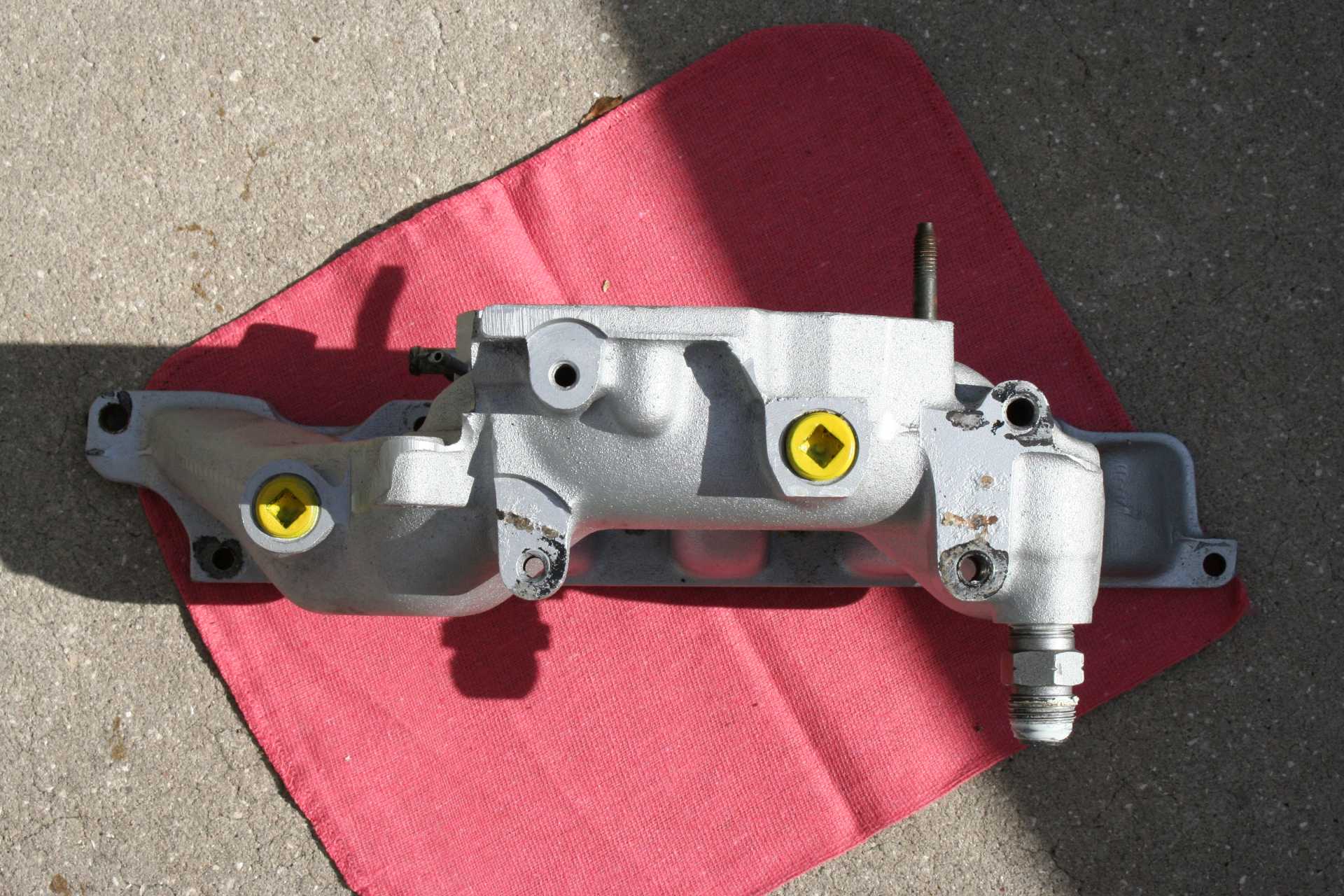
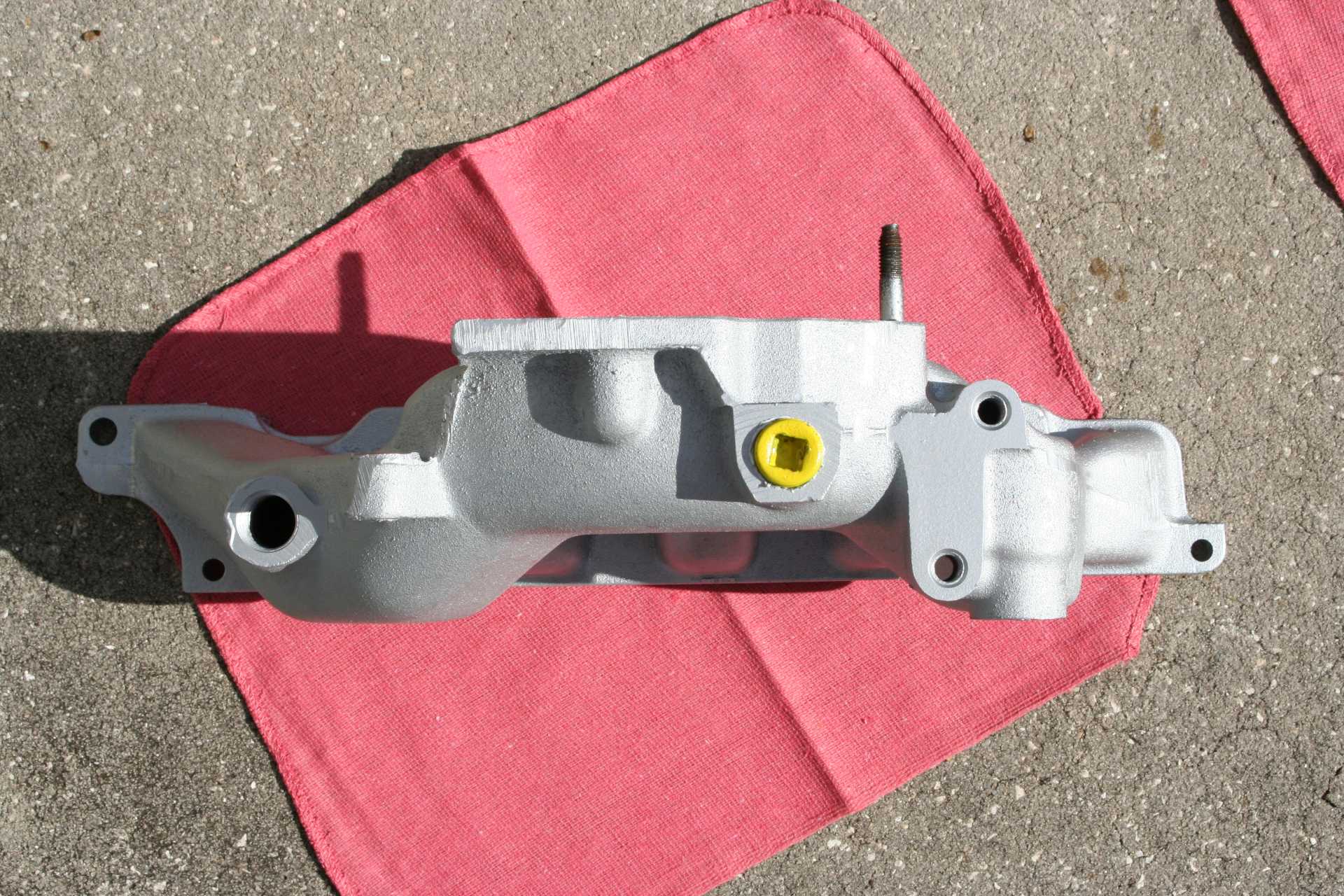
Bad news is that apparently my intake manifold is different from the one I took off the car! Haha... it looked identical, so I didn't think anything of it. The one I got back from the machine shop is "Revision B" ... which best I can figure, the only difference at all is that it's completely lacking two bolt holes meant for the cruise control cable mounting bracket.
Original:
New one from eBay:
I don't know if this is something that changed in 1986? Maybe the 1986 model doesn't require a big bracket, or maybe it was for cars that didn't have cruise? I don't knoow... but now I have to figure something out.
But... that won't stop us from being able to install it... so here are the two intakes side by side...
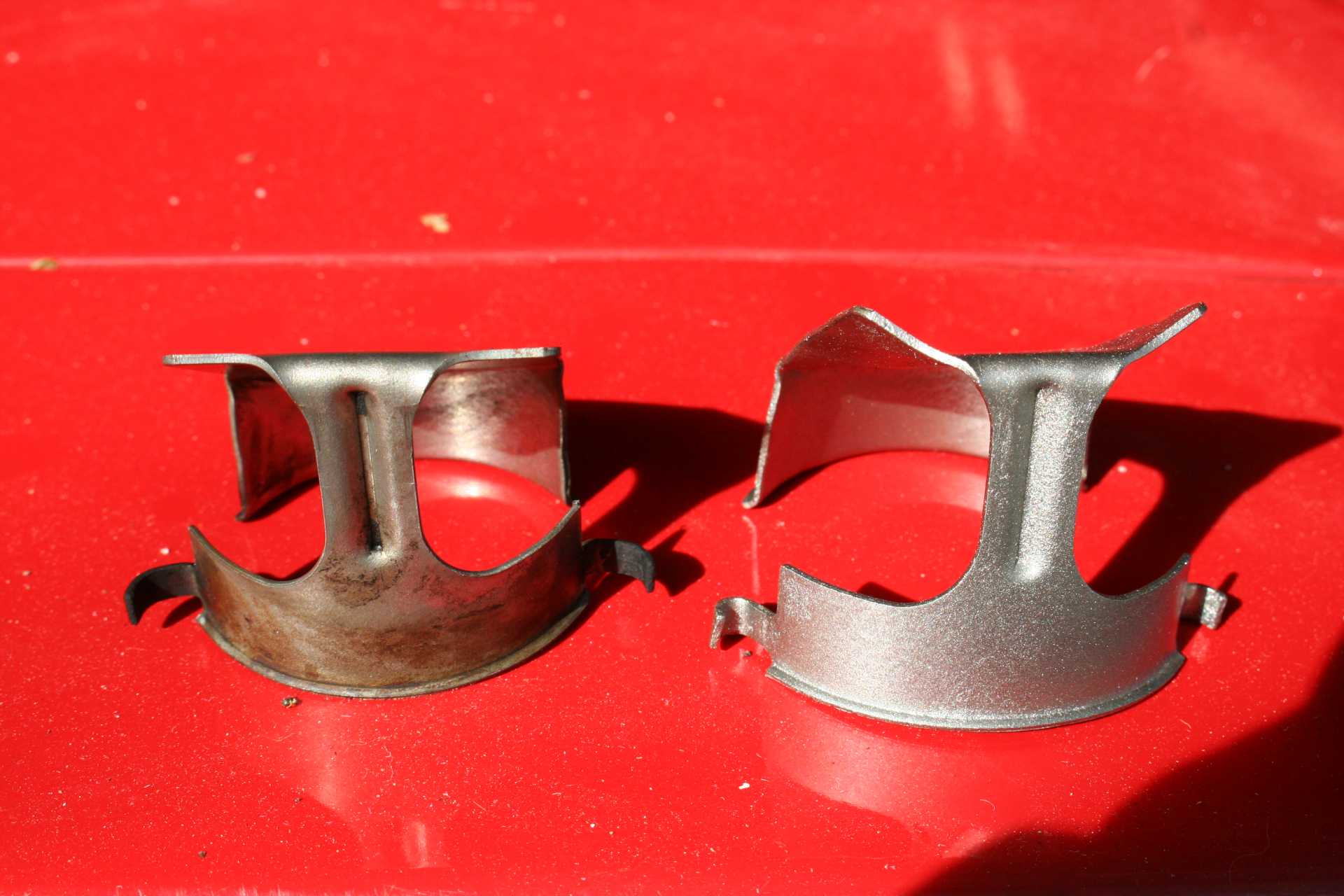
I also modified the fuel foil a little bit to allow for a bit more air flow. Several old threads and articles say you can increase horsepower (gains of ~2-3hp) by removing the air/fuel foil on a stock motor... but I think a lot of that had to do with the fact that while the stock intake bore size is 43mm, when you install the foil, the interior diameter ends up actually being more like 41mm. It would make sense that they put this on here to help "displace" the fuel evenly between all the intake ports... otherwise you're likely to get more in the center ports it would seem... so I decided to keep it... I just bent it a little bit to reduce obstruction as much as possible.