| | | quote | Originally posted by Signupacct:
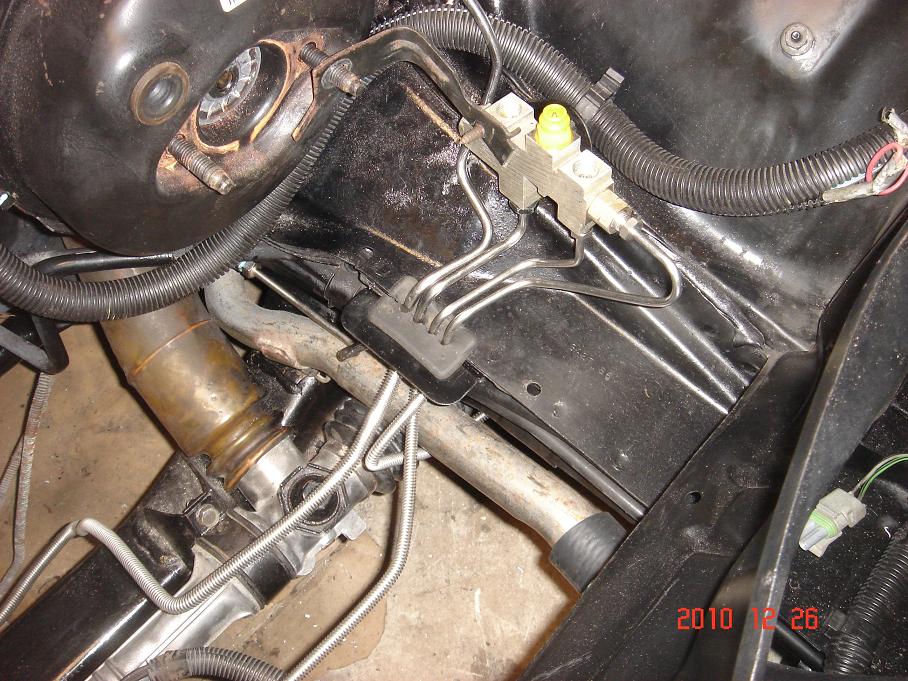
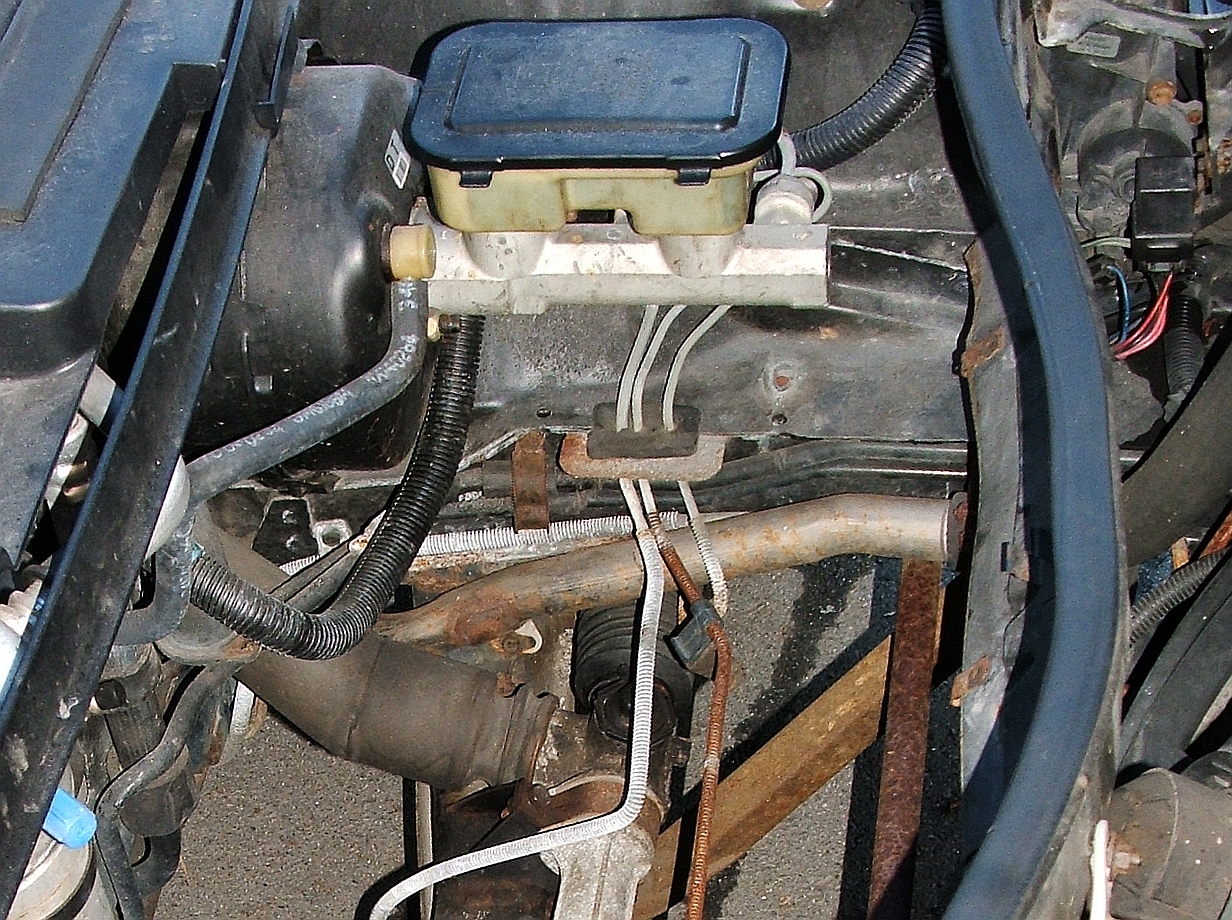
it appears the picture is a 88 and I have seen what appeared to be an 84 and the it appeared that the 84 went between the frame and the radiator pipe and then in this case in the 88 it looks like it goes around the pipe and the shape that I see in the above picture is consistent with the shape that I have here now and also what I have seen in the pics of lines for sale at the fiero store and the website inline brakes.
|
|
That is a 1987 Fiero SE / V6 with an automatic (was), not an 88. I know because it's a picture of my car:
https://www.pontiacperforma...7FieroSE_Brakes.htmlSo, that should be identical to yours... as a 1987 Fiero GT. They are stainless steel lines from the Fiero Store. When they ship them, there's a couple of points where they bend them, and you just have to bend them back to match. It's kind of a pain, but ideally you'll want to lay the old line down and match it up with the new line.
For the record, it was a lot of work to bend those hoses into place so that they fit like that. They are very high quality, but need a little finessing.
| | | quote | Originally posted by Signupacct:
I always want to go with the original configuration as often as possible unless there is a good reason to do otherwise. I wonder what would matter since the line is inches away from a radiator pipe, not ideal either way and possibly one more instance where they might have been in too much of a hurry to get this car out the door so to speak
can anyone think of a reason it would matter either way of going around the pipe or between the pipe and the frame ?
|
|
I'm the same way, and original configuration is really important to me (to an extent). In this case, I matched up the lines I took off (which were still good) with the new lines from the Fiero Store. That is my high school car, and I'll keep it for as long as I'm able to drive a car (which ideally is still another 40 years, but we'll see... haha). I made sure that everything came out as perfect as possible...
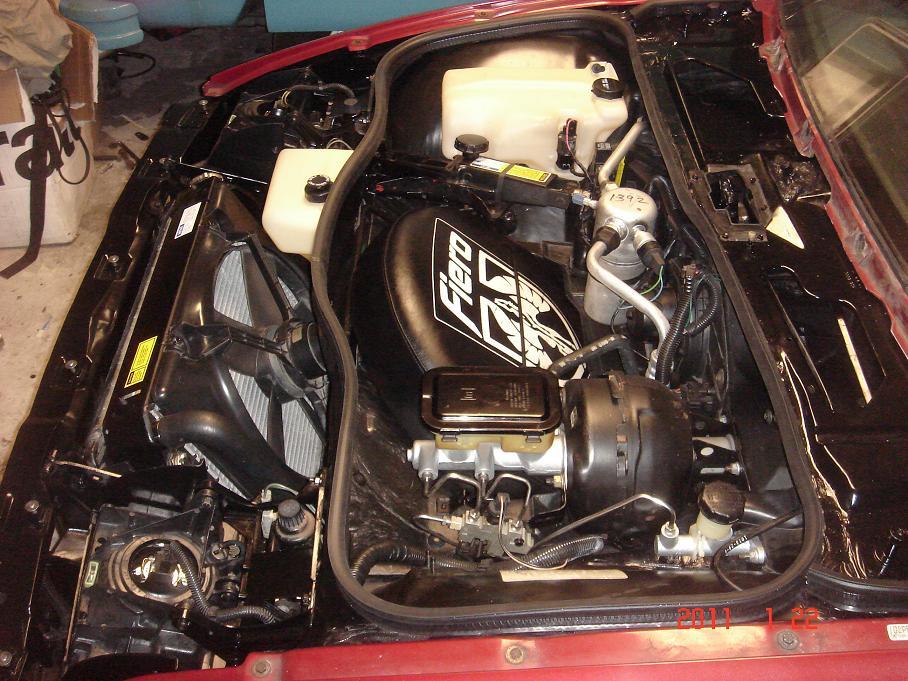
And if you notice the clutch master cyl, and say... "Hey, you said it was an automatic?" That's because I was in the process of converting it to a manual, and I also installed the
third pedal and a brand new
stainless steel clutch line in the factory location (using Harbor Freight isolator clips).
As for the routing... I have to think the reason they did this is so that, should you need to remove the drivers side cooling pipe, you can still do it without having to cut or dramatically remove anything. I remember that on our cars, there's one cooling pipe which doesn't come out as easily... but for both of them, you SHOULD be able to remove them without disassembling the cars.
| | | quote | Originally posted by Signupacct:
Before I move on with this I just thought to take a moment and wonder if it was and is a good idea to have the brake lines (three of them) so close to the radiator pipe.
This seems to not be such a good idea. The radiator pipe can get as hot as 225 F and that is a good chunk of the boiling point threshold for brake fluid 3.0 and 4.0 |
|
I definitely wouldn't worry about this. The brake (by the brakes) can get much hotter, and the cooling pipe on my car has never gotten to a temperature where I can't simply put my hand on it for a few seconds. We were just talking about this in another thread. The Fiero has 14+ quarts of coolant, and by the time it's going down that tube, it's already cooling down significantly, even before it gets to the radiator. The lines shouldn't be touching... you'll have to bend them a little bit (as I mentioned above). Again, if you still have the originals use those as a template. They should match.
[This message has been edited by 82-T/A [At Work] (edited 09-03-2024).]