
 
     |
| Added a few gadgets over the past few weeks (Page 1/2) |

|
CoolBlue87GT
|
NOV 04, 01:57 AM
|
|
|

|
Patrick
|
NOV 04, 03:18 PM
|
|
| quote | Originally posted by CoolBlue87GT:
First one is a soft start for the home AC. It took the starting Amps from 132 down to 24 starting amps. That's 108 less amps !
It starts the fan first, then starts the compressor. The starting sound used to be very loud, now it's very quite.
|
|
So it appears that the fan draws 24 amps when it starts. Just curious... what is the additional starting amp draw then when the compressor kicks in? 108? If so, is there actually any power saving?[This message has been edited by Patrick (edited 11-05-2025).]
|
|
|
|
CoolBlue87GT
|
NOV 04, 10:35 PM
|
|
| quote | Originally posted by Patrick:
So it appears that the fan draws 24 amps when it starts. Just curious... what is the additional starting amp draw then when the compressor kicks in? 108? If so, is there actually any power saving?
|
|
I believe the 24 amps (Last Start Peak amps) was both the fan & compressor. I don't see how the fan alone could pull that many amps, it's rated at 3.5 amps.
Follow are the rating w/o the soft start.
The fan FRA is 3.5 amps
Compressor RIA is 17.0 amps
Compressor LRA 123.9 amps
Your question about power savings, once the unit has started, the running amps are most likely the same. The "savings" most would say would come from making the unit last longer by not hitting it with the 123.9 start up amps.
I will talk with the tech support guy tomorrow and ask if the 24 amp reading includes the fan & compressor. Will update you later when I find out.[This message has been edited by CoolBlue87GT (edited 11-04-2025).]
|
|

|
Patrick
|
NOV 05, 12:29 AM
|
|
| quote | Originally posted by CoolBlue87GT:
I will talk with the tech support guy tomorrow and ask if the 24 amp reading includes the fan & compressor. Will update you later when I find out.
|
|
Thanks. Technically speaking, I'm just curious what the actual benefit of that device is. Yeah, see what the tech guy says.[This message has been edited by Patrick (edited 11-05-2025).]
|
|
|
|
CoolBlue87GT
|
NOV 05, 10:03 AM
|
|
Here what I found.
The soft start can make a compressor last longer by reducing the initial stress and electrical surges during startup. It does this by gradually increasing the power to the compressor instead of delivering a sudden, hard jolt of electricity, which minimizes wear and tear on the compressor and other components.
A 24-amp startup reading for a Trane AC compressor with a soft start added is likely normal and an expected outcome of using the device.
Soft starters are designed to significantly reduce the high inrush current (locked rotor amps, or LRA) that compressors typically draw on startup, which can often be 3 to 6 times their normal running load amps (RLA). The 24-amp reading indicates a successful reduction from a much higher potential LRA.
Here are some context points to consider:
Typical Reduction: Soft starters can reduce startup amperage by 55% to 75%. For example, one user reported their 4-ton unit's startup amps dropped from 76 amps to 24 amps after installing a soft start.
Running Amps: A typical central AC unit has running amps (RLA) between 15 to 45 amps, depending on its size (tonnage). A 24-amp startup reading is often close to or slightly above the unit's normal running amperage, which is the goal of a soft start.[This message has been edited by CoolBlue87GT (edited 11-05-2025).]
|
|
|
|
Patrick
|
NOV 05, 02:50 PM
|
|
| quote | Originally posted by CoolBlue87GT:
Here what I found...
|
|
Interesting. So there's a lot more to what this device does then than simply stagger when the fan and compressor come on.
I'm surprised that an electric motor will actually start rotating if its usual starting amp draw has been forcibly reduced. I would've thought it would just sit there and hum!
|
|
|
|
CoolBlue87GT
|
DEC 10, 12:11 AM
|
|
Had the the Generator input plug & breaker for the generator and the interlock kit to the panel installed today.
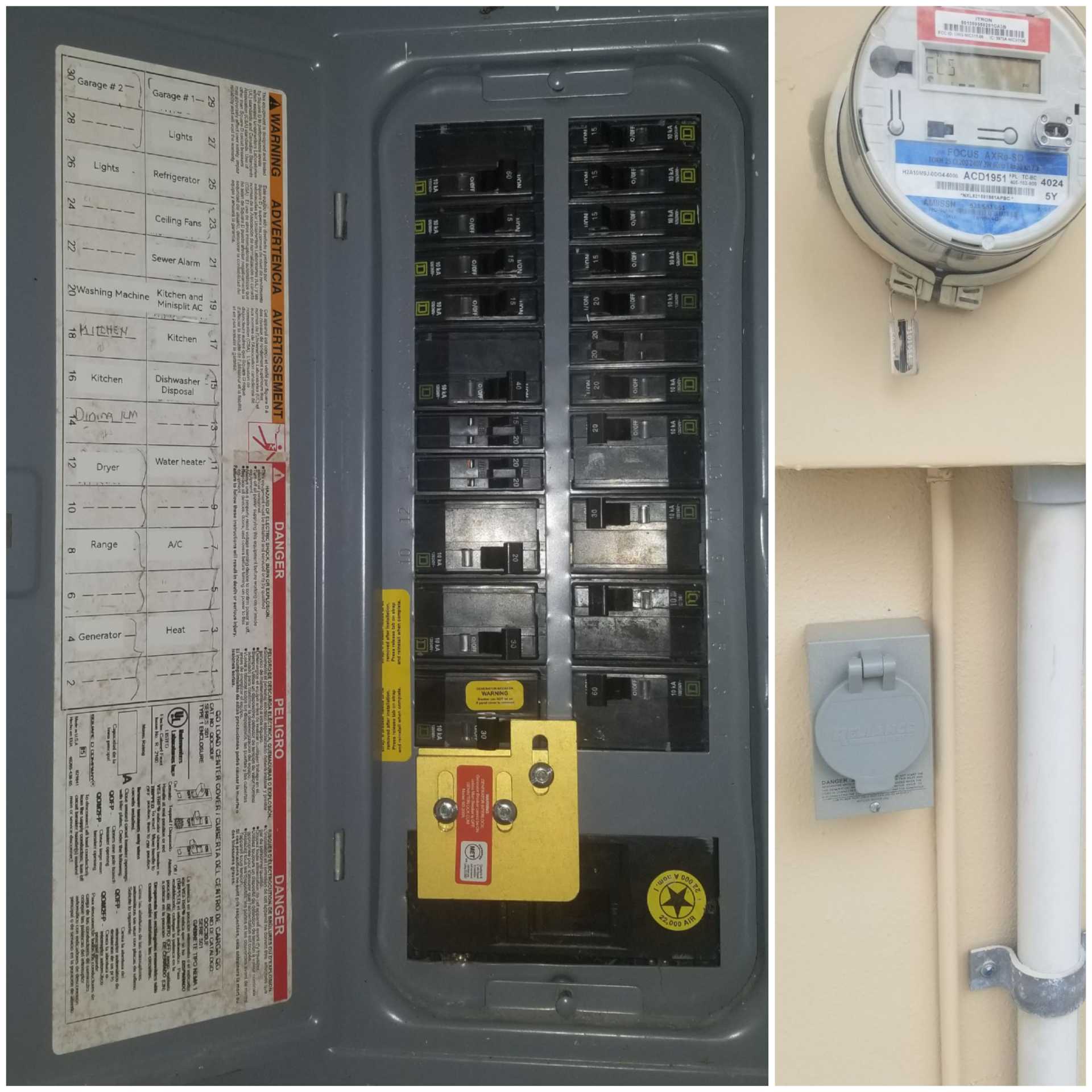
The outside socket is the gray box underneath the power meter.
Tested the hookup with the new generator, it worked great.
It ran the whole house, barely came off of idle. Turn AC on, it ramped up a bit, then settled down. The soft start worked great.
Runs very quite under the load. The installer did a great job.[This message has been edited by CoolBlue87GT (edited 12-10-2025).]
|
|
|
|
Raydar
|
DEC 10, 12:49 AM
|
|
My neighbor is a serious "jack of all trades" type. Used to do physical plant stuff (electrical, HVAC, plumbing, etc) for a large company.
He's been talking about the soft start devices, and has also given me some info regarding a generator transfer switch https://thegenerlink.com/ that can be installed in my meter base, so that I don't have to install a separate transfer switch and associated hardware.
Thanks for posting. That's a useful "nudge" for me to get off my azz... 
Our electrical service is not the most reliable. The typical point of failure for an outage for us will only take out about 50 customers. Not a big deal in the grand scheme of things.
Subliminal message... they're not in too much of a hurry, especially if there are larger "networks" out.
I get it. They have to pick the low hanging fruit, and get the largest number of people back online, ASAP. I use to work for the (different) power company. I know how it works.
Edit - My generator is also a Predator, of about the same capacity. But it's not the inverter type. Loud as hell, but cost half as much.
But then again, I'm out in the country, so the noise isn't really a big deal to anyone but me.[This message has been edited by Raydar (edited 12-10-2025).]
|
|
|
|
CoolBlue87GT
|
DEC 10, 02:09 AM
|
|
| quote | Originally posted by Raydar:
Generator transfer switch
Thanks for posting. That's a useful "nudge" for me to get off my azz...
|
|
Your welcome.
In my setup, I didn't need a Generator transfer switch.
The interlock kit, (the gold color metal plate) on the main panel box, prevents you from having the main power on & the input breaker on at the same time.
You slide the gold plate up, then shut the main breaker off, then you turn on the generator breaker on. This prevents back feeding to the grid.
Then plug in the generator to the new outside socket.
Easy peasy.
|
|
|
|
Raydar
|
DEC 10, 11:24 AM
|
|
| quote | Originally posted by CoolBlue87GT:
Your welcome.
In my setup, I didn't need a Generator transfer switch.
The interlock kit, (the gold color metal plate) on the main panel box, prevents you from having the main power on & the input breaker on at the same time.
You slide the gold plate up, then shut the main breaker off, then you turn on the generator breaker on. This prevents back feeding to the grid.
Then plug in the generator to the new outside socket.
Easy peasy. |
|
The Generlink system works in a similar manner. It installs between the meter and the meter base.
There is a socket on the bottom where a cable from a portable (I use the term loosely) generator can be plugged in.
I haven't read the description recently, but I believe that the presence of current on the generator port will cause the switch to transfer the load to the generator.
There is a fail safe built in to prevent back-feeding the incoming service drop. I'm sure it's just a big relay or contactor.
(Full disclosure... I have a cheater/suicide cord that I have used. Once. I don't like it, for several reasons, but it worked splendidly.
But I was absolutely certain to turn off the main service breaker before I did anything else. I used to work for the power company, so I get it.)[This message has been edited by Raydar (edited 12-10-2025).]
|
|
|
|


