
 
     |
| just out of curiosity, how much has the world's dependence on battery devices .... (Page 2/3) |

|
slicknick
|
FEB 01, 12:42 PM
|
|
Peak shaving is where it's going to be at in the next few years, and batteries are going to lead the way with smart metering and devices coming up next.
As much as everyone hates the bogeyman of smart meters and smart devices, communication with the grid to stagger usage and smooth out the load during a 24 hour period is where the grid will start to shine. You can't just shut down a coal burner, so might as well take advantage of what they're forced to generate.
Even something like staggering motor starts by a few cycles through communication could help to lessen energy usage.
They're already using Tesla powerwalls in, I think New Zeland, to cover high demand spikes and it's working out well for them.
In a home environment, with the right billing (they'll catch up to screwing you eventually) there's a lot of potential savings in pulling load off of something like a powerwall and recharging it at night during off-peak hours.
|
|

|
theogre
|
FEB 01, 02:47 PM
|
|
Most battery things have chargers that are unplugged when not needed. Or should be...
Even if plugging in 24/7 have negligible affect on main power grid to home even for 40v and larger systems. But you are pay for all chargers and other vampires pulling power.
Even before CFL and LED things saving power, all the chargers and a lot more never bother the Grid.
E-cars and other big amp draws is often a problem to many systems because many areas are made to handle standard/traditional loads for home use things. One guy getting a stick welder or big air compressor can cause problems in many neighborhoods. Having many E-cars wiring up to 240vac drawing 30a or more each can cause same problems.
Unlike home E-Stoves, E-furriness, Heatpumps and related... E-cars can draw 30+ amps Continuously and for Many Hours.
⚠️ If you use something big and lights blink or dim in your home and worse in other homes... the problems is much worse and often big headache to get whatever utility to fix it when bothers other homes feeding off one transformer. In you home you need to check everything for bad sockets and loose parts anywhere including the breaker/fuse box and even the meter mount box. The Power Co many have iffy connections to a shared transformer if other houses lights blink/dim too.
When/What people are worried about Grid problems, often they mean Power Factor is a problem whether or not they know that right now...
In Super Short.... AC Amps and AC Volts should be on same curve at same time but does not happen when you have Inductive loads, Capacitive loads or both. So AC Amps Lags or Leads AC Volts. PF is a term for this "problem." A "Standard" Light Bulb or other Resistive loads are have PF = 1. Most others are < 1 to near 0 unless a devise uses some type of PFC.
Larger plug-in things like refrigeration or AC of any type, air compressors, and water pumps never had PFC and most still don't.
⚠️ Warning: Ignore  claiming you "Power Factor Correction" at home and most other places. Plug-in or wired to breaker box does not correct PF in a building and often eats more power. If a device uses PFC, is build into them to match the error in them. Example: Most "Desktop" PC built in last 15+ years have PFC in the PSU. claiming you "Power Factor Correction" at home and most other places. Plug-in or wired to breaker box does not correct PF in a building and often eats more power. If a device uses PFC, is build into them to match the error in them. Example: Most "Desktop" PC built in last 15+ years have PFC in the PSU.
Many small chargers, LED "light bulbs," and more have nothing for PFC and most have very poor PF. For proof need to buy Kill-a-watt or something like that.
But at Home and More you are Not Paying for this problem and the Grid doesn't care about your crap PF at home most times.
Only some Large to Huge businesses need to worry about PF that affects Power Billing because using huge electric motors and more. And they need more then capacitors at the service entrance.------------------
Dr. Ian Malcolm: Yeah, but your scientists were so preoccupied with whether or not they could, they didn't stop to think if they should.
(Jurassic Park)
The Ogre's Fiero Cave
|
|
|
|
theogre
|
FEB 01, 07:00 PM
|
|
| quote | Originally posted by maryjane:
Your thoughts on this?
(granted, the article IS 9 years old)
Which uses more electricity: the iPhone in your pocket, or the refrigerator humming in your kitchen? Hard as it might be to believe, the answer is probably the iPhone. As you can read in a post on a new report by Mark Mills — the CEO of the Digital Power Group, a tech- and investment-advisory firm — a medium-size refrigerator that qualifies for the Environmental Protection Agency’s Energy Star rating will use about 322 kW-h a year. The average iPhone, according to Mills’ calculations, uses about 361 kW-h a year once the wireless connections, data usage and battery charging are tallied up. And the iPhone — even the latest iteration — doesn’t even keep your beer cold. (Hat tip to the Breakthrough Institute for noting the report first.)
https://science.time.com/20...ergy-than-you-think/ |
|
Is likely still true. Maybe more when you count Many OE or Aftermarket chargers that are very inefficient and poor PF too.
Many Laptops and Tablets still have crap "wall warts" that generate a lot of heat too as computer is running or just charging the battery.[This message has been edited by theogre (edited 02-01-2022).]
|
|
|
|
kslish
|
FEB 01, 08:29 PM
|
|
Elon Musk states that the world's power generation would have to double to support everyone driving electric cars, and this is coming from a guy that wants to sell a lot more electric cars.
|
|
|
|
theogre
|
FEB 01, 08:29 PM
|
|
| quote | Originally posted by 82-T/A [At Work]:
Our existing power consumption... at least my uneducated thoughts on this, is that our power grid is developed primarily to support industry and commerce during the day. E.g., solar panels provide a lot of power to supplement the power being used during the day by big businesses with increased HVAC use, etc. With nearly 20% of Americans working from home now, and people switching to electric vehicles... the solar model that many power companies have been adopting may not be the right approach as we shift to more power being used from say, 5:00 to 10:00 PM?
Curious... |
|
Main Grid and Sub Feeds to Large to Huge factories etc is often Far Different then power feeds servicing many to most homes...
Big Commercial power setup is often 3 phase and many voltages and larger transformers on the property or very near by w/ 13500vac or high feeding them.
Example: A Mall or other shopping center often have 3 phase in to them then each store have own 240/120 transformer(s). Or small stores can share 1 small transformer. While Anchor Stores have 3 phase and things lile elevators to use it and 240/120 to run other things.
Home and other smaller Commercial users often share 1 transformer output only 240 and 120vac depending how the devices are wired.
In my area most houses have Gas stoves etc and 1 transformer feeds many houses.
In other place I lived, about same size transformer share between 6-8 town/row houses because all where total electric.
If you have more and more E-cars sucking 30+ amps each for many Hours to complete Days on this... You can and often will have problems no matter has local Solar and "power wall" hype products.
|
|
|
|
maryjane
|
FEB 01, 09:38 PM
|
|
|
I've not noticed anywhere here that each residence didn't have it's own transformer. Even my son's home in subdivision, each house (1/10 acre lot) has it's own transformer in it's own backyard. Subdivision is less than 3 years old.
|
|
|
|
theogre
|
FEB 02, 02:50 AM
|
|
| quote | Originally posted by maryjane:
I've not noticed anywhere here that each residence didn't have it's own transformer. Even my son's home in subdivision, each house (1/10 acre lot) has it's own transformer in it's own backyard. Subdivision is less than 3 years old. |
|
Go go most cities and a lot more is built as stated above.
Many times it depends on density and policy from whatever power co. or local gov.
Sometimes a developer build a local setup in a given area and maybe better then required by either.
In "rural" areas is simply too far to share transformer between homes in one case yet next spot can have 2 or more sharing.
But If a house had "own" T-former for decades past but gets 1 or more new houses close to it then now often sharing same unit.
In those areas, high power 3-phase service is often impossible to get and why can't build big commercial projects unless willing to spent out the ass to built miles of power lines. Even then maybe impossible unless very close to "High tension" lines where could build new sub station.
Follow rt 12 in NY from Binghamton to north and look at where nearly all big things are. Once you go a few miles east or west of most towns is very little power hungry places.
Greene has Raymond factory and other thing in town and near nothing but homes and small business east and west because can't get power for much else.
You can repeat the same in thousands of places in all of east coast states alone.
Adding solar and wind in these areas often have problems because the Grid there can't handle much added power.
"Power Wall" hype putting power to the Grid won't help for same reason.
"Power Wall" for 1 house might help running lights and other low power things and yet find Electric Heating used that up fast. Having to charge E-cars off of "power walls" eat them too. Worse if the "power wall" or other storage has to make AC so Charger then make whatever to charge the car. Every time you convert to X you waste power. Best T-formers, inverters and Switching PSU still generates a lot of Heat and Batteries generate heat to store and discharge. If batteries get too hot or cold they loose power or shutdown completely.
|
|
|
|
maryjane
|
FEB 02, 03:47 AM
|
|
| quote | Originally posted by theogre:
[QUOTE]Originally posted by maryjane:
I've not noticed anywhere here that each residence didn't have it's own transformer. Even my son's home in subdivision, each house (1/10 acre lot) has it's own transformer in it's own backyard. Subdivision is less than 3 years old. |
|
Go go most cities and a lot more is built as stated above.
Many times it depends on density and policy from whatever power co. or local gov.
Sometimes a developer build a local setup in a given area and maybe better then required by either.
In "rural" areas is simply too far to share transformer between homes in one case yet next spot can have 2 or more sharing.
But If a house had "own" T-former for decades past but gets 1 or more new houses close to it then now often sharing same unit.
.[/QUOTE]
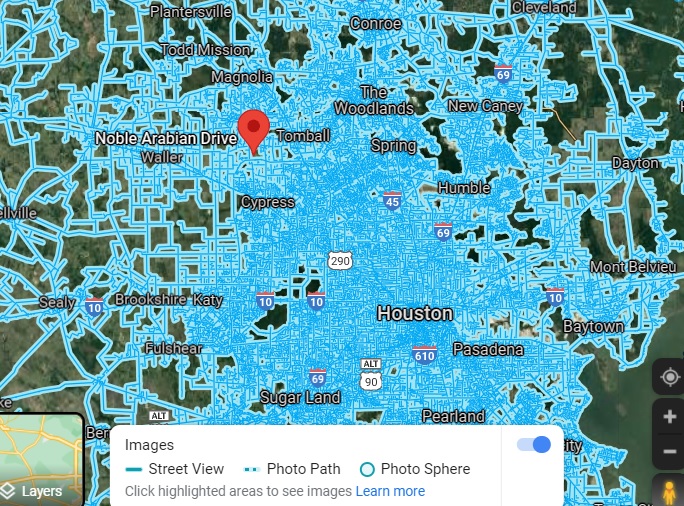
Maybe I'm way out in left field here, but I think where he lives, (in the 4th most populated metro area in the USA) qualifies as a city.
Every yard in his subdivision has it's own transformer in the back or side yard (not that I would call those little patches of grass a 'yard')
|
|
|
|
82-T/A [At Work]
|
FEB 02, 08:44 AM
|
|
| quote | Originally posted by maryjane:
I've not noticed anywhere here that each residence didn't have it's own transformer. Even my son's home in subdivision, each house (1/10 acre lot) has it's own transformer in it's own backyard. Subdivision is less than 3 years old. |
|
That's pretty wild... by transformer, you mean that large green box that sits on a concrete pad?
My home in San Antonio had one in the back yard. I cleared all the brush out from around it. None of my immediately neighbors had one, so it probably fed at least 5-6 homes I would think. When the HVAC (13 SEER Trane) would cycle on, the lights would dim for a quick second. It was the original panel from 1983.
|
|
|
|
maryjane
|
FEB 02, 08:49 AM
|
|
| quote | Originally posted by 82-T/A [At Work]:
That's pretty wild... by transformer, you mean that large green box that sits on a concrete pad?
|
|
It's not terribly large. About the size of a large window air conditioner. All the electric lines in that subdivision are underground.
|
|
|
|