
 
     |
| An American 2nd Amendment thread (Page 10/23) |

|
2.5
|
NOV 15, 12:41 PM
|
|
Yep, and looking back at our freedoms, folks used to be able to buy fully automatic machine guns from a catalog. Now here even just suppressors, used to reduce the need for hearing protection, require you be on an NFA list and a 200 tax.
Sounds like liberal leaders desire for that to be the case for any gun that isn't manual loading for each shot. Meaning anything semi auto. On top of that limiting magazine capacities. Step one is go after the scary looking black rifles, the best selling most populer rifles in the USA. Meanwhile in Norway you can still buy suppressors at the hardware store.
...And meanwhile in the US, criminals still dont follow laws or regulations, so adding more aren't making a difference.
From the 5 min mark
The National Shooting Sports Foundation talks about Biden's plans for gun owners.
https://www.youtube.com/watch?v=Wa3Uno0a7ok
Reclassifying firearms, undermining the industry by allowing lawsuits against manufacturers, and using tax money to pressure states against gun owners.[This message has been edited by 2.5 (edited 11-15-2020).]
|
|
|
|
Monkeyman
|
NOV 15, 01:02 PM
|
|
|
All of my guns fell in the lake (the deep part) when I was out fishing the other day. Bummer, eh?
|
|
|
|
2.5
|
NOV 20, 01:45 PM
|
|
|
|
|
maryjane
|
NOV 20, 04:42 PM
|
|
All the girls in my family know their way around firearms.
Sis-n-law with her 243, moved up to a 300 mag later.
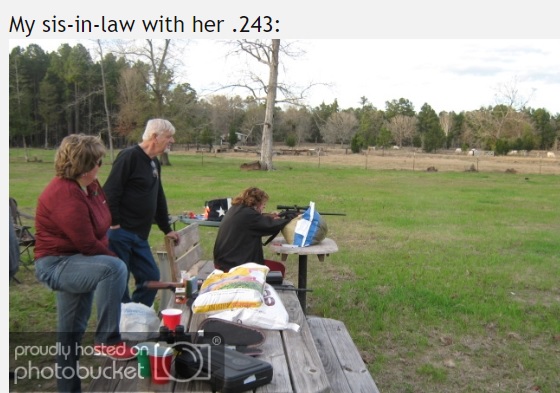
2 of my nieces waiting for 'the 200 yard boys' to get thru so they can move up closer to the targets with their handguns. all 3 nieces have concealed carry.

my wife on the end with another PFFer's 300 blackout.

Both my older sisters have their CC.

|
|
|
|
2.5
|
NOV 23, 09:21 AM
|
|
Glad to hear your family is good to go.
Though I gotta say I was expecting it. 
|
|
|
|
2.5
|
NOV 23, 09:25 AM
|
|
|
|
|
Hudini
|
DEC 01, 08:39 PM
|
|
|
|
|
Monkeyman
|
DEC 01, 09:53 PM
|
|
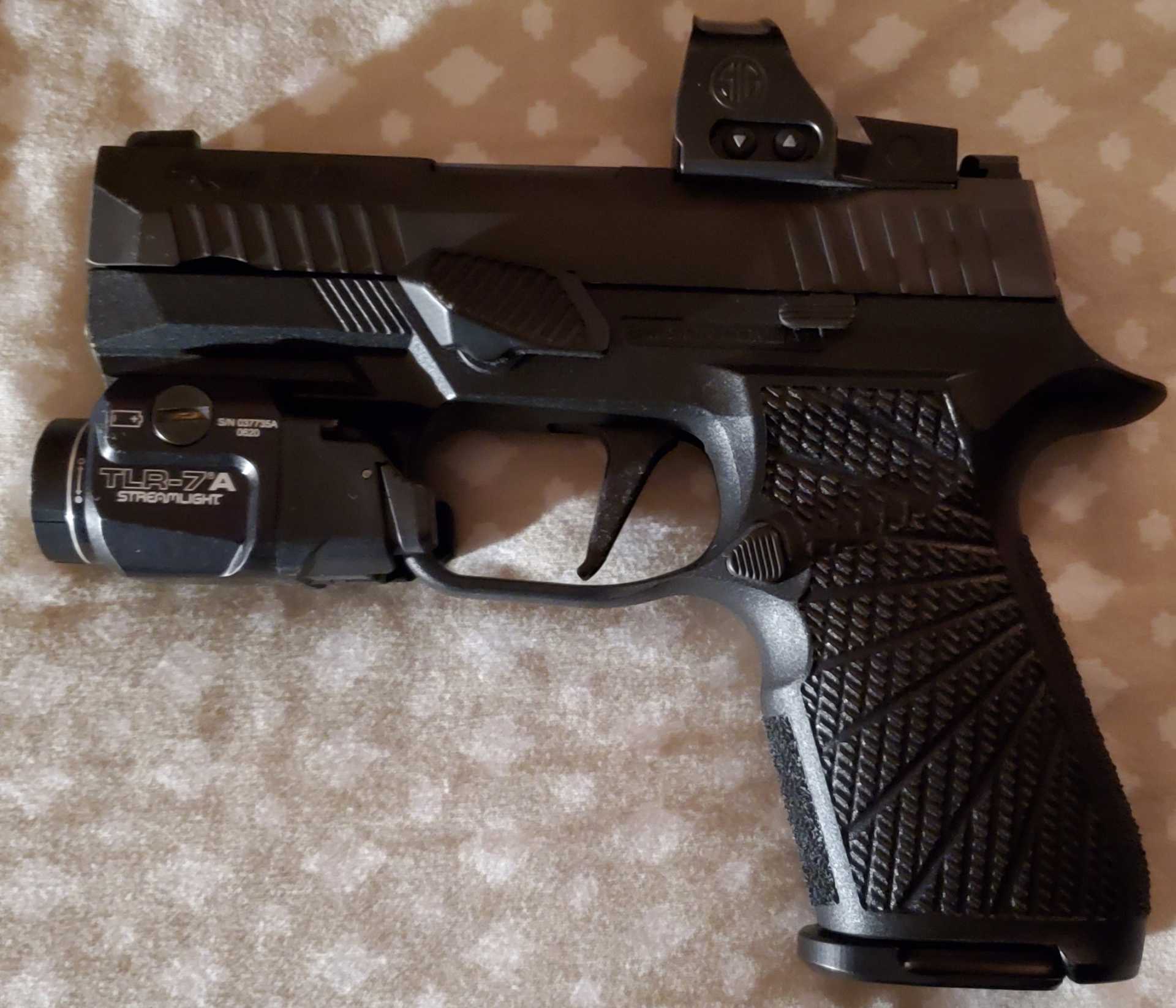
That's funny, Hudini, but sometimes too accurate. I'm all for some modifications but I've seen way too many weapons (pistols and AR types alike) that have more weight in mods than in the stock weapon. I EDC a SIG X Compact. The only "stock" part is the FCU (Fire Control Unit...the only serialized part on the pistol making it the actual pistol....love modularity). Everything else is aftermarket or at least not native to an X Compact. Wilson Combat grip module, Streamlight TLR-7a weapons light, Barsto bull barrel (which is completely unnecessary but it was on sale), Gogun gas pedal, etc. The RDO is a genuine SIG Romeo 1 Pro (although I didn't buy it from SIG) and the slide is a genuine SIG Pro slide. But.....EVERYTHING on the gun is fully functional. It's not Gucci'ed out like so many. If it doesn't enhance the functioning, I don't need it.
(Just so everyone knows, just after I took this pic, this pistol fell in the lake, too. In the deep part.)
|
|
|
|
randye
|
DEC 01, 09:55 PM
|
|
| quote | Originally posted by Hudini:
 |
|
You can't be "tacticool" without all the junk glommed onto your weapon.......(photoshop makes the point nicely)
The house keys on the bottom of the handgrip are a nice touch.[This message has been edited by randye (edited 12-01-2020).]
|
|
|
|
2.5
|
DEC 10, 02:28 PM
|
|
Cancel culture never sleeps.
...
...
"In late November, the Trump administration took its firmest action yet to counteract ongoing banking discrimination against firearms-related companies
...
The proposed OCC rule aims to end politically-motivated manipulation of the financial service industry and to require large banks to provide fair access to all the products they offer to law-abiding customers who are able to satisfy predetermined “quantitative, impartial risk-based standards.” It reiterates that the Dodd-Frank Wall Street Reform and Consumer Protection Act requires “fair treatment of customers by . . . the institutions” subject to its jurisdiction. The rule would therefore establish enforceable standards of fairness for America’s largest banks. Those standards would prevent activists and banks from conspiring to deprive otherwise eligible customers of financial services for purely political reasons.
...
The Office of the Comptroller of the Currency, a significant banking regulator, issued a proposed rule to prohibit politically-motivated service denials and to ensure large, nationwide banks would have to make offered products available to all law-abiding customers without ideological bias.
Of all the Obama/Biden administration’s attacks on the Second Amendment, Operation Choke Point (OCP) was one of the most insidious. Frequent readers of this page will recall how federal banking regulators, under the guise of shielding banks and the public from fraud, pressured financial service providers against doing business with lawful but politically-disfavored customers. These included sellers of firearms and ammunition, which were specifically singled out as “high risk” by the Federal Deposit Insurance Corporation in regulatory guidance provided to banks in 2011.
What made these firearm-related businesses high risk? In the circular reasoning of OCP, it wasn’t their creditworthiness or financial performance but the “reputation risk” they supposedly posed to banks that, so the story went, could anger third parties by serving the “high risk” clients. And the regulators made sure the banks understood that no one might be angrier than the regulators themselves: failing to heed their “risk-based” guidance could subject the banks to costly and embarrassing investigations. The simple solution was for the banks to avoid conducting business with “high risk” customers entirely.
The Obama/Biden administration retreated from OCP when Congressional investigators and other watchdogs revealed its obvious wrongdoing. The FDIC revised its infamous 2011 regulatory guidance in 2014, and issued further clarification in 2015, refocusing on case-by-case risk management, rather than debanking of entire industries. Nevertheless, the regulators portrayed the furvor over OCP as a big misunderstanding, with banks supposedly overreacting to legitimate attempts to hinder scammers.
Subsequent events, however, confirmed that political activists were indeed deliberately trying to weaponize the financial services industry against the targets of their activism.
On February 18, 2018, the New York Times published an infamous essay by Andrew Ross Sorkin that called upon the financial services industry to adopt restrictions on relationships with gun companies to demonstrate its commitment to “moral responsibility.” The plan was for banks and payment processors to defund activities – like the making and sales of semiautomatic rifles – that anti-gun activists had unsuccessfully lobbied the political branches to ban.
Sorkin’s proposal, like OCP, recognized that financial services are the lifeblood of any successful business. But the pressure this time was to come from the social justice mob, not faceless government bureaucrats. The new OCC rulemaking actually cites Sorkin’s article as an example of how politics have infected the provision of financial services.
Even some in the government itself have retroactively embraced the tactics of OCP. After anti-gun Democrats took over control of the House Financial Services Committee following the 2018 midterms, the committee hauled a Wells Fargo Bank executive to a hearing to berate him for, among other things, the bank’s transactions with gun companies.
Other banks, Rep. Carolyn D. Maloney (D-NY) lectured, had forced their firearm-related customers to adopt “best practices” that limited the scope of their lawful activities. These practices just happened to mirror unsuccessful legislative proposals pushed by anti-gun Democrats, that included such constitutionally dubious measures as refusing to sell otherwise-legal long guns to otherwise-eligible adults of military age. To his credit, the executive stood his ground, asserting, “We just don’t believe that it is a good idea to encourage banks to enforce legislation that doesn’t exist.”
The tenor of the hearing, however, made it unmistakably clear that certain committee members were unabashedly trying to pressure the bank to curb its business with certain customers, not because those customers were behaving illegally, but because the committee members found them objectionable.
All the while, firearm-related businesses were finding their options for financial services shrinking.
...
For its part, the Trump administration explicitly repudiated OCP, with the U.S. Department of Justice (which had participated in OCP under the Obama/Biden administration) providing written assurance to the U.S. House Judiciary Committee that the program had been terminated and would not be revived. Characterizing OCP as a “misguided initiative conducted during the previous administration,” the DOJ’s Aug. 16, 2017, letter stated:
“the Department will not discourage the provision of financial services to lawful industries, including businesses engaged in … firearms-related activities.”
Still, whether from lingering doubts left by OCP or in the vain hope of appeasing the social justice grievance lobby, some of America’s biggest banks have continued to shun lawful, creditworthy, and financially sound businesses within the firearm and ammunition sectors.
...
We also thank the Trump Administration and Acting Comptroller of the Currency Brian P. Brooks for their leadership in seeking to restore fairness and sanity to the nationwide market for financial products. Ideological discrimination in the services businesses need to survive is a shameful, pernicious, and thoroughly un-American trend. The proposed OCC rule is a welcomed step toward eliminating it."
.
https://www.ammoland.com/20...383899#axzz6gFaqqpLd
|
|
|
|