
 
     |
| So my Fiero died... (Page 9/12) |

|
Patrick
|
AUG 19, 05:25 PM
|
|
| quote | Originally posted by Cliff Pennock:
...oddly enough the radiator fan was on, even though the gauge showed such a low temperature.
...there's a huge difference between the sensors for the temperature gauge and the radiator fan.
|
|
The fan switch is located at the thermostat end of the intake, and the temp sender is at the opposite end of the motor in the rear head. Since both the temp sender and the fan switch get their readings from being immersed in coolant, it would seem the only explanation is that there is a difference in coolant temperature between the two locations. However, it's difficult to imagine that there could be such a difference in the coolant temperature itself within the engine. Is it possible then that travelling air pockets/bubbles are responsible due to them passing by the temp sender or fan switch and temporarily throwing off the readings? 
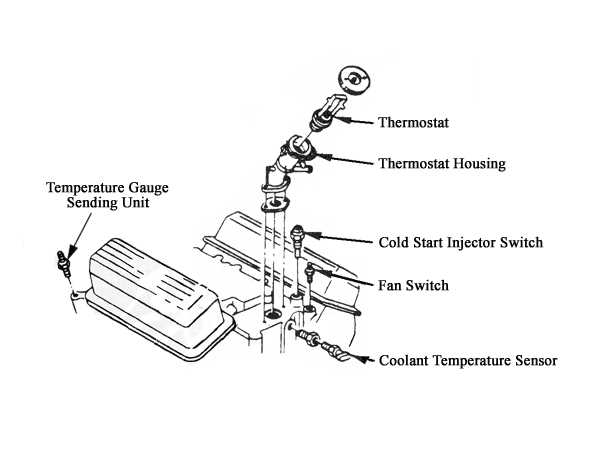
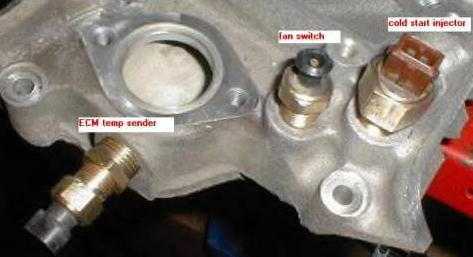
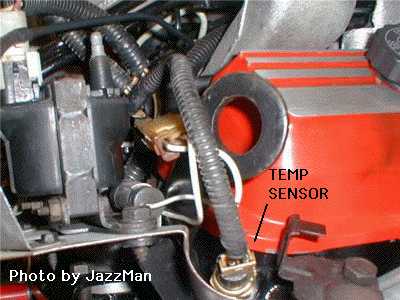
|
|

|
XxdjxX89
|
AUG 19, 06:15 PM
|
|
|
Cliff sorry I’m late to this thread , if I wasn’t late parts stores do carry adapters for male to female , for transmission lines but I see you already cut them to run rubber hose which is fine ,,, the radiator fan ,, I’d do Kyle fan mod , I did it on my car and man huge improvement, also I recommend Rodney’s 190 fan switch and 180 thermostat
|
|
|
|
Cliff Pennock
|
AUG 19, 07:15 PM
|
|
| quote | Originally posted by Patrick:
The fan switch is located at the thermostat end of the intake, and the temp sender is at the opposite end of the motor in the rear head. |
|
I'm starting to think that the temperature gauge sending unit might be faulty. I think the fan switch is working correctly because it doesn't turn on during very short trips, even if my temperature gauge shows that my engine is overheating. When I ignore what the temperature gauge is showing, the cooling fan turns on and off at the times I expect it to. However, the temperature gauge is acting highly erratic.
Furthermore, after driving for a long 1.5-hour trip on the highway and then driving at a slower speed of 30mph for 15 minutes, it doesn't make sense that the temperature gauge shows a reading of 135°F while the radiator fan is running. The radiator fan running is expected, but an engine temperature of 135°F is not. Even if there was a trapped air bubble at the temperature gauge sending unit, the air temperature there should be near the temperature needed to trigger the fan switch.
So, my plan is to first replace the temperature gauge sending unit before I go any further in trying to figure out this issue.
|
|
|
|
Cliff Pennock
|
AUG 19, 07:20 PM
|
|
Oh, one more thing I would like to mention:
I've read in several threads now that the way people check if the waterpump is working, is by removing the tstat housing cap, as well as the thermostat, then start the engine. And that you should see a steady flow of coolant running.
If I do that (with a cold engine), it's more like a fountain. Coolant sprays out with brute force.
|
|
|
|
Patrick
|
AUG 19, 07:58 PM
|
|
| quote | Originally posted by Cliff Pennock:
I've read in several threads now that the way people check if the waterpump is working, is by removing the tstat housing cap, as well as the thermostat, then start the engine. And that you should see a steady flow of coolant running.
|
|
With a conventional engine setup (where the radiator cap is the high point of the system), removing the rad cap would allow the observation of coolant flowing in the radiator... but I kind of doubt that removing the thermostat cap and thermostat would allow a similar view of gently flowing coolant... unless perhaps the coolant level was low enough to easily allow coolant flow into that large hose at the housing?
|
|

|
theogre
|
AUG 19, 09:32 PM
|
|
Cannot Trust Dash Gauges/Meters!
They Lie and often for just wire from X meter to Y sender even when both work then add often have iffy power and grounds.
Just 1 Example: https://www.fiero.nl/forum/Forum2/HTML/146784.html
Get a ECM scanner or maybe other methods to watch engine temp.
Note: IR tools including "FLIR" cameras are not very good for this problem.
K type thermal couple or 100KΩ thermistor attach to T-stat tube base maybe read this accurately enough.
|
|
|
|
Cliff Pennock
|
AUG 20, 03:36 AM
|
|
| quote | Originally posted by theogre:
Cannot Trust Dash Gauges/Meters!
They Lie and often for just wire from X meter to Y sender even when both work then add often have iffy power and grounds. |
|
A few months ago, I replaced the dash and that didn't make a difference. So I know at least the problem is not in there.
|
|
|
|
sdgdf
|
AUG 20, 02:21 PM
|
|
| quote | Originally posted by Cliff Pennock:
I'm starting to think that the temperature gauge sending unit might be faulty. I think the fan switch is working correctly because it doesn't turn on during very short trips, even if my temperature gauge shows that my engine is overheating. When I ignore what the temperature gauge is showing, the cooling fan turns on and off at the times I expect it to. However, the temperature gauge is acting highly erratic.
Furthermore, after driving for a long 1.5-hour trip on the highway and then driving at a slower speed of 30mph for 15 minutes, it doesn't make sense that the temperature gauge shows a reading of 135°F while the radiator fan is running. The radiator fan running is expected, but an engine temperature of 135°F is not. Even if there was a trapped air bubble at the temperature gauge sending unit, the air temperature there should be near the temperature needed to trigger the fan switch.
So, my plan is to first replace the temperature gauge sending unit before I go any further in trying to figure out this issue. |
|
If it really does go up into and beyond the red on the gauge you'd have the coolant reservoir erupting and spewing coolant everywhere. I wouldn't trust the gauge at all. Drive it like you don't have a temp gauge. Its not the end of the world if you overheat it. The iron head/iron block 2.8 doesn't blow headgaskets easily, though you could be unlucky. On an old Fiero I had, the waterpump failed and I had it overheat 4-5 times spewing out the reservoir and it was fine for years after I replaced the pump.
If your gauge IS accurate I'd say its reading air pockets/steam that passes through the system. You can only bleed it so much and hope for the best. These systems generally bleed themselves out given enough time.
I'd still track down what's bad between the sensor, wiring, and gauge. Maybe wire up an aftermarket gauge and see what it does? Not sure if I read that you did that, the story of this has spanned a few threads at this point.
|
|
|
|
sleek fiero
|
AUG 20, 03:27 PM
|
|
|
Hi Cliff. If you can borrow a radiator test pump/pressure gauge and pressure the system with it to 10 psi and watch the gauge for a couple of minutes. If it doesn't drop then start the engine and let it idle. If the pressure slowly climbs it is probably ok. If it starts climbing rapidly then you may have a problem that will hurt your engine and definitely further checks will be necessary. Your engine should never spew coolant out the thermostat hosing with the thermostat removed. It should just circulate as the water pump pulls in as much as it discharges. sleek
|
|
|
|
sleek fiero
|
AUG 20, 03:35 PM
|
|
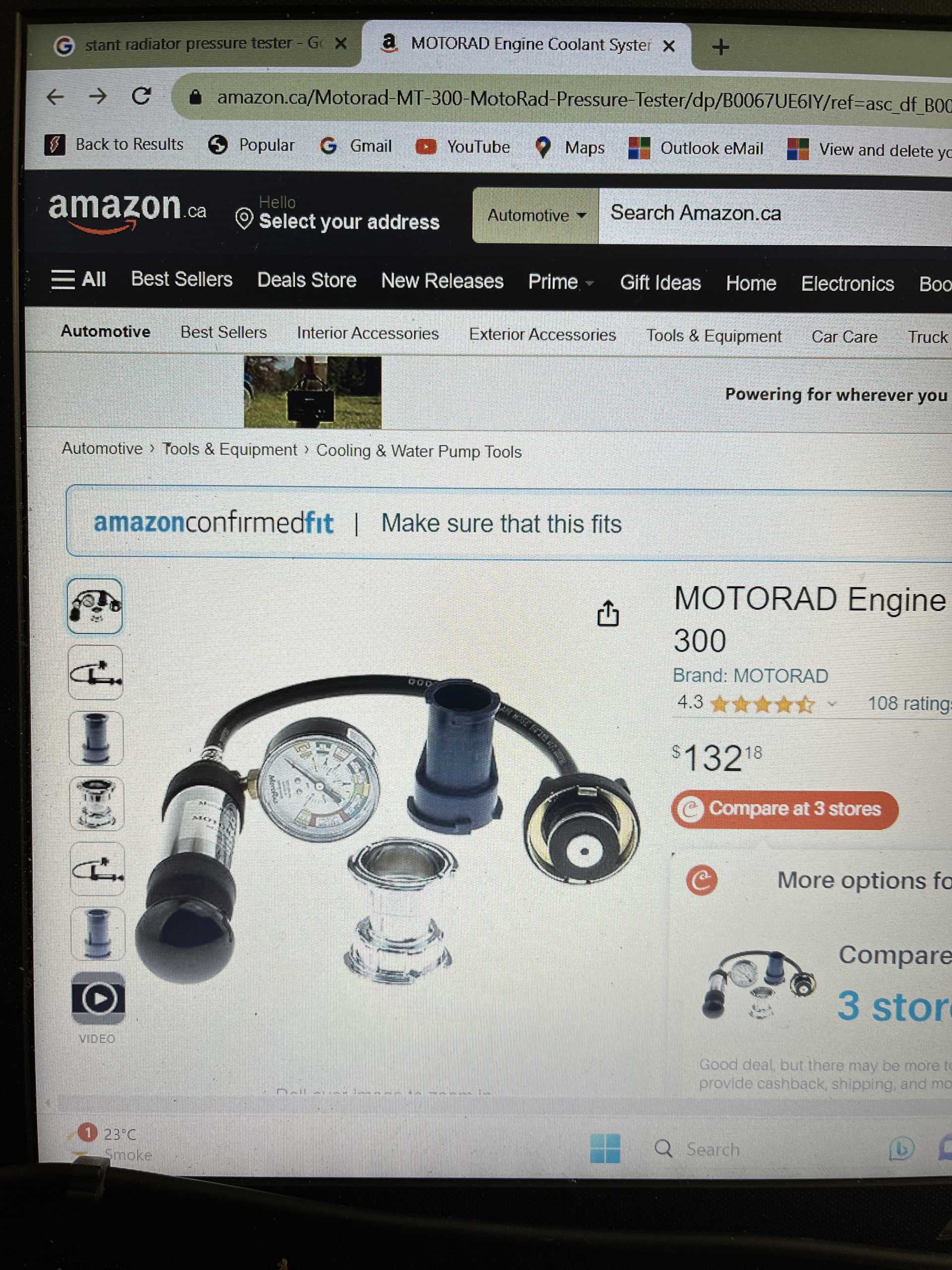
this is what you need Cliff
|
|
|
|