 
     |
| Bringing a 88 Fiero Back to Life with a LFX Swap (Page 11/15) |

|
zkhennings
|
FEB 01, 03:17 PM
|
|
| quote | Originally posted by MikesFirstFiero:
Spraying acetone does work mostly. But for color & clear you will want the gun to be completely clean. I'd take the gun apart after every use and clean everything.
|
|
I take it fully apart to clean it every time, I was just saying shooting some acetone out of it does the majority of the work beforehand and stops the paint from drying as fast to give you a little time before it hardens fully in the gun.
|
|
|
|
MikesFirstFiero
|
FEB 01, 07:41 PM
|
|
|
|
|
MikesFirstFiero
|
FEB 17, 01:31 AM
|
|
Finally I may have a real reason for the misfire at high RPMs, fuel mixture too lean at high power. I thought about the fact that the LFX ran correctly in the Impala. What's different? Two things. The exhaust has been opened up with a restriction where the pipes from each bank come together removed and the pipe from there to the muffler is 1/4" larger and the total length is at least 10 feet shorter. The muffler is a Camaro transverse unit with one Borla resonator 12" long on each exhaust. So it flows better than the huge Impala mufflers. BTW I do still have the stock cats on each bank of the engine. The third cat on the 2" single pipe from the engine to the muffler (glasspack) under the car is no more. The original single pipe then split to two huge mufflers behind the rear wheels.
The intake is also better with a 9" cone to a 3.5" pipe to the MAF and 3" from the MAF to the Throttle Body with only two bends. The Impala was more restrictive and had a much longer inlet path. Could I now be getting too much air? I stopped over at Ace Hardware and got a flex coupling for 3" ABS which is 3.5"ID, same as the MAF. I also picked up a 2" to 3" ABS adapter which gives a restricted opening for air inlet of about 2" ID. I replaced the cone with this and gave it a run. No misfire up to redline in first 3 gears full throttle. Several runs with same result. The idle was crap at first until the ECU figured how to set the TB idle. Then it went back to 550-600.
Tomorrow I'll open up the restrictor to 2.5" and see what happens. If that works I'll go to 3" and continue until it starts misbehaving. If I go too far I'll get a new restrictor for $8 and drill it out to the size that works best. This restrictor will fit in the inlet pipe between the cone and the MAF. When I have the money I'll take it to someone who can tune the ECU to correct the mixture, make the speedo accuratre and remove some DTCs causing warning lights on the instrument cluster.
What this says to me is the intake and exhaust I used should permit engine to breath significantly better and make more power with the proper fuel flow map.
|
|
|
|
Will
|
FEB 17, 04:39 AM
|
|
The MAF should give the right mixture for any amount of inlet air, within reason. 10% more airflow should not cause a problem.
I'm in my phone, so it's hard to go back and look at the pics. How much straight pipe do you have upstream of the MAF?
Turbulence in the MAF can cause problems like this.
Also, if you think the mixture is lean, that would show up in the O2 sensor readings. You need to capture that data in order to verify your hypothesis.
|
|
|
|
fieroguru
|
FEB 17, 06:57 AM
|
|
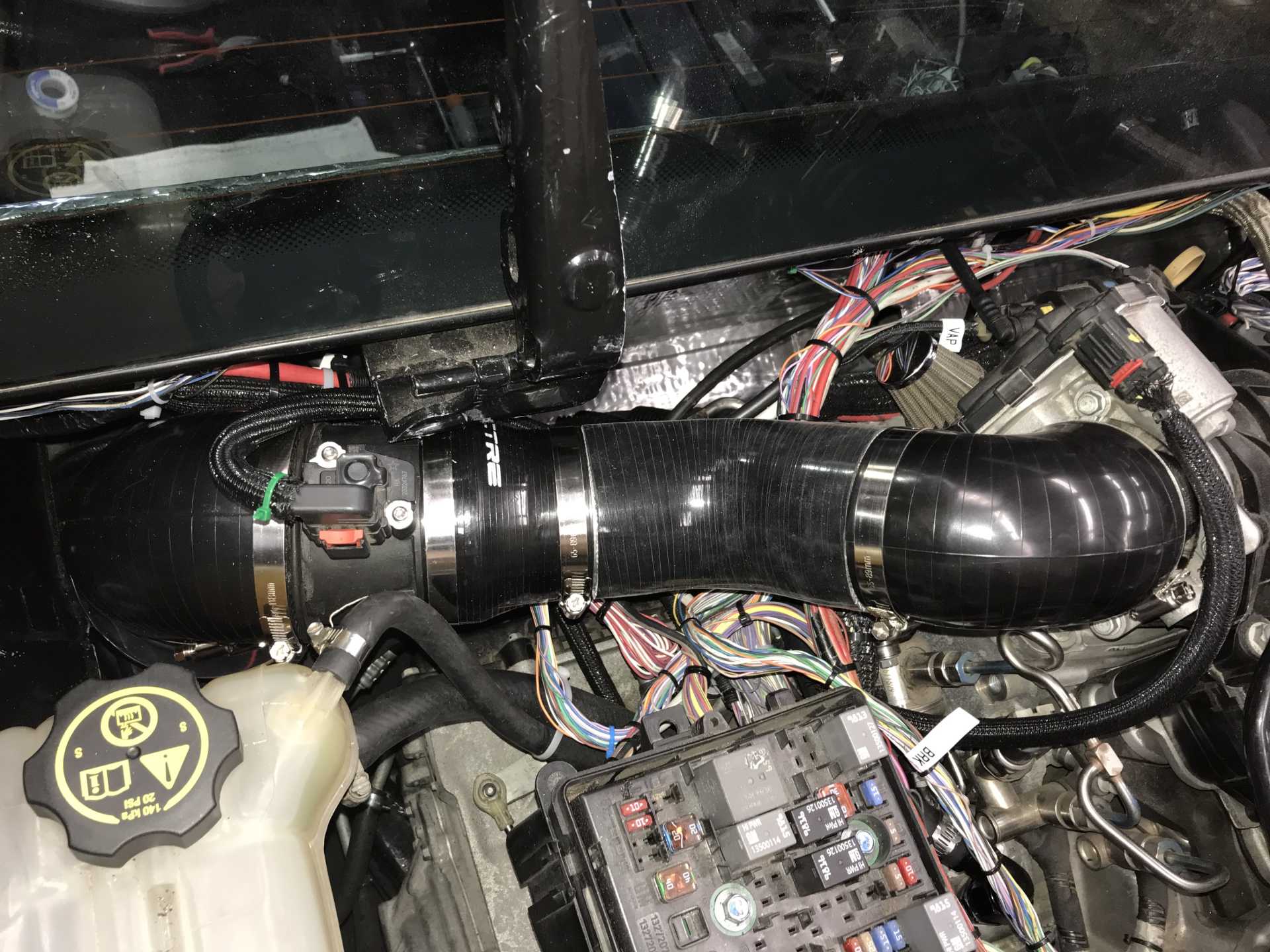
Is there a screen in front of you MAF in the housing?
MAFs don't line bends within about 6" of the MAF inlet and you have your MAF right at the end of a 90 degree bend. Running a screen (flow straightener: http://www.saxonpc.com/airflow-products.html ) can help, but the larger the straight section before the MAF, the better.
All those silicone hoses can also flex, deform, collapse and change the air flow at high rpm.
You might also want to consider using metal or plastic tubing for your intake tract and adjust the placement of the MAF to give it a straighter path.
|
|
|
|
MikesFirstFiero
|
FEB 18, 11:28 PM
|
|
Those are very good points you raise. Thanks for the advice.
No I don't have a flow screen and it sounds like a good idea to give a try. The hoses are flexible somewhat but each joint has a steel ring about 1" wide inside made from 3" exhaust pipe for the hoses to clamp on to. I don't see any signs of any bending but between the rings I don't know. Those hoses also have 1/4" thick walls and I'm not sure how much they actually do compress or flex. I'll figure out how to check this. The original Impala intake was a rigid plastic pipe (about 4" long) as part of the filter box. I cut the box off and trimmed the OD to fit the 3.5" 90 hose to the cone filter. I might be able to eliminate the bends somehow but I'm not sure there is enough length.
Here is the original Impala configuration. The front of the engine is at the bottom of the photo. I reversed the intake manifold to clear the shock tower. It does show the 4" straight path to the MAF with a bend afterwards to line up with the TB.
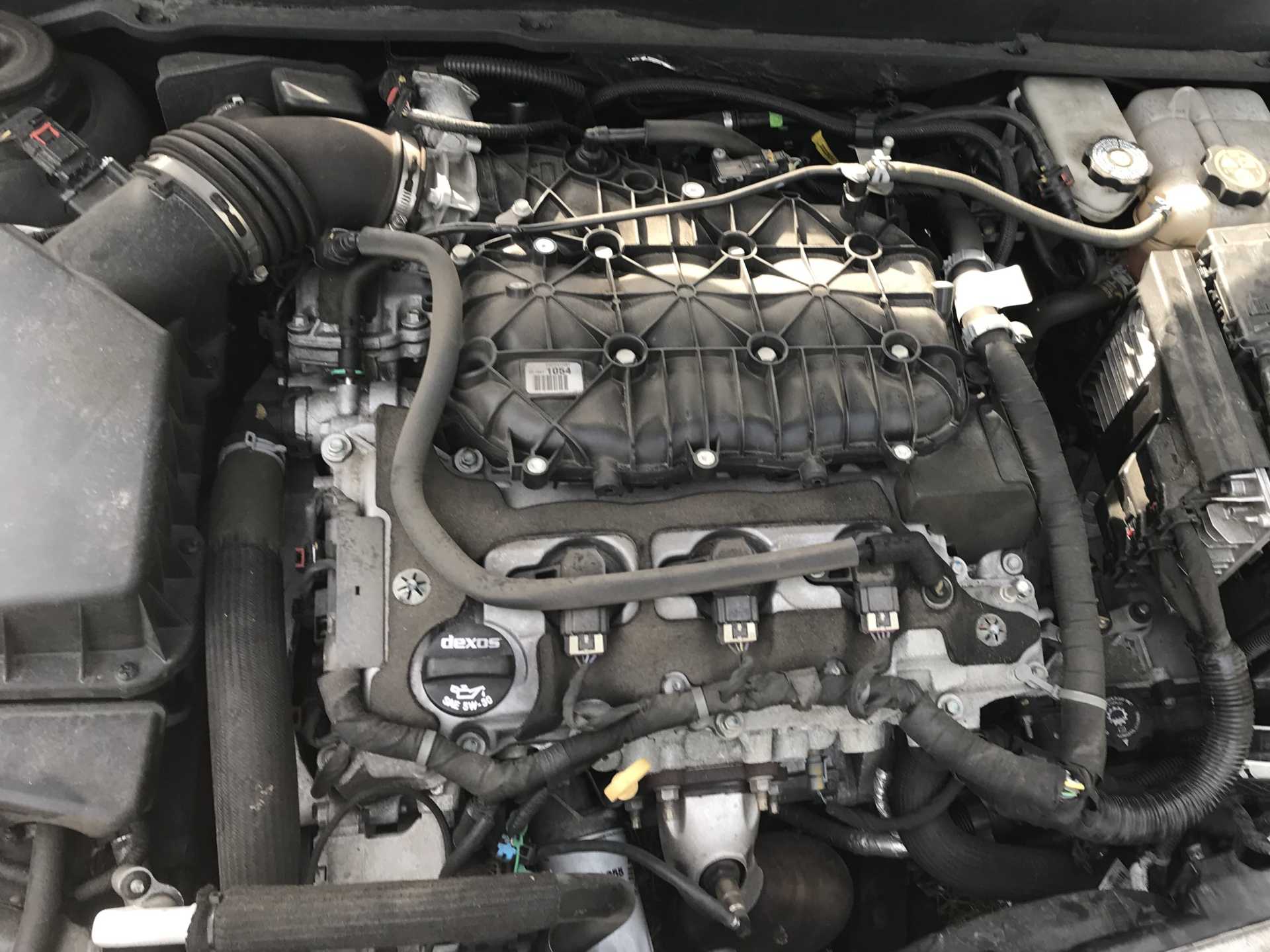
I've had some more results since the last post. With the opening increased to 2.5" ran quite well in a 30 mile trip up the road. Nothing was done to the car other than sitting around while I was at an estate sale. But on the way back it really misbehaved at first. As I got closer to home it seemed to behave better. I then opened the restrictor to 3" and drove it around today. That seemed to be a bit too much since the misfire came back some and the idle was really crap.
I've done a bit of reading and found that I might have introduced a problem with the air inlet to the valve cover for PCV. I took it from a small filter at ambient air not from the MAF measured air, you can see it in the photo hiding behind the TB. Guys on the Impala forum say this will cause problems since this would lean the mixture being unmetered air. So tomorrow I'll insert a hose fitting after the MAF to feed the source air to the valve cover. I'll also remove the restrictor and see how it operates. This would make the configuration more like stock. If you look at the Impala photo it is clear that the S-shaped air supply to the valve cover is after the MAF.[This message has been edited by MikesFirstFiero (edited 02-18-2023).]
|
|
|
|
Will
|
FEB 19, 06:54 AM
|
|
| quote | Originally posted by MikesFirstFiero:
I've done a bit of reading and found that I might have introduced a problem with the air inlet to the valve cover for PCV. I took it from a small filter at ambient air not from the MAF measured air, you can see it in the photo hiding behind the TB. Guys on the Impala forum say this will cause problems since this would lean the mixture being unmetered air. So tomorrow I'll insert a hose fitting after the MAF to feed the source air to the valve cover. I'll also remove the restrictor and see how it operates. This would make the configuration more like stock. If you look at the Impala photo it is clear that the S-shaped air supply to the valve cover is after the MAF.
|
|
Lol... A lot of times it's the easy stuff. Be brilliant at the basics. If we'd known that from the info you shared here, we could have pointed that out.
|
|
|
|
fieroguru
|
FEB 19, 08:24 AM
|
|
Yes, MAF cars calculate fuel and timing on measured air into the engine, so the clean filtered air for the PCV needs to come from after the MAF.
Your setup with the external PCV filter would cause issues with unmetered air, but I would expect those to be low rpm issues where the % of unmetered air would be the greatest.
At WOT the high air velocity will force more air to the outside of the curve and cause more of it to miss the MAF that is centrally located. This changes the air measurement and throws fueling and spark timing off. A straight section or a flow screen will definitely help the high rpm issue.
|
|
|
|
MikesFirstFiero
|
FEB 19, 12:27 PM
|
|
|
I missed the air hose being after the MAF, I thought it was only filtered air. I'm working on fixing that, seeing if I can relocate the MAF closer to the TB and will order a flow screen. I didn't appreciate the absolute need for laminar flow across the MAF. Watched a couple of vids on YT which demonstrated the effects of unstable air flow. Again thanks for the advice. [This message has been edited by MikesFirstFiero (edited 02-19-2023).]
|
|
|
|
ericjon262
|
FEB 19, 12:37 PM
|
|
|
it's worth mentioning that most cheap OBD2 readers can log fuel trims too, so you can see if the engine is actually going lean, or if there's some other factor causing your problem. I have one that works via bluetooth to my phone, it's pretty handy, I highly recommend something like it for anyone with an OBD2 car (everyone?) ------------------
"I am not what you so glibly call to be a civilized man. I have broken with society for reasons which I alone am able to appreciate. I am therefore not subject to it's stupid laws, and I ask you to never allude to them in my presence again."
I invited Lou Dias to trash me in my own thread, he refused. sorry. if he trashes your thread going after me. I tried.
|
|
|
|