
 
     |
| The White Bug (Page 10/46) |

|
pmbrunelle
|
MAY 03, 01:05 PM
|
|
I continued the investigation, and here is the smoking gun!
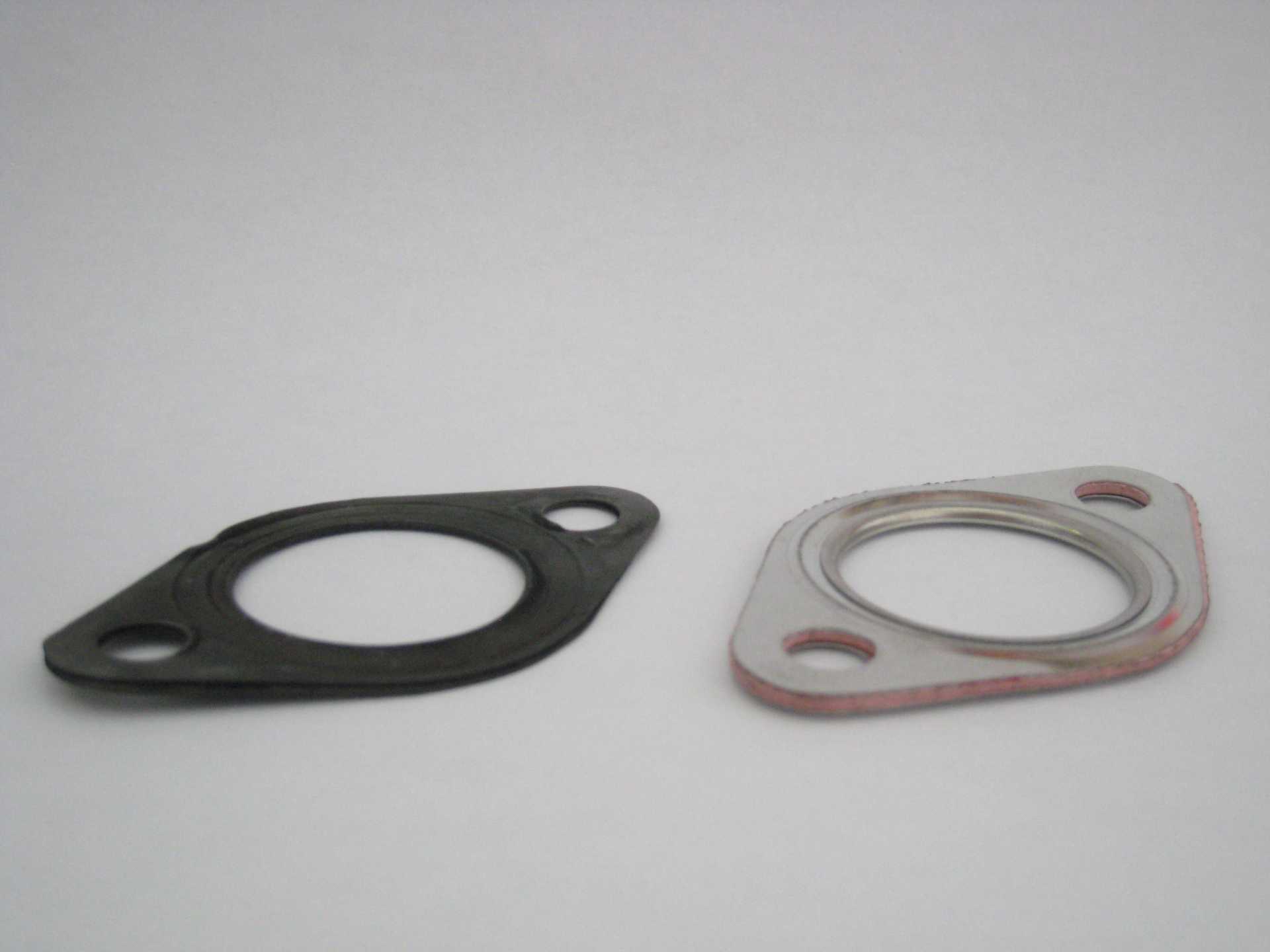
Right side of photo: New gasket (IAP 111251261B). Sandwich made of two metal layers with pink fibers in between. A fire ring prevents the exhaust gas from directly touching the fibers.
Left side of photo: #5 gasket, completely flattened. The fibers are gone. I believe that the fibers burned away in the car.
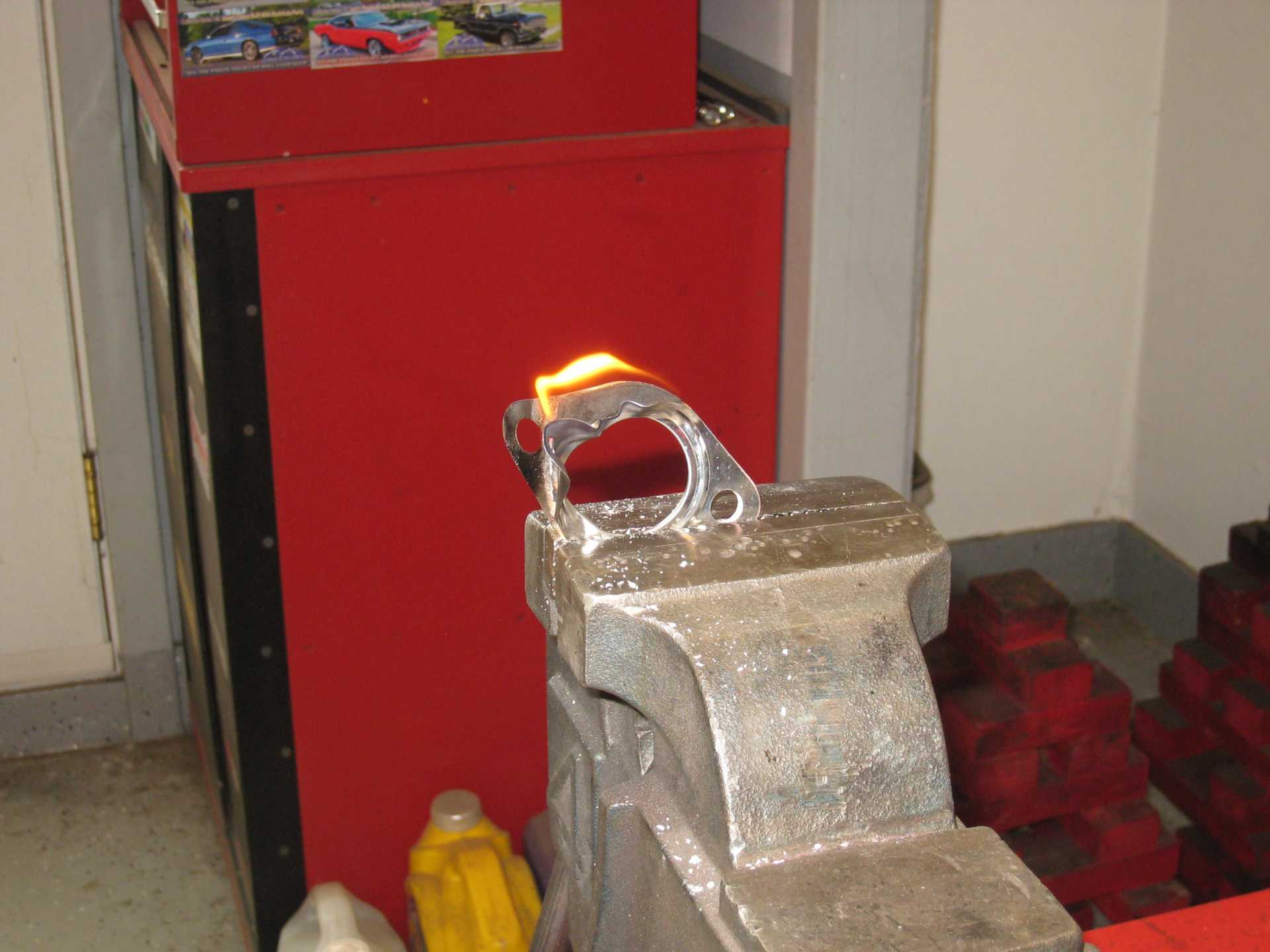
The pink fibers appear to be cardboard. With a new gasket, I was able to set it on fire. The white/grey ash crumbled when I touched it.
Will:
Why stainless fasteners? Will they creep less with the exhaust heat?
Claude:
Yes, the #5 gasket is the most solicited, since it must deal with the mass of the turbo.
However, the exhaust bolts on all cylinders were loose or missing.
I inspected the #1 gasket, and most of the fibers were gone on that one too.
Conclusion:
I need to select better gaskets before I start worrying about anti-loosening techniques on the bolts.[This message has been edited by pmbrunelle (edited 05-03-2020).]
|
|
|
|
Will
|
MAY 03, 01:33 PM
|
|
| quote | Originally posted by pmbrunelle:
Will:
Why stainless fasteners? Will they creep less with the exhaust heat?
|
|
They're going to be less likely to seize in head.
|
|
|
|
La fiera
|
MAY 03, 09:24 PM
|
|
| quote | Originally posted by Will:
They're going to be less likely to seize in head. |
|
Claude has a point. I built a bracket bolted on the upper 2transmission bolts to hold the weight of the downpipe (when I had one).
And that was the trick. Never had a loose bolt or a warped exhaust manifold. That turbo seems heavy and its putting a hurtle when
hot on the pipes. Specially with those accordeon flex pipes, if you didn't have them the upper bolt hole would not gave to the weight
of the turbo because there were no play to give.
Or get a set of those gaskets and burn them and then put them in.!  [This message has been edited by La fiera (edited 05-03-2020).]
|
|
|
|
Will
|
MAY 03, 09:56 PM
|
|
| quote | Originally posted by fieroguru:
There are exhaust bolts available either drilled for safety wire or tear drop locks. Both will prevent the bolts from walking out. However, if the root of the issue is the gasket relaxing at temp (copper is known for this), then you will need to retorque a couple of times... which likely will fix the issue w/o needing to use wire or other positive locks. |
|
If you have to safety wire something on a car, there's something else wrong with the joint design. I understand it as a belt and suspenders approach used in conjunction with good joint design on airplanes when human life can be lost due to an engine failure... but pretty much any application on a car can be set up not to require it.
Aluminum flywheels getting hot and creeping out from under the flywheel bolt heads is a prime example of this... the bolt don't need safety wire; the joint design is bad.[This message has been edited by Will (edited 05-03-2020).]
|
|
|
|
La fiera
|
MAY 03, 10:52 PM
|
|
| quote | Originally posted by Will:
Aluminum flywheels getting hot and creeping out from under the flywheel bolt heads is a prime example of this... the bolt don't need safety wire; the joint design is bad.
|
|
I'm going to dissagree with you Will, its not a bad design, its the wrong approach.
I've seen a lot of aluminum flywheels get loose and the main reason is becasue people install them like is a steel flywheel, bolt to flywheel.
If you dont install a wide WASHER to spread the load of the torque of the bolt on the alumimun flywheel
IT WILL GET LOOSE because of the different expansion rates between the bolt and the flywheel and the hard steel bolts eat on the soft aluminum.
Instaliing a wide washer on the bolt applying the torque results in a wider foot print to keep it in place and prevents the bolt from walling the soft aluminum
its simple physics and common sense. They don't teach common sense at school or college.
|
|
|
|
pmbrunelle
|
MAY 03, 11:00 PM
|
|
Claude + Rei:
I do have a support, but it's just for the vertical load (static weight + bumps) of the turbo:
http://www.fiero.nl/forum/F...ML/142133-2.html#p48
The support leaves the turbo free to move sideways, so acceleration/braking/turning loads (due to the turbo's mass) are taken up by the cylinder #5 flange.
If the turbo were fully fixed, then the exhaust pipe and #5 flange would not see any acceleration/braking/turning loads.
However, if the turbo were fully fixed, the exhaust pipe would try to expand with the heat, creating stress in the pipe and #5 flange.
When I selected the present exhaust concept, I concluded (with some very basic calculations) that the thermal stress (in the pipe + flange) from a fully fixed setup was worse than the stress from acceleration/braking/turning loads with a rod-end support.
It is possible that this exhaust scheme is not workable. If that is the case, I suppose I will have to revisit the exhaust setup 
********************************************************************************
I ordered these wedge-lock bolts:
https://www.summitracing.com/parts/pro-66754
Being a certified Fiero-nut, I looked in my parts collection and I found TWO pairs of the Fel-Pro MS 93045 exhaust gaskets for the 2.8 Fiero. They look like they have a bunch of graphite in them.
So I'm going to try with the Fel-Pro gaskets and probably retorque after some driving.
If only gasket #5 fails afterwards (which we could assume is due to acceleration/braking/turning loads), then I'll look into a copper gasket for flange #5 to stiffen that joint. I may choose to use copper gaskets for all flanges for standardization.[This message has been edited by pmbrunelle (edited 05-03-2020).]
|
|
|
|
Will
|
MAY 04, 07:41 AM
|
|
| quote | Originally posted by La fiera:
I'm going to dissagree with you Will, its not a bad design, its the wrong approach.
I've seen a lot of aluminum flywheels get loose and the main reason is becasue people install them like is a steel flywheel, bolt to flywheel.
If you dont install a wide WASHER to spread the load of the torque of the bolt on the alumimun flywheel
IT WILL GET LOOSE because of the different expansion rates between the bolt and the flywheel and the hard steel bolts eat on the soft aluminum.
Instaliing a wide washer on the bolt applying the torque results in a wider foot print to keep it in place and prevents the bolt from walling the soft aluminum
its simple physics and common sense. They don't teach common sense at school or college. |
|
That's part of the joint design... the contact stress is too high for the materials being joined.
|
|
|
|
pmbrunelle
|
MAY 04, 08:37 AM
|
|
When I was in school, the stress in a material underneath the bolt head was part of the curriculum.
There was no deep study of the subject, but there was a brief overview.
|
|
|
|
Will
|
MAY 04, 09:03 AM
|
|
| quote | Originally posted by pmbrunelle:
When I was in school, the stress in a material underneath the bolt head was part of the curriculum.
There was no deep study of the subject, but there was a brief overview. |
|
That's unfortunate, as impacts from the thermal environment are unavoidable, yet rarely treated in engineering education.
In this case, the operating temperature can get high enough that the aluminum will creep unless the contact stress is reduced via washers as Rei says or a steel doubler to cover the entire flywheel bolt pattern. Not a problem at room temperature, just at elevated temperature.
|
|
|
|
claude dalpe
|
MAY 04, 11:25 AM
|
|
| quote | Originally posted by Will:
That's unfortunate, as impacts from the thermal environment are unavoidable, yet rarely treated in engineering education.
In this case, the operating temperature can get high enough that the aluminum will creep unless the contact stress is reduced via washers as Rei says or a steel doubler to cover the entire flywheel bolt pattern. Not a problem at room temperature, just at elevated temperature.
|
|
Will I do not say that your answers are not good or good, but I find that you have an answer to give to all those who answer the problem, I do not agree with all your statements but me I leave room for others to give their opinion without contradicting them. I know Patrick very well and he is a very good engineer and he is wrong some time maybe you too? What do you think.
|
|
|
|