 
     |
| Northstar rebuild: Will style (Page 65/119) |

|
Will
|
MAY 23, 10:13 PM
|
|
|
|
|
Will
|
JUN 03, 07:59 AM
|
|
Hmm... not too many people worried about that, I guess.
Was rained out at the strip last weekend. Going to try to hit it again this weekend. Forecast looks like it'll be fantastic weather for power and traction... Now I just have to perfect my launch technique with the SPEC clutch.
|
|
|
|
cptsnoopy
|
JUN 03, 12:59 PM
|
|
| quote | Originally posted by Will:
Hmm... not too many people worried about that, I guess.
Was rained out at the strip last weekend. Going to try to hit it again this weekend. Forecast looks like it'll be fantastic weather for power and traction... Now I just have to perfect my launch technique with the SPEC clutch. |
|
Just curious, are those numbers not ok? My engine should be close to that before drive train losses so I was thinking you were in the ballpark anyway.
Charlie

|
|
|
|
Will
|
JUN 03, 01:29 PM
|
|
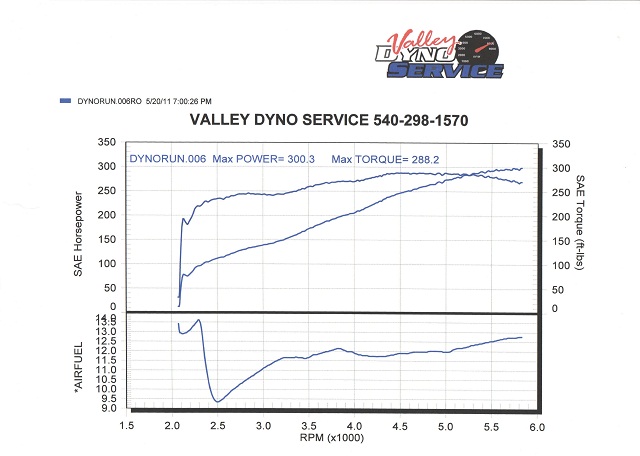
My dyno numbers? I think they're ok. The chart above was recorded at the wheels. 
As I mentioned in the LS1 PCM thread, the built short block exceeded my wildest expectations. +45 HP and +20 ftlbs peak with +45 ftlbs at 5800 RPM. It's a monster.
Peak power went from 5200 RPM on the stock shortblock to 5800 RPM on the new shortblock... *just* from changing the shortblock. Everything else is the same.
I hit the speed limiter in 4th or it would have gone to 6400. If I'm on the dyno again with this ECM, I'll unplug the VSS so I can go all the way to the rev limiter.[This message has been edited by Will (edited 06-03-2011).]
|
|

|
USFiero
|
JUN 09, 07:59 AM
|
|
at the wheels? I'd say this is pretty amazing. I especially admire the very smooth torque curve, which would be important in a mid-engined car. I have really enjoyed this thread, and abandoned any hope of ever being able to build a performance motor myself - and I have no clue how I'd ever find a shop to build a Northstar motor for my own use.
I may have missed this in a page or comment I skipped over too quickly, but this seems perfectly matched to the six-speed manual's abilities to handle power.
|
|
|
|
Will
|
JUN 09, 08:37 AM
|
|
Didn't get to the strip last weekend either. Had a fuel pump issue. Haven't had the time to diagnose it yet.
On the plus side, I'm 99% sure DFCO works. I may have to wire up the ECM cruise and see if it works.
|
|
|
|
IXSLR8
|
JUN 19, 01:57 AM
|
|
Will, what do you attribute the additonal HP to regarding the before block and after rebuilt block? You have an additional 40HP don't you?
My lifter is starting to make a louder noise on Bank number 2. I'm going to have to stop driving it and put some new ones in to get that single lifter quiet. Drives me whacko.
By the way, my speck clutch is holding up quite well. But then, I'm 40 HP below you.
|
|
|
|
Will
|
JUN 19, 09:18 AM
|
|
I tried to find my previous dyno graph here on the forum. I know I've posted it, but I wasn't finding it via the search.
There are two things going on.
First is that up to peak torque RPM (4500) and a little beyond, the new block is up 20 ftlbs on the old block. I think this is due to the combination of increased compression, ceramic piston crown coating and better ring seal. The ported bay-to-bay breathing windows may have a small effect, but I would not expect that mod to operate significantly at low RPM. There may be a tiny effect from the lightened rotating assembly, but the acceleration rate on the dyno is fairly low and I would not expect to see much from that.
Second is that beyond peak torque RPM, the new block stays relatively flat, while the old block fell off dramatically. The old block's peak power RPM was 5200, while the new block's is 5800. The new block is up by 45 ftlbs at 5800 RPM. If I had been able to rev it to the 6400 RPM rev limiter, the difference would have been even more dramatic. Obviously the factors of the first effect still apply, but in addition--and I think this is the primary reason for the difference above peak torque RPM--the new block should have vastly reduced ring flutter. This is also the RPM range in which the ported bay-to-bay breathing windows would show gains due to reduced pumping losses for the air in the crankcase.
I'm learning more about the meaning of the phrase "turn up and make power" applied to a built engine... the gains from improved efficiency at high RPM really compound.
What really blows me away is that I gained 45 HP with ZERO "normal" mods... The new engine has the EXACT SAME intake pipe, throttle, intake manifold, heads, cams, exhaust manifolds, exhaust pipes and tune as the old engine, yet beats it significantly at every single RPM point and blows it out of the water on the top end.[This message has been edited by Will (edited 06-19-2011).]
|
|
|
|
1fatcat
|
JUN 20, 11:28 PM
|
|
|
This is nice to know. Most people do something to the engine durring a rebuild, like cams or something. My build is quite similar to yours, different engine but pretty much the same little touches. Makes me happy to see you gained that much with no major mechanical changes.
|
|
|
|
1fatcat
|
JUN 20, 11:49 PM
|
|
| quote | Originally posted by AJxtcman:
The Head bolts pull the treads out of the block-- time serts only work some times in these blocks --- the threads need to be cleaned and inspected completely-- inspect for pitting after cleaning out the thread locker--- if any pitting is found in the thread area it usually means that the block will not hold a time sert--- when drilling out the block if the material is grey and or powdery the factory time sert will not hold-- Either the thread locker has broke down the blocks or the aluminum quality was not that good---- old thread locker will bind up the threads and break then out--- I would say 50% of the blocks can not use TIMESERT time serts. GM has short blocks available for this problem or use NS300L inserts
|
|
I know this is an old quote, but I've done head gaskets in 6 of these engines to date. Used timeserts in every headbolt hole of every engine (120 timeserts) never had an issue with a single one.
|
|
|
|