
 
     |
| V8 vs V6 (Page 7/9) |

|
reinhart
|
JAN 15, 12:56 AM
|
|
| quote | Originally posted by Skybax:
I realize its off topic, but throwing numbers around I just want to elaborate, the stock Getrag 5-speed V6 Fiero's are in the 16-second range, while the stock 85-86 Muncie 4-speed V6 Fieros are in the mid 15-second range.
|
|
The difference is just due to shift points. I believe the Getrag requires a shift just before 60. I would bet a signed dollar if we put down 0-X MPH in 5 or 10 MPH increments for the Getrag vs Muncie, the Getrag would win about as many as the Muncie.[This message has been edited by reinhart (edited 01-15-2022).]
|
|
|
|
Daryl M
|
JAN 17, 12:09 AM
|
|
| quote | Originally posted by Will:
That's... umm... two transmissions  |
|
Been many years, but I have driven one. Very narrow power band.
|
|
|
|
La fiera
|
JAN 17, 09:10 PM
|
|
| quote | Originally posted by Daryl M:
Would this post be a good place to discuss the pros and cons of long stroke smaller bore engines vs short stroke larger bore engines? Bigger bore allows for larger valves and better breathing. Longer stroke allows for a longer time to more completely burn the air/fuel mixture making for better efficiency.
|
|
Longer stroke engines allows for a shorter time to completely burn the air fuel mixture. And it's due to the higher piston velocity and acceleration.
Take for example these two 5.0L engines.
Engine 1
Bore= 3.736
Stroke= 3.48
Rod Ratio= 1.63
Displacement 5.0L (5001cc)
Piston velocity @ 74* crank angle= 5717fpm @ 6000rpm
Engine 2
Bore= 4.0
Stroke= 3.0
Rod Ratio= 1.9
Displacement= 5.0L (4942cc)
Piston Velocity @ 77* crank angle= 4873fpm @ 6000rpm (5717fpm @ 7040rpm)
Note that Engine 1 has more piston velocity from TDC or 0* to 74* crank angle compared to Engine 2.
Also note that Engine 2 needs and extra 1040rpm and an extra 3* of crank angle travel to match the piston speed of Engine 1.
So this shows that since Engine 1 piston speed is higher than Engine 2's, the time to burn the air fuel mixture is much shorter than Engine 2.
So a timing adjustment is needed to start ignition earlier and progressively increase it as RPM goes up. If timing is fixed specially in the long stroke engine, the piston speed will out run the flame front at high RPMs.
|
|
|
|
Daryl M
|
JAN 17, 11:16 PM
|
|
| quote | Originally posted by La fiera:
Longer stroke engines allows for a shorter time to completely burn the air fuel mixture. And it's due to the higher piston velocity and acceleration.
Take for example these two 5.0L engines.
Engine 1
Bore= 3.736
Stroke= 3.48
Rod Ratio= 1.63
Displacement 5.0L (5001cc)
Piston velocity @ 74* crank angle= 5717fpm @ 6000rpm
Engine 2
Bore= 4.0
Stroke= 3.0
Rod Ratio= 1.9
Displacement= 5.0L (4942cc)
Piston Velocity @ 77* crank angle= 4873fpm @ 6000rpm (5717fpm @ 7040rpm)
Note that Engine 1 has more piston velocity from TDC or 0* to 74* crank angle compared to Engine 2.
Also note that Engine 2 needs and extra 1040rpm and an extra 3* of crank angle travel to match the piston speed of Engine 1.
So this shows that since Engine 1 piston speed is higher than Engine 2's, the time to burn the air fuel mixture is much shorter than Engine 2.
So a timing adjustment is needed to start ignition earlier and progressively increase it as RPM goes up. If timing is fixed specially in the long stroke engine, the piston speed will out run the flame front at high RPMs.
|
|
All true, but typically longer stroke engines are not designed to develop maximum power at as high an rpm as a shorter stroke engine. Your data indicates this. Your two engines assume the same deck height, right? A well designed longer stroke engine should have a taller deck height. Will that not effect crank angle? Those are the benefits a manufacturer has. They can design different size blocks for longer stroke engines than for short stroke engines. The rest of us have to use what is available. I find these mental exercises fascinating.
|
|
|
|
La fiera
|
JAN 18, 06:33 PM
|
|
| quote | Originally posted by Daryl M:
All true, but typically longer stroke engines are not designed to develop maximum power at as high an rpm as a shorter stroke engine. Your data indicates this. Your two engines assume the same deck height, right? A well designed longer stroke engine should have a taller deck height. Will that not effect crank angle? Those are the benefits a manufacturer has. They can design different size blocks for longer stroke engines than for short stroke engines. The rest of us have to use what is available. I find these mental exercises fascinating.
|
|
The longer stroke not designed for high rpm mentality is obsolete now. The 427ci smallblock has 4.125 bore and 4.000 stroke revving past 8200rpms and this is one of the tiny Mountain motors Will mentioned earlier. Then you have the Ricers with their K24s Frankensteins. All those are longer stroke squared engines.
The advantages of a longer stroke over a short stroke are many. Using the two engines in my previous example in which the only difference is the geometry of the rotating assembly between the two the advantages of the longer stroke (Engine 1) are:
-More compression.
-More swept volume
-More torque
-Less sensitive to bigger camshaft compared to the short stroke engine.
-Less sensitive to bigger intake ports compared to the short stroke engine.
-Less prone to knock
-It favors turbo or supercharging. Due to more swept volume, more air can be packed resulting in more power.
-Very wide powerband.
The only advantage the Short stroke has is less friction. The dweling of the piston at TDC is wasted time because the crankshaft is rotating for a few degrees without any force acting on it which translates in slower acceleration.
But like you, I also find these mental exercises super fascinating!  [This message has been edited by La fiera (edited 01-18-2022).]
|
|
|
|
Skybax
|
JAN 18, 07:20 PM
|
|
| quote | Originally posted by reinhart:
The difference is just due to shift points.
|
|
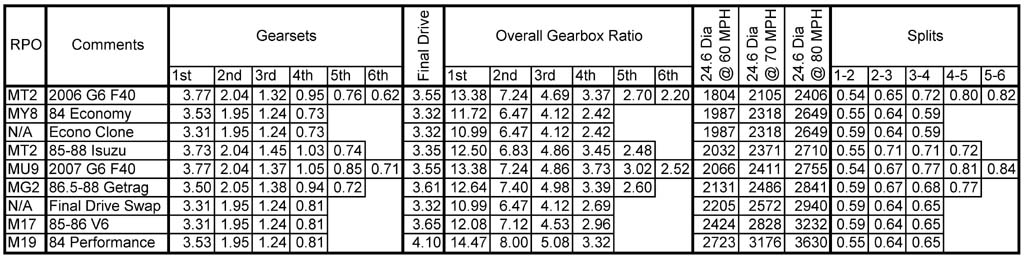
It's gear sets and final drive ratio...
 [This message has been edited by Skybax (edited 01-18-2022).]
|
|
|
|
Will
|
JAN 19, 06:21 PM
|
|
| quote | Originally posted by La fiera:
Engine 1
Bore= 3.736
Stroke= 3.48
Rod Ratio= 1.63
Displacement 5.0L (5001cc)
Piston velocity @ 74* crank angle= 5717fpm @ 6000rpm |
|
AKA a Chevy 305
| quote | Originally posted by La fiera:
Engine 2
Bore= 4.0
Stroke= 3.0
Rod Ratio= 1.9
Displacement= 5.0L (4942cc)
Piston Velocity @ 77* crank angle= 4873fpm @ 6000rpm (5717fpm @ 7040rpm) |
|
AKA a Chevy 302
| quote | Originally posted by La fiera:
Longer stroke engines allows for a shorter time to completely burn the air fuel mixture. And it's due to the higher piston velocity and acceleration.
Take for example these two 5.0L engines. |
|
Throughout all of this, I'm neglecting the effects of rod angle to simplify the math.
Not so much... The 302 is within 0.030 of TDC within 11.5 degrees of TDC while the 305 is within 0.030 of TDC within 10.6 degrees of TDC. Not a big difference.
| quote | Originally posted by La fiera:
Note that Engine 1 has more piston velocity from TDC or 0* to 74* crank angle compared to Engine 2.
Also note that Engine 2 needs and extra 1040rpm and an extra 3* of crank angle travel to match the piston speed of Engine 1.
So this shows that since Engine 1 piston speed is higher than Engine 2's, the time to burn the air fuel mixture is much shorter than Engine 2.
So a timing adjustment is needed to start ignition earlier and progressively increase it as RPM goes up. If timing is fixed specially in the long stroke engine, the piston speed will out run the flame front at high RPMs.
|
|
Well... The 305 is going to have 16% higher piston speed at EVERY crank angle because it has 16% more stroke. I don't think anyone is doubting that. Piston speed at constant RPM is a weird flex.
The things you're talking about are relevant to tuning, but not power production. Also, there's not a big difference between the timing required between a 305 and a 302. They're both going to make best power with max advance in the 30 degree range. Some 4 valve heads like BMWs are in the 20 degree range for NA use and teens for boost, without being knock limited. That's a big difference.
| quote | Originally posted by La fiera:
The longer stroke not designed for high rpm mentality is obsolete now. The 427ci smallblock has 4.125 bore and 4.000 stroke revving past 8200rpms and this is one of the tiny Mountain motors Will mentioned earlier. Then you have the Ricers with their K24s Frankensteins. All those are longer stroke squared engines.
[QUOTE]Originally posted by La fiera:
The advantages of a longer stroke over a short stroke are many. Using the two engines in my previous example in which the only difference is the geometry of the rotating assembly between the two the advantages of the longer stroke (Engine 1) are:
-More compression.
-More swept volume
-More torque
-Less prone to knock
-It favors turbo or supercharging. Due to more swept volume, more air can be packed resulting in more power.
|
|
None of these follow from the basic dimensions of the engine. There is no first principles argument for this and discussion devolves to who has the better intake port.
Well... a 305 will have more swept volume than a 302 because each cylinder in a 305 has 38.125 cid while each cylinder of the 302 has 37.75 cid. That's related to total displacement, not just stroke.
If you calculate torque output related to cylinder pressure, torque is related ONLY to displacement, not stroke. The longer stroke engine has a longer lever in the crank, but the bigger bore engine has more bore area for the cylinder pressure to push on.
| quote | Originally posted by La fiera:
-Less sensitive to bigger camshaft compared to the short stroke engine.
-Less sensitive to bigger intake ports compared to the short stroke engine.
-Very wide powerband. |
|
Maybe? Depends on the cylinder head & cam choice, but not on basic dimensions.
| quote | Originally posted by La fiera:
The only advantage the Short stroke has is less friction. The dweling of the piston at TDC is wasted time because the crankshaft is rotating for a few degrees without any force acting on it which translates in slower acceleration.
But like you, I also find these mental exercises super fascinating!
|
|
Again... mutatis mutandis doesn't apply to anything in an engine. Comparing short stroke to long stroke at constant bore compares different displacements. Comparing short stroke to long stroke at constant displacement compares different bores. At constant deck height, different rod ratios... The list goes on.
The bigger bore engine can fit a bigger intake valve, which allows more air into the cylinder. That sounds like an advantage to me. The longer stroke engine needs to achieve a higher port speed just to have air get to the bottom of the cylinder when the piston is approaching BDC. Since flow through a pipe is related to the square root of pressure difference, higher piston speed does not achieve enough additional port speed to account for the greater distance the air has to travel to fill the cylinder.[This message has been edited by Will (edited 01-19-2022).]
|
|
|
|
Daryl M
|
JAN 19, 06:56 PM
|
|
| quote | Originally posted by Will:
Again... mutatis mutandis doesn't apply to anything in an engine. Comparing short stroke to long stroke at constant bore compares different displacements. Comparing short stroke to long stroke at constant displacement compares different bores. At constant deck height, different rod ratios... The list goes on.
The bigger bore engine can fit a bigger intake valve, which allows more air into the cylinder. That sounds like an advantage to me. The longer stroke engine needs to achieve a higher port speed just to have air get to the bottom of the cylinder when the piston is approaching BDC. Since flow through a pipe is related to the square root of pressure difference, higher piston speed does not achieve enough additional port speed to account for the greater distance the air has to travel to fill the cylinder.
|
|
All interesting stuff, but your comparison doesn't address over square engines. (Stroke significantly longer than bore diameter) The 1.3l and the 2.5 LCV Ecotec both have a stroke about 15% longer than their bore size. With production engines today, excluding exotic supercars, I'm told the 1.3 has the highest power density of any production engine. (Hp per cubic inch) . If you calculate power density as hp per pound of weight, then I don't know where it is, but it is still pretty respectable. If you go by the rumbling on the net, there are already those who are planning mods to get even more power from this small engine. I am just fascinated by the amount of useable power over a broad rpm range, these new engines are achieving.
|
|
|
|
Skybax
|
JAN 19, 08:17 PM
|
|
| quote | Originally posted by Daryl M:
All interesting stuff, but your comparison doesn't address over square engines. (Stroke significantly longer than bore diameter) The 1.3l and the 2.5 LCV Ecotec both have a stroke about 15% longer than their bore size. With production engines today, excluding exotic supercars, I'm told the 1.3 has the highest power density of any production engine. (Hp per cubic inch) . If you calculate power density as hp per pound of weight, then I don't know where it is, but it is still pretty respectable. If you go by the rumbling on the net, there are already those who are planning mods to get even more power from this small engine. I am just fascinated by the amount of useable power over a broad rpm range, these new engines are achieving. |
|
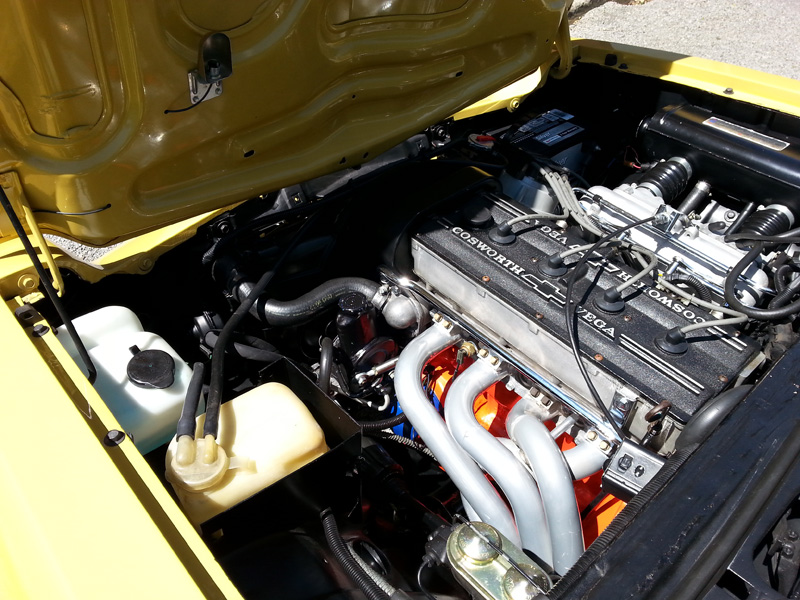
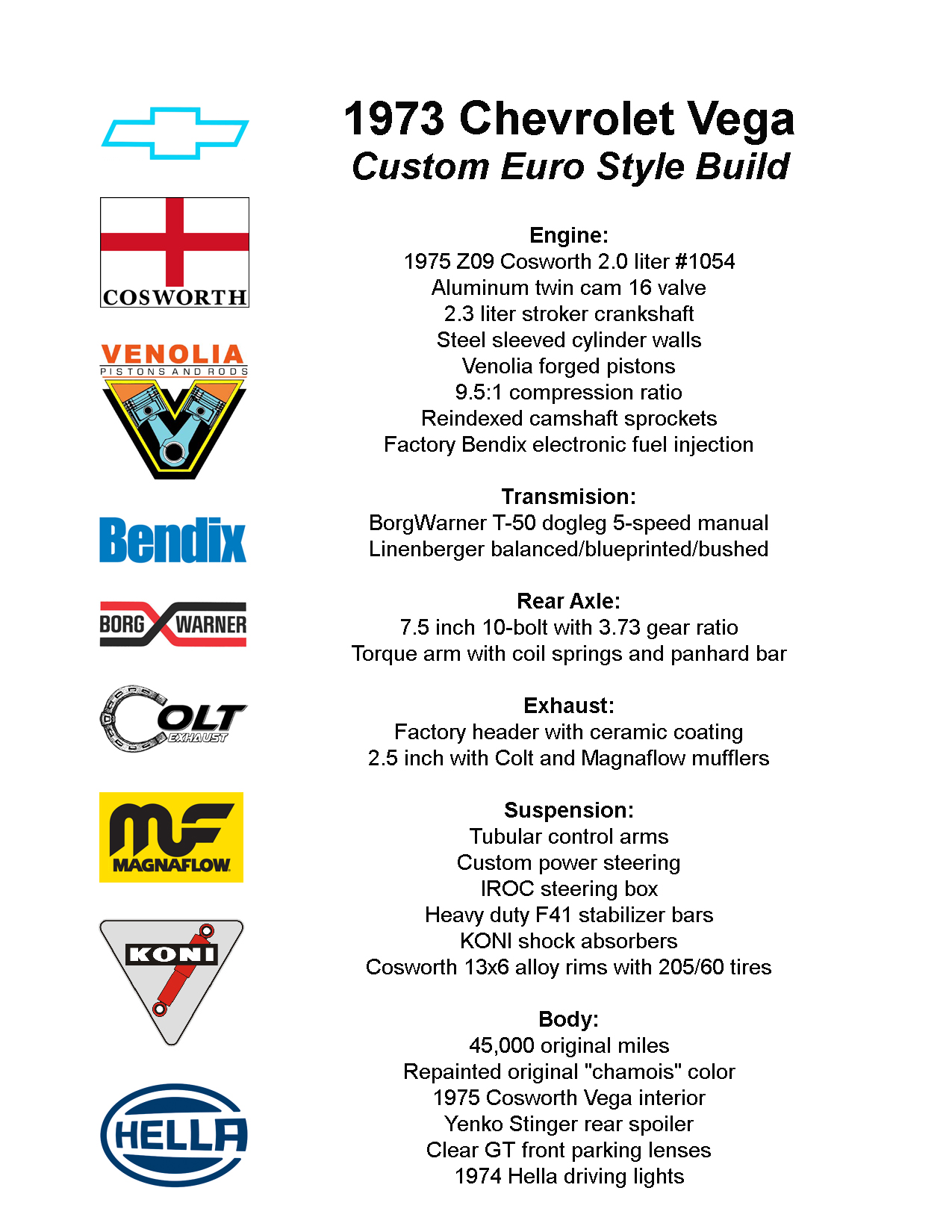
Very interesting stuff, I don't mean to hijack cause its related, but I once had a 1973 Vega (first body style like Ferrari) with a 1975 twin-cam 2.0 Cosworth engine sleeved and stroked to 2.3 and dialed in with the help of Duke Williams, and still running the GM fuel injection system with rebuild-able and adjustable brass sensors, that was fun! So I wonder how that would compare to your highest power density aka Hp per cubic inch with a stroke longer than bore. (my modding days are over and enjoy stock/original boring stuff now, so my hot rod memory is very limited nowadays) I was digging thru my Chevy folder looking for specs but didn't find much...
 [This message has been edited by Skybax (edited 01-19-2022).]
|
|
|
|
pmbrunelle
|
JAN 19, 09:51 PM
|
|
I don't get too excited over hp/cubic inch.
Power density goes down as displacement per cylinder increases... it's just like that. Motorcycles have the highest.
At the lower end of power density you have the 14-cylinder Wärtsilä-Sulzer RT-flex96C turbodiesel. 108920 hp from 1562358 cubic inches.
0.07 hp / cubic inch
Power density doesn't tell you if the engine is fit for its purpose; other characteristics such as fuel consumption, power, size, weight, pollution, maintenance cost, production cost, are the actual external characteristics that matter. How an engine achieves its external characteristics does not matter, in my mind.
I don't really like how different jurisdictions tie car registration fees to engine displacement; instead of giving folks the leeway to optimize designs as they see fit to meet the true requirements (external characteristics), folks must work around meeting arbitrary registration rules.
|
|
|
|