
 
     |
| My 1988 LFX F40 build. (Page 52/68) |

|
msweldon
|
SEP 05, 03:30 PM
|
|
Daryl,
I have FieroGuru's hydraulic adapter which "looks" to fit into the composite assembly, will verify shortly.
However, mine isn't 6" short only about 1-2" short which might be addressed through a minor repositioning of the clutch line. I'm converting from an auto to a manual so all my test fitting at the moment of my clutch line is simply holding it in place...[This message has been edited by msweldon (edited 09-05-2020).]
|
|
|
|
Daryl M
|
SEP 06, 10:38 AM
|
|
| quote | Originally posted by msweldon:
Daryl,
I have FieroGuru's hydraulic adapter which "looks" to fit into the composite assembly, will verify shortly.
However, mine isn't 6" short only about 1-2" short which might be addressed through a minor repositioning of the clutch line. I'm converting from an auto to a manual so all my test fitting at the moment of my clutch line is simply holding it in place...
|
|
https://www.summitracing.com/parts/ear-652504erl
This is the fitting I am using.
|
|
|
|
Daryl M
|
SEP 19, 08:45 PM
|
|
| quote | Originally posted by msweldon:
Watching the adapter construction very closely as I'm one step behind you. |
|
Here is my adapter. Way more detail work and research than I thought it would be, but I finally got the adapter fabricated.
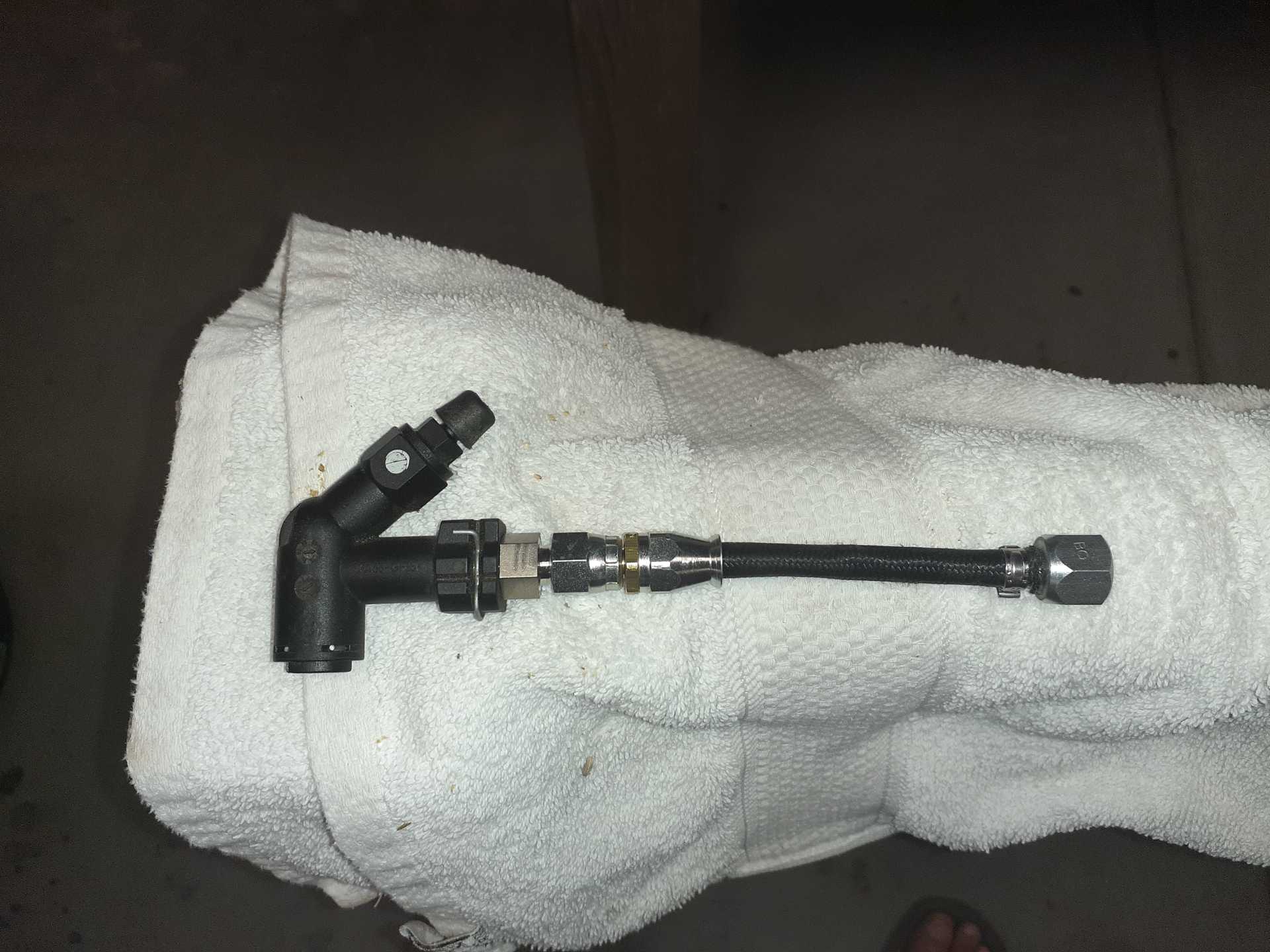 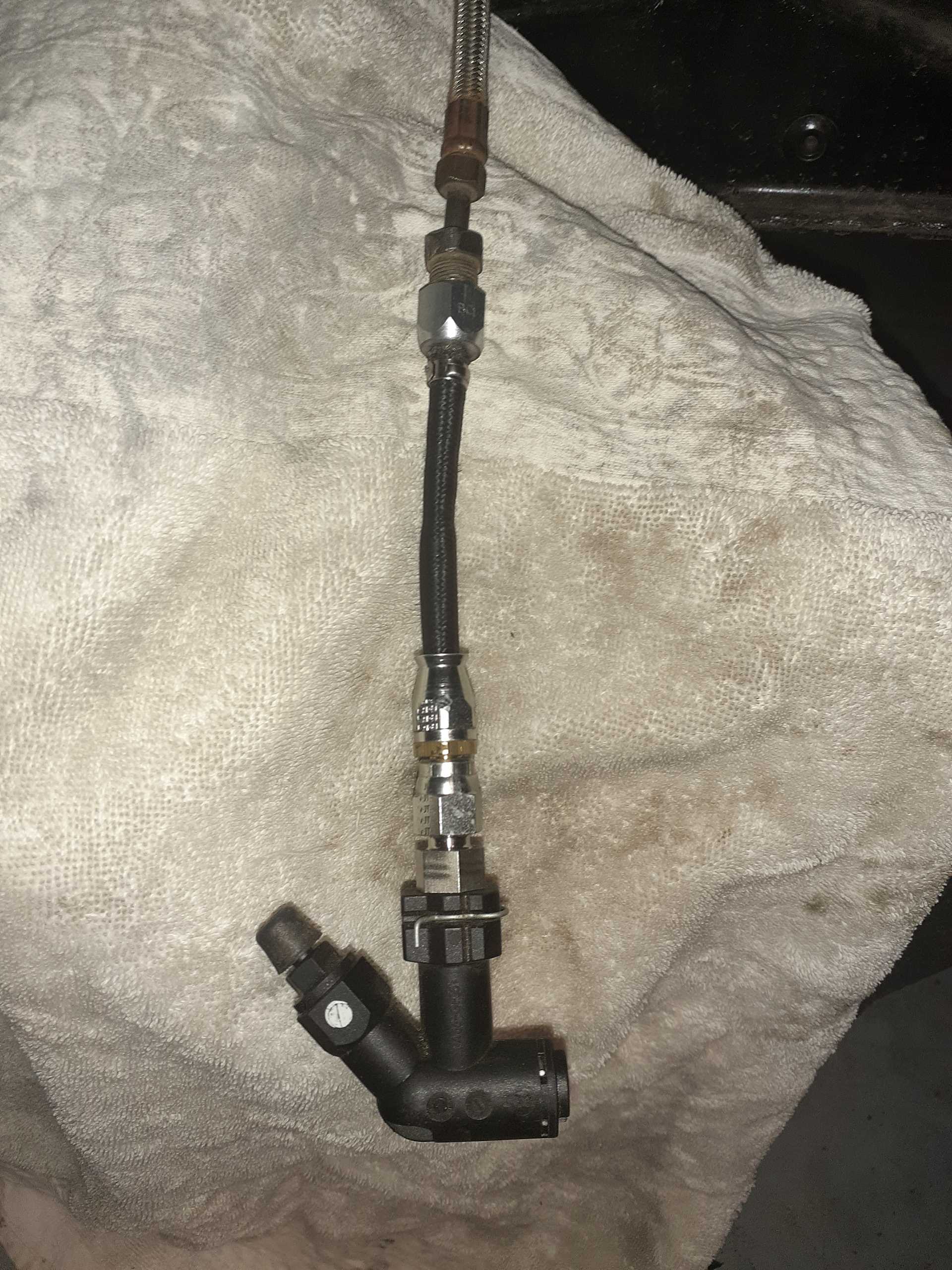
|
|
|
|
Daryl M
|
SEP 22, 08:59 PM
|
|
I have an F40 question. I tried to bleed the hydraulic clutch system last night and realized that it appears that the clutch is always disengaged. It has been 2 years since I mated the engine to the transmission. I don't recall noticing it being this way, but I don't know for sure. What is the logical next step to determine why it is always disengaged?
Thanks
Daryl
|
|
|
|
Joseph Upson
|
SEP 23, 11:19 AM
|
|
| quote | Originally posted by Daryl M:
I have an F40 question. I tried to bleed the hydraulic clutch system last night and realized that it appears that the clutch is always disengaged. It has been 2 years since I mated the engine to the transmission. I don't recall noticing it being this way, but I don't know for sure. What is the logical next step to determine why it is always disengaged?
Thanks
Daryl |
|
Sounds like you have a clearance issue. If by disengaged you mean like a depressed clutch pedal, then you have insufficient pressure plate to throwout bearing clearance, or worse, a clearance problem that resulted from too much bearing travel, damaging the bearing and causing it to seize extended, disengaging the pressure plate. You should have about a 1/4 to 1/2" pedal travel before feeling a resistance increase signaling bearing engagement. The excessive travel incident has happened before although I do not recall the specific symptoms other than the bearing needing to be replaced to resolve the issue. There are other possibilities, but insufficient clearance between bearing and pressure plate would be my first suspicion.
|
|
|
|
Daryl M
|
SEP 23, 03:01 PM
|
|
| quote | Originally posted by Joseph Upson:
Sounds like you have a clearance issue. If by disengaged you mean like a depressed clutch pedal, then you have insufficient pressure plate to throwout bearing clearance, or worse, a clearance problem that resulted from too much bearing travel, damaging the bearing and causing it to seize extended, disengaging the pressure plate. You should have about a 1/4 to 1/2" pedal travel before feeling a resistance increase signaling bearing engagement. The excessive travel incident has happened before although I do not recall the specific symptoms other than the bearing needing to be replaced to resolve the issue. There are other possibilities, but insufficient clearance between bearing and pressure plate would be my first suspicion. |
|
Regardless, it looks like the cradle gets dropped again and the transmission and engine have to be separated to see what I did wrong, right?
|
|
|
|
Joseph Upson
|
SEP 24, 06:27 AM
|
|
| quote | Originally posted by Daryl M:
Regardless, it looks like the cradle gets dropped again and the transmission and engine have to be separated to see what I did wrong, right? |
|
It appears so. If you can carefully loosen all of the tranny bolts after supporting the bottom of the motor to unload the connection point and back the transmission away from the block without moving it off the dowel centering pins, you may be able to confirm the problem if it resolves and you can no longer turn the wheels freely in the same direction with the transmission in gear. I would imagine there's enough room for about a 3/16" gap between the mounting surfaces and still have the dowel pins engaged.
Just be sure to confirm there's nothing you can do to have the transmission engage, make sure there's no potential blockage in the customized portion of your fitting. It's been a long time since I worked with the gearbox but, I vaguely recall there being a check valve somewhere in the hydraulic system. at the transmission. Crack the bleed valve and make sure nothing changes to avoid tearing it down for nothing.[This message has been edited by Joseph Upson (edited 09-24-2020).]
|
|
|
|
Daryl M
|
SEP 24, 10:17 AM
|
|
| quote | Originally posted by Joseph Upson:
It appears so. If you can carefully loosen all of the tranny bolts after supporting the bottom of the motor to unload the connection point and back the transmission away from the block without moving it off the dowel centering pins, you may be able to confirm the problem if it resolves and you can no longer turn the wheels freely in the same direction with the transmission in gear. I would imagine there's enough room for about a 3/16" gap between the mounting surfaces and still have the dowel pins engaged.
Just be sure to confirm there's nothing you can do to have the transmission engage, make sure there's no potential blockage in the customized portion of your fitting. It's been a long time since I worked with the gearbox but, I vaguely recall there being a check valve somewhere in the hydraulic system. at the transmission. Crack the bleed valve and make sure nothing changes to avoid tearing it down for nothing.
|
|
Sounds like good advice, thanks.
|
|
|
|
Daryl M
|
OCT 01, 07:40 PM
|
|
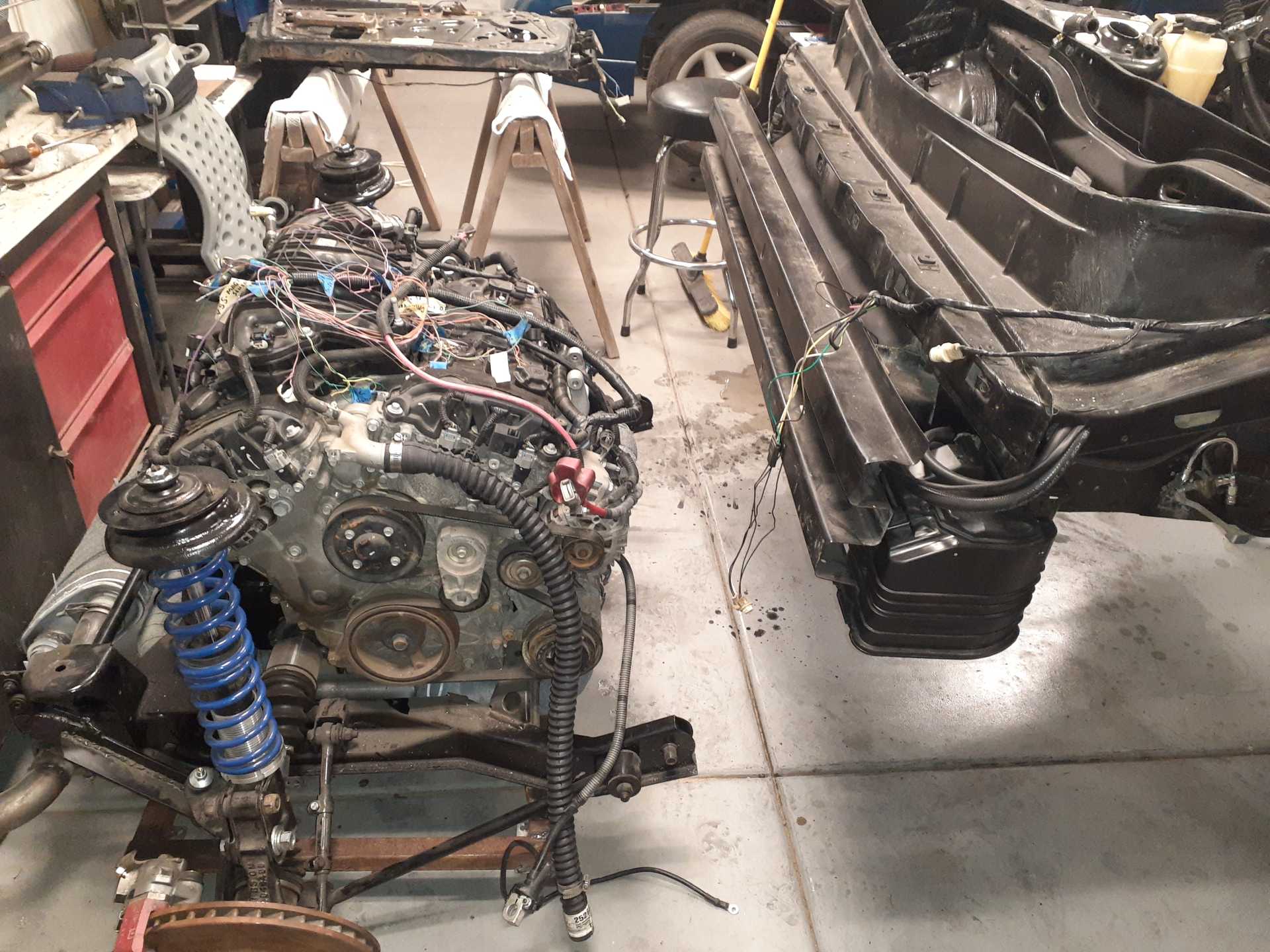
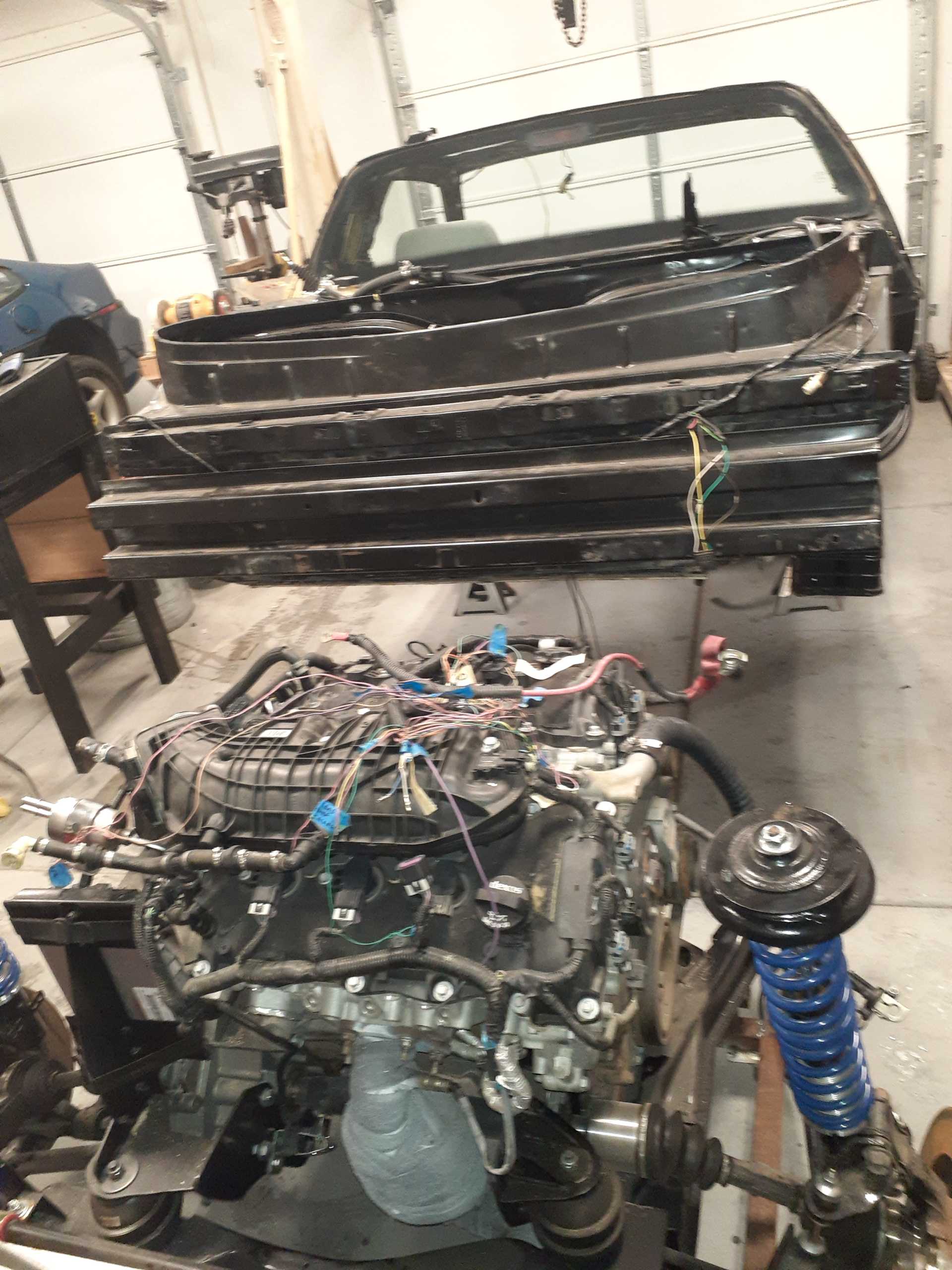
Well, I guess it had to happen. I did loosen the bell housing bolts to see if it was a clearance problem. Fluid gushed out, so I guess I may have a small leak. Anyway, the cradle is out and awaiting disassembly. Wish me luck.[This message has been edited by Daryl M (edited 10-01-2020).]
|
|
|
|
Joseph Upson
|
OCT 02, 08:20 AM
|
|
| quote | Originally posted by Daryl M:
Well, I guess it had to happen. I did loosen the bell housing bolts to see if it was a clearance problem. Fluid gushed out, so I guess I may have a small leak. Anyway, the cradle is out and awaiting disassembly. Wish me luck.
|
|
If clutch hydraulic fluid came from the bottom of the bell housing clutch area upon backing the transmission off a little, I suspect you have too much hydraulic volume and snapped the hydraulic throwout bearing past its stop, as I mentioned earlier has happened before, ruining the hydraulic bearing.
.
.
.
.
.
I wanted to come back and mention, that when I swapped the F40 in the 86, I was using the clutch mastercylinder from the 1984 model, because of all the versions I had experience with, it was the most dependable and trouble free for me. I was aware of the potential hydraulic mismatch with the F40 at the time and elected to put a couple of precautionary spacers between the firewall and mastercylinder mount to reduce hydraulic flow volume and I suspect that is why I never had a problem with the hydraulics after install.[This message has been edited by Joseph Upson (edited 10-02-2020).]
|
|
|
|