 
     |
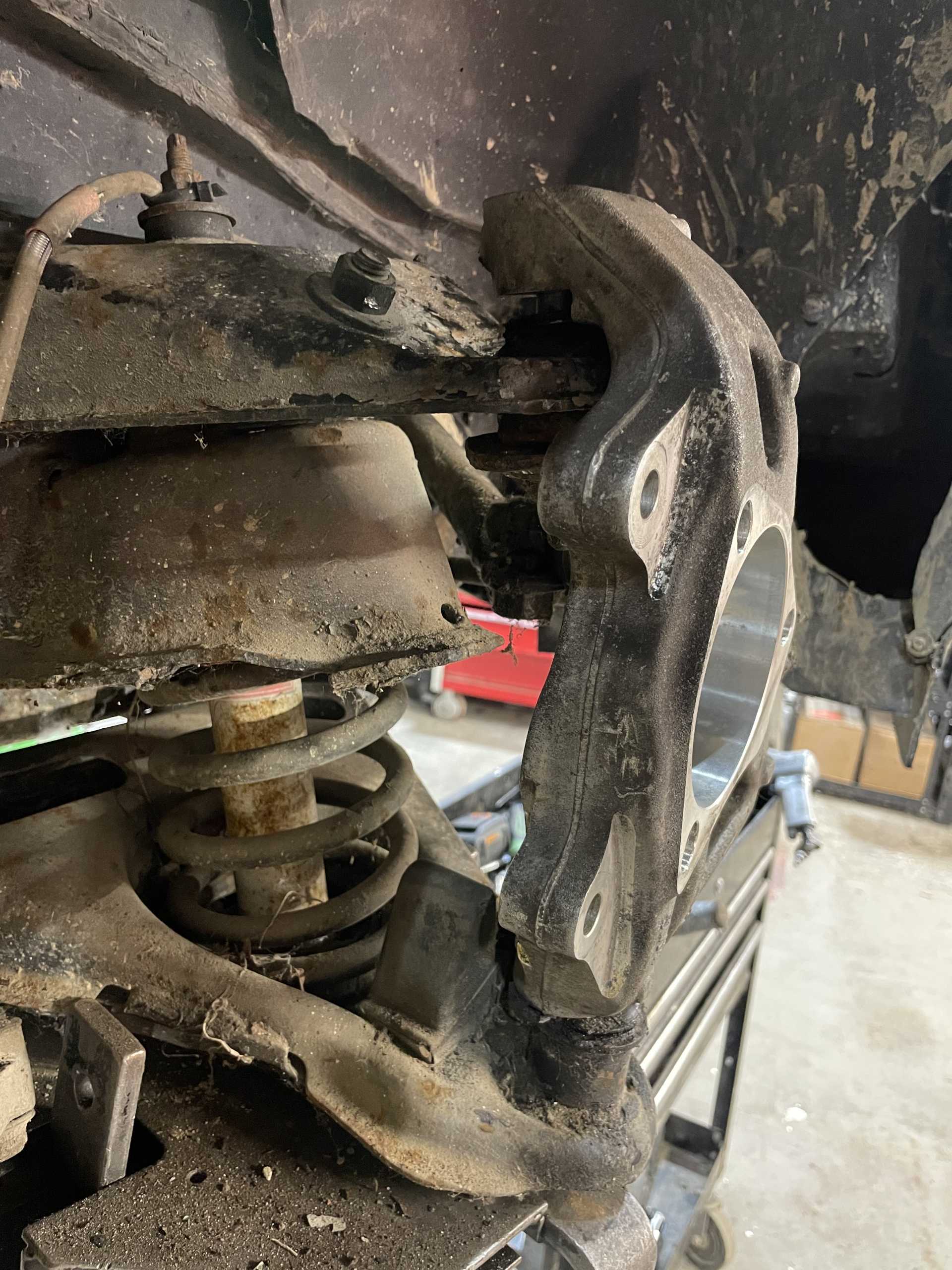
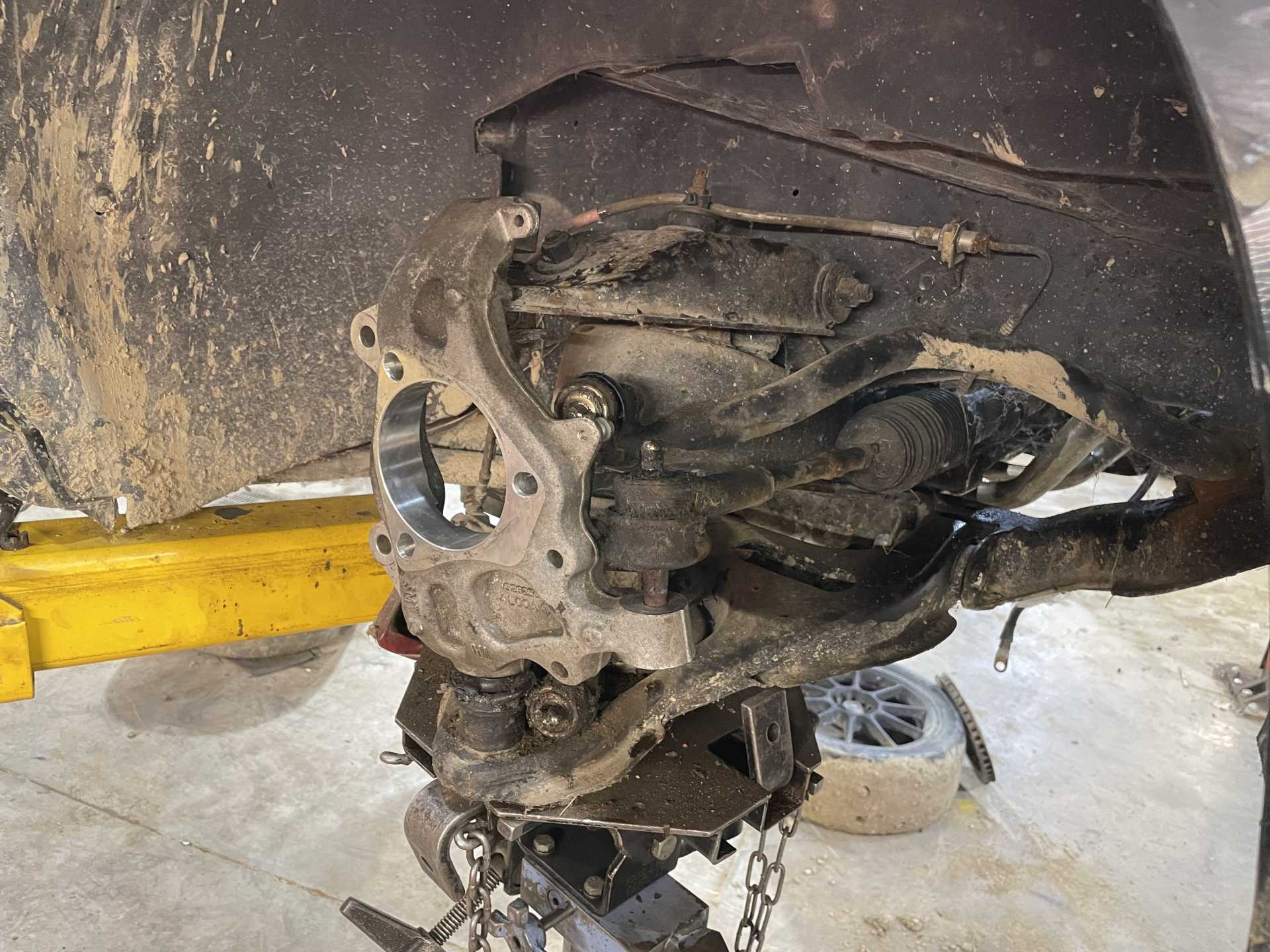
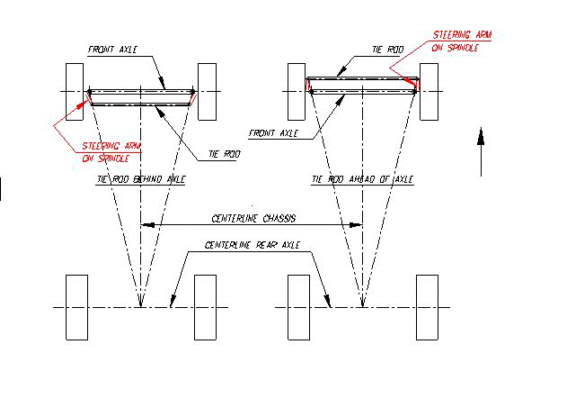
| Is the Ackerman angle on the 88 really bad? It looks it. (Page 5/5) |

|
ricreatr
|
JUL 07, 11:08 PM
|
|
| quote | Originally posted by Yellow-88:
I imagine that you mean the sealed wheel bearing / hub unit that bolts into the cast iron "knuckle". Better meaning more meaty? If I may ask, why?
|
|
yup the hub/bearing.
why? the usual 88 front hub conundrum, i have a hub starting to get loose, and there seems to be no good replacement available.
|
|
|
|
Steven Snyder
|
JUL 08, 03:19 PM
|
|
|
Has anyone really used Rodney's latest front hub design on a race car and had issues? Or is the "not for racing" warning a holdover from the earlier versions that had problems on the track?
|
|
|
|
ricreatr
|
JUL 08, 11:06 PM
|
|
|
Well, Steven Snyder is just the guy i would expect to know the answer to that question!! Thanks for the huge contributions you have made! I remember reading somebody had problems when racing with them, but dont remember what problem. being a rodney product, tapered roller bearings, and rebuild-able, i would really like to have a pair. so, yeah... are there any issues with them?
|
|
|
|
Yellow-88
|
JUL 09, 12:37 PM
|
|
| quote | Originally posted by ricreatr:
yup the hub/bearing.
why? the usual 88 front hub conundrum, i have a hub starting to get loose, and there seems to be no good replacement available. |
|
OK, yeah.
I heard somewhere long ago that, that unit was used in some piece of construction equipment. A tiny clue that I never pursued.
They are available as a car part .... but quality is an issue??? For racing??
Also as it turns out, there is "Ackerman Angle". It changes constantly so it's not really a measurable spec. Straight ahead, both wheel axial centerlines are the same line. When steering is input, an angle between the 2 centerlines appears. More steering, bigger angle. It's a meaningless number so it gets ignored in the definition of "Ackerman principal".
|
|
|
|
ricreatr
|
JUL 13, 08:58 AM
|
|
Welp, no replies, that proves unequivocally that rodneys hubs are ready for F1!
At least until steven gets those super techy cnc c8 hub knuckles available for us. So nice
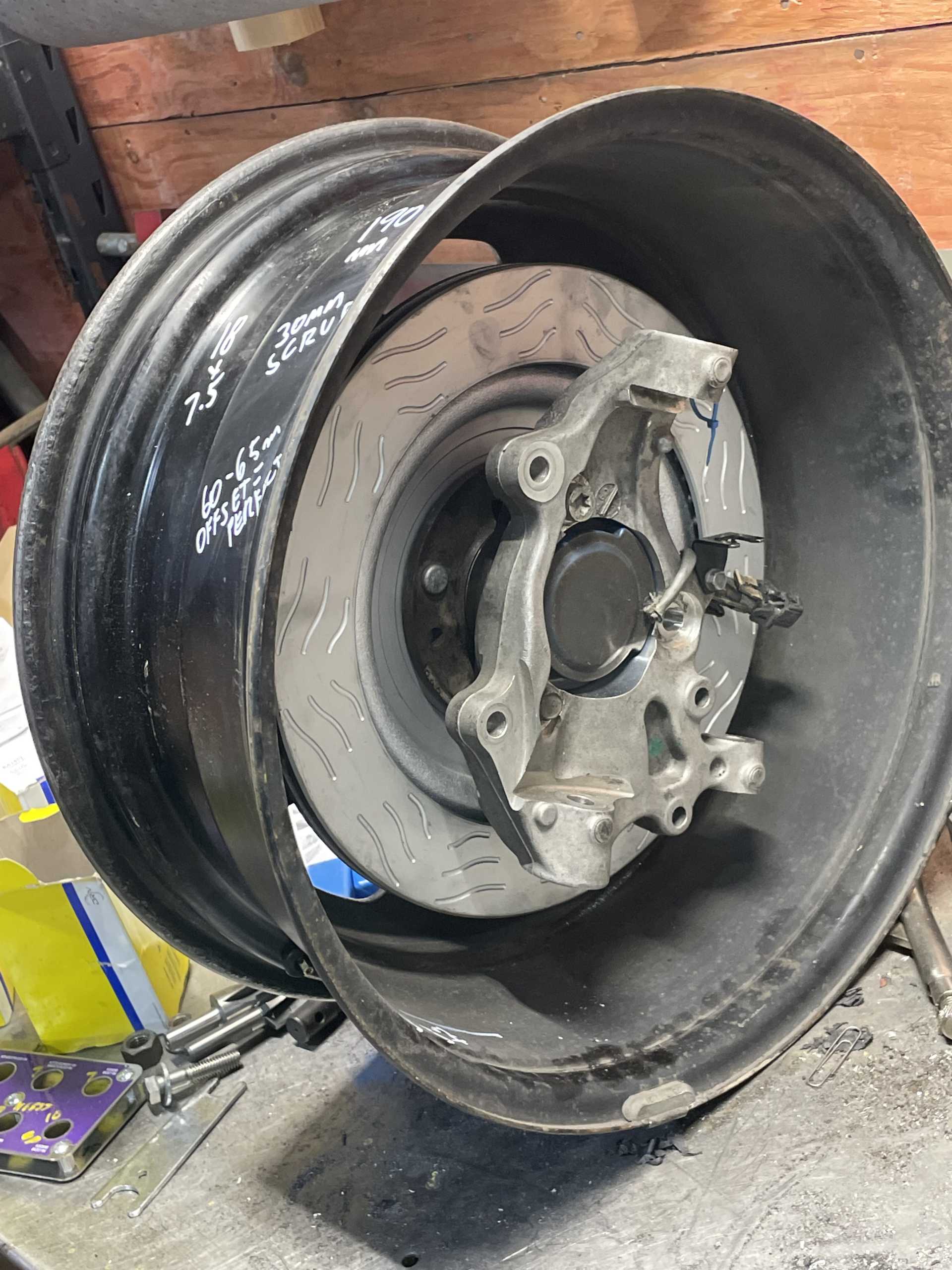
For now, here is a mockup with a steel camaro 18x7.5 rim. The offset is ~40mm. Scrub radius was a little over an inch. Plenty of room for the 88 calipers.
|
|
|
|
ricreatr
|
JUL 13, 09:29 AM
|
|
|
|
|
fieroguru
|
JUL 13, 06:21 PM
|
|
Here are the lines between the outer tierod pivots and the upper and lower balljoint pivots for the 88 Fiero. With 5 degrees of caster, the elevation of the tire rod pivot is within 3/16" of the midpoint of the upper and lower ball joint pivots. Also with 0.7 degrees negative camber, the tie rod pivot moves inboard about 0.050". Also assumed in the drawing is zero toe. The magenta line accounts for these changes. Change any of the caster, camber, toe assumptions and the lines will change. They even change as the car goes up and down over bumps as the suspension cycles.

Ackermann is OK in concept, but understand it was invented in the 1860s for horse drawn carriages, not for automotive applications with independent suspensions, flexible tires, and ability to corner above 0.75Gs.[This message has been edited by fieroguru (edited 07-13-2024).]
|
|
|
|
Yellow-88
|
JUL 14, 10:25 PM
|
|
You're enlightening me. I was of the understanding that Ackerman principal was either correct or incorrect. Correct if both inside and out side slip angles are equal and incorrect if they're not. Your drawing is straight running. What happens when steering is input? Is this geometry a way to model Ackerman Principle correctness? I always thought it was very hard to measure probably not adjustable without screwing up to many other parameters.
|
|
|
|