
 
     |
| High NOx Smog Failure (Defeat or Bust) (Page 5/9) |

|
Notorio
|
MAR 18, 07:10 PM
|
|
| quote | Originally posted by sanderson231:
Given that the vacuum source is ported the vacuum will depend on the position of the butterfly. The butterfly position while revving the engine to 1800 rpm in neutral vs driving down the road with the engine at 1800 rpm will be different The factory service manual does say when doing the 1800 rpm test to "have the engine in drive (automatic transmission), hold brake, accelerate momentarily to 1800 rpm and observe gauge". I'd suggest hooking a gauge with a long hose to the EGR port on the TB and taking the car for a drive while observing the gauge.
If it passes an 1800 rpm test, I would remove the top intake to inspect the EGR tube and where it enters the tube attaches to intake manifold to make sure that it is not grimed up.
Still curious that GM used ported vacuum when the ECM is using pulse width modulation to control the EGR solenoid)
|
|
Towards Patrick's good point, this new vacuum gauge just allowed me to retest when the EGR opens enough to cause the idle to stumble. Using my manual pump, teed into the line, with repeated trials, I'm convinced my EGR doesn't crack open until 3" on the gauge (whatever the 'absolute' inches of Hg might actually be.) The ported vacuum on the TB at 1800 rpm, now that I opened up the orifice to 0.075" (from 0.059"), is now a solid 1" instead of just barely moving the needle. There is no question whether this would open my EGR ... it will NOT.
Toward's Sanderson's good point, that is true the FSM calls for an automatic to be in gear and on the brakes. It DOES make sense that the throttle plate would be more open to accomplish that, and that the ported vacuum would therefore be higher. Instead of driving, can I do this with the wheels off the ground, since I have a manual?
Second point: when I had the EGR tube off I looked into the EGR port and it looked fine.
QUESTION: Before I try the road test with the really long vacuum tube, does anyone know what the California Smog test calls for at the two speeds? I had found that info but now can't find it again. I may have to call BAR to get a definitive answer. The reason I ask is because the three shops I've been too are not all doing it the same way.
For 15 mph test, use 1st gear, engine about 1600 rpm
For 25 mph test, use 2nd gear, engine about 2500 rpm
|
|
|
|
sanderson231
|
MAR 18, 07:43 PM
|
|
| quote | Originally posted by Notorio:
Toward's Sanderson's good point, that is true the FSM calls for an automatic to be in gear and on the brakes. It DOES make sense that the throttle plate would be more open to accomplish that, and that the ported vacuum would therefore be higher. Instead of driving, can I do this with the wheels off the ground, since I have a manual?
|
|
Maybe, if you applied some brake while revving engine up. You need to put some load on the engine to get the butterfly to open up. I would trust a road test more.
You could road test two ways; 1) with vacuum gauge connected to throttle body to make sure that you have enough source vacuum and 2) with vacuum gauge teed into vacuum line between the EGR solenoid and the EGR valve. The second test would verify functioning of EGR solenoid under control by the ECM.------------------
formerly known as sanderson
1984 Quad 4
1886 SE 2.8L
1988 4.9L Cadillac
1988 3800 Supercharged
|
|
|
|
Notorio
|
MAR 19, 10:34 AM
|
|
| quote | Originally posted by sanderson231:
Maybe, if you applied some brake while revving engine up. You need to put some load on the engine to get the butterfly to open up. I would trust a road test more.
You could road test two ways; 1) with vacuum gauge connected to throttle body to make sure that you have enough source vacuum and 2) with vacuum gauge teed into vacuum line between the EGR solenoid and the EGR valve. The second test would verify functioning of EGR solenoid under control by the ECM.
|
|
I'll do these tests once I understand the mph/gear question.
Found the BAR manual on line here.
|
|
|
|
Notorio
|
MAR 19, 11:15 AM
|
|
So, the BAR manual refers to specific vehicle/engine parameters that their system communicates to the Smog Test Machine, including the RPM limits for the test. It calls out testing manual transmissions in 2ND GEAR but allows for choosing higher/lower gears to satisfy the RPM Range. Therefore, I will have to call BAR and get an appointment with a Referee to get the RPM range 
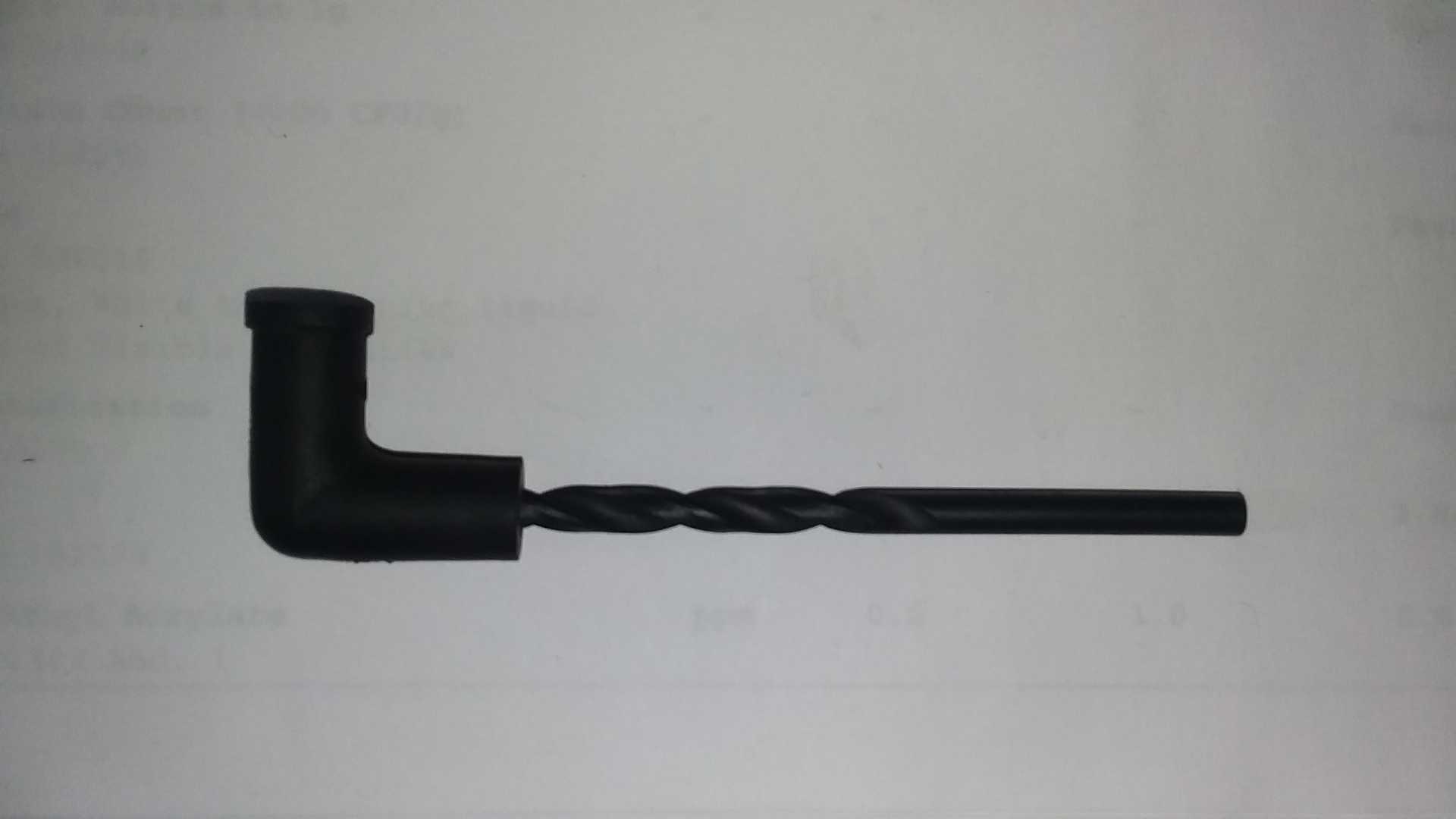
Meanwhile, I discovered it is easy to carefully drill out the broken-off plastic tubing from the Rubber Elbow, using a 5/32" drill for this instance. The elbow then fits smoothly onto the remaining tubing and a little non-hardening gasket sealer makes a nice seal. 
|
|
|
|
Notorio
|
APR 01, 12:37 PM
|
|
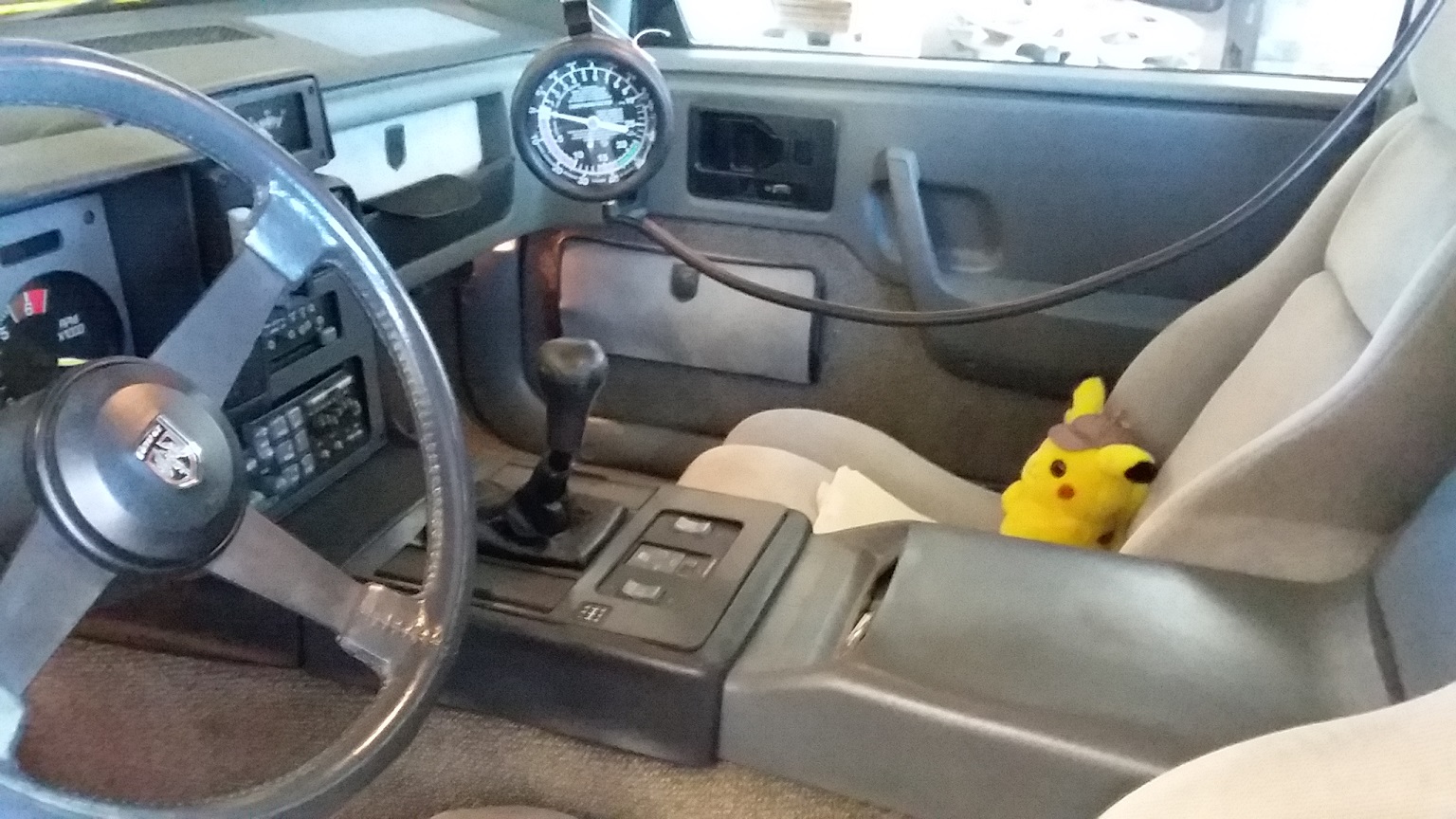
Update - finally able to run the road test. Below is my setup with the gauge in the cockpit. Drum roll please ....
25 mph, 2nd gear, level road, gauge teed into the EGR value. The vacuum is at most 2 inches.
25 mph, 2nd gear, level road, gauge directly to EGR port on the TB. The vacuum is about 10 inches.
Since from prior tests I know my new, new-style EGR doesn't open until 3 inches, this proves the EGR doesn't open during the Smog Test. The Root Cause would appear to be Too High of a 'Pressure Drop' inside the EGR Solenoid. How to fix THAT seems like the next challenge and more reading on the Forum.
|
|
|
|
Notorio
|
APR 01, 01:15 PM
|
|
Here is an excellent thread started in 2004 with posts out to 2020. Page 1 has all the info to troubleshoot a non-functional EGR Solenoid. Click Here I'm using this as my guide to take apart and look for perhaps weak opening against the spring or dirt buildup, etc.
|
|
|
|
Raydar
|
APR 01, 01:28 PM
|
|
| quote | Originally posted by Notorio:
...
Since from prior tests I know my new, new-style EGR doesn't open until 3 inches, this proves the EGR doesn't open during the Smog Test. The Root Cause would appear to be Too High of a 'Pressure Drop' inside the EGR Solenoid. How to fix THAT seems like the next challenge and more reading on the Forum.
|
|
Edit - Your post beat me to it.
=========================
Okay. In this case "Pressure Drop" pretty much = "Vacuum Leak"
Thje EGR valve works by venting ported vacuum to the atmosphere, when it's not commanded "on". This is the little nipple on the front end of the EGR solenoid.
Blocking that nipple should provide maximum vacuum to the EGR valve. Period. Unless there is a leak somewhere else.
Easy enough to test (or possibly to "gimmick" the solenoid by putting a BB in a hose, attached to that nipple. Nudge, nudge. Same thing as running a hose straight from the TB to the EGR valve.)
Or it's possible that your EGR solenoid is just failing.
I'll remind you of the recall "fix". There used to be a rubber hose that connected that nipple on the EGR solenoid to a tube on the firewall. That tube extended over to the air filter. It was sucking air, but it was filtered air. Many times, those hoses just got removed.[This message has been edited by Raydar (edited 04-01-2023).]
|
|
|
|
Notorio
|
APR 01, 01:55 PM
|
|
| quote | Originally posted by Raydar:
A. Okay. In this case "Pressure Drop" pretty much = "Vacuum Leak"
B. Thje EGR valve works by venting ported vacuum to the atmosphere, when it's not commanded "on". This is the little nipple on the front end of the EGR solenoid.
Blocking that nipple should provide maximum vacuum to the EGR valve. Period. Unless there is a leak somewhere else.
Easy enough to test (or possibly to "gimmick" the solenoid by putting a BB in a hose, attached to that nipple. Nudge, nudge. Same thing as running a hose straight from the TB to the EGR valve.)
C. Or it's possible that your EGR solenoid is just failing.
I'll remind you of the recall "fix". There used to be a rubber hose that connected that nipple on the EGR solenoid to a tube on the firewall. That tube extended over to the air filter. It was sucking air, but it was filtered air. Many times, those hoses just got removed.
|
|
Raydar, thanks for thinking about my little problem. I've got the Solenoid partially apart now and am leaking at possible leaks (Point A). The hoses to/from were previously checked and found NOT to leak.
As for Point B, the function of the complete system is still a bit mysterious to me. I suspect if I try to block that filtered-air inlet, the EGR Valve will OPEN and then remain open, regardless of the position of the Throttle Plate. Not sure about that, however.
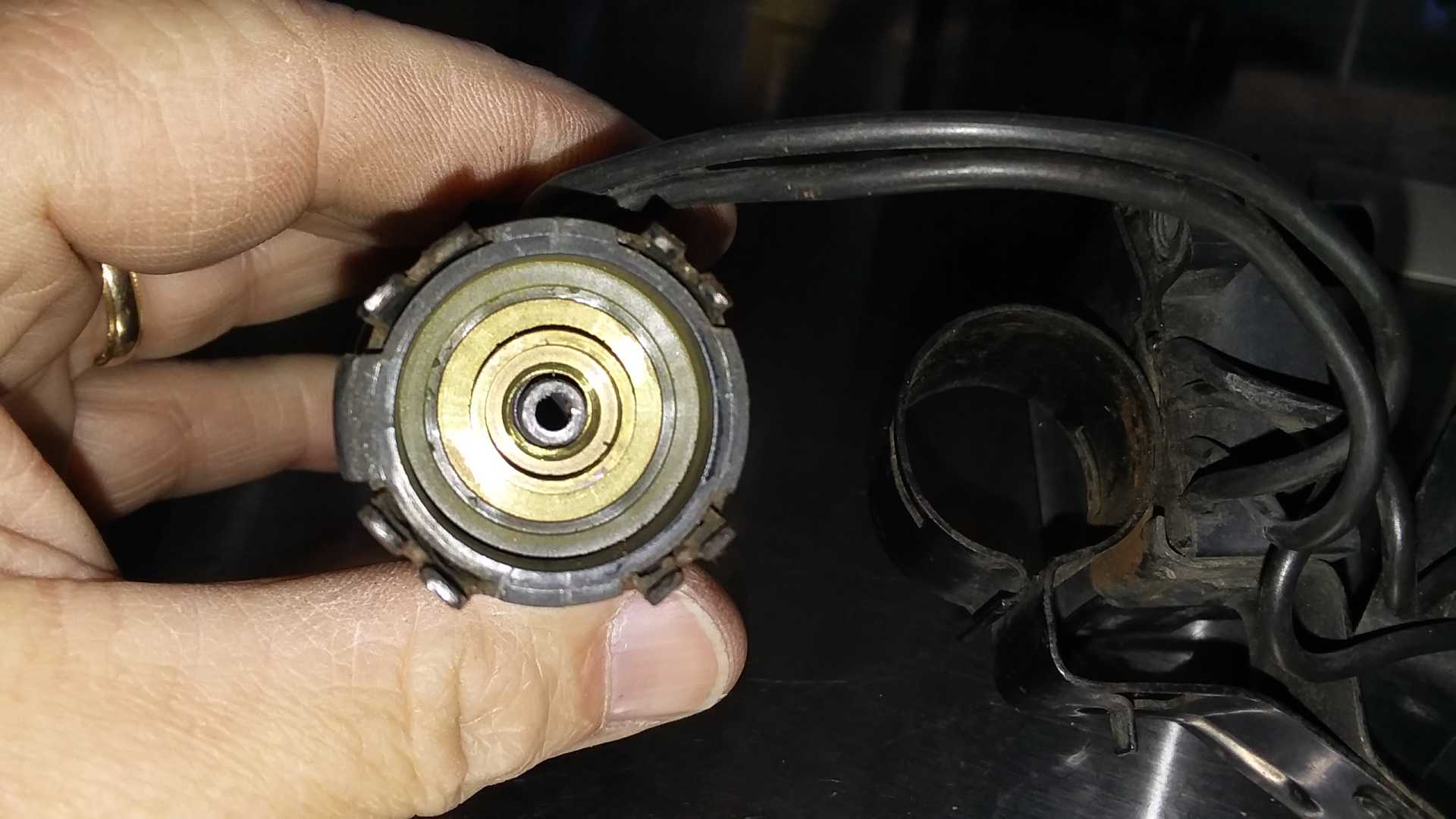
As for Point C, I can't get the solenoid coil out of the housing. I've pulled and pushed as much as I dare. Is there a trick to this? Posting a picture of what that looks like below.
|
|
|
|
Notorio
|
APR 01, 02:00 PM
|
|
Here's something interesting. The relatively large diameter hosing coming from the TB Port and going to the EGR Solenoid has an orifice in it that is TINY. Take a look below, the nipple on the Left. There is no Brass Filter that I can see. One thought I had was to enlarge this TINY hole a bit ...
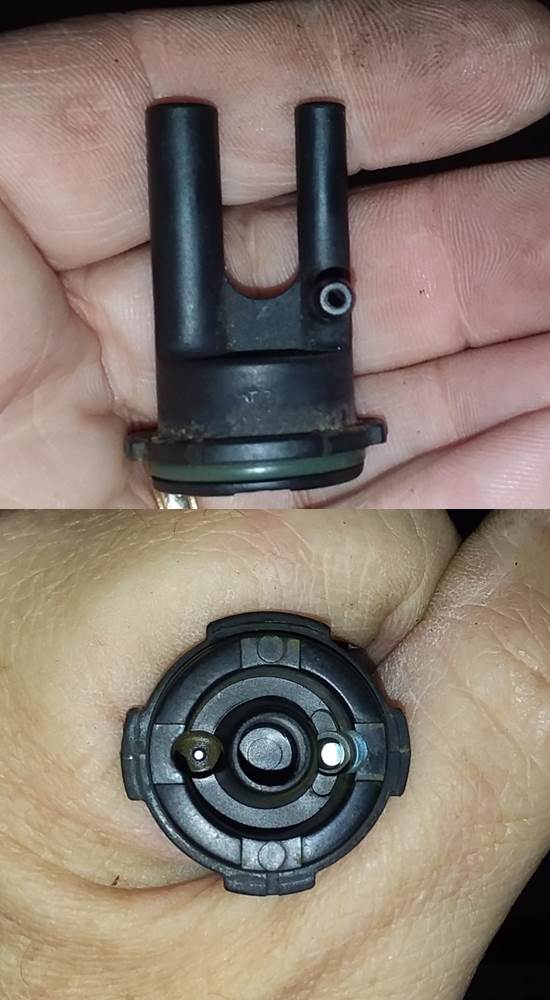
Another idea would be to snip a coil off this spring to make it easier to open ...
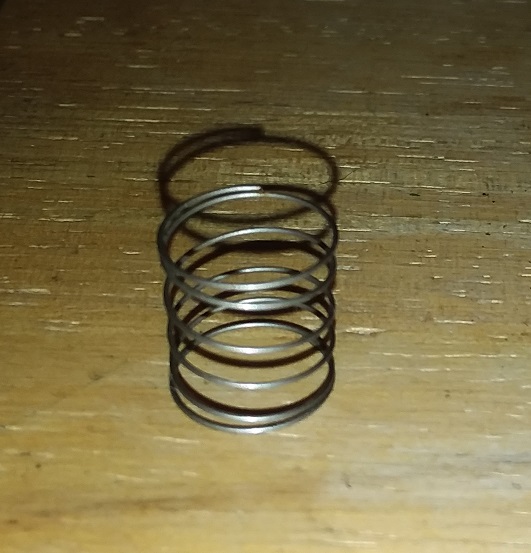
|
|
|
|
Notorio
|
APR 01, 04:42 PM
|
|
| quote | Originally posted by Notorio:
As for Point B, the function of the complete system is still a bit mysterious to me. I suspect if I try to block that filtered-air inlet, the EGR Valve will OPEN and then remain open, regardless of the position of the Throttle Plate. Not sure about that, however.
|
|
Eureka! Raydar, you were right! I plugged the filtered-air inlet as suggested and now I'm getting 10 inches at 25 mph! Let off the throttle and the vacuum returns immediately to zero.
|
|
|
|