
 
     |
| My 1988 LFX F40 build. (Page 44/68) |

|
pmbrunelle
|
JUL 25, 12:57 AM
|
|
|
I don't think anybody plans from the get-go to use special wiring (cause $$)... sounds like the kind of thing that is implemented following problems encountered in testing.
|
|
|
|
Daryl M
|
JUL 25, 01:30 AM
|
|
| quote | Originally posted by ChuckR:
Daryl, I keep seeing your adjustable coilovers. I went back through this thread again and I do not see if you ever said where they came from. I either am missing the post or it is not called out. In your pix i do not see them when you are asking about the rear sway bar, and then they are there in pix after. I am just curious as I want to get a parts list for replacing / refreshing my 88' suspension. Thanks! |
|
The coilovers are made from monroe struts from Rockauto and a cheap coil over kit for a Honda from Ebay. Kit costs under $40, but had to be enlarged on my lathe to fit over the strut.
|
|
|
|
Joseph Upson
|
JUL 25, 08:41 AM
|
|
| quote | Originally posted by Daryl M:
The coilovers are made from monroe struts from Rockauto and a cheap coil over kit for a Honda from Ebay. Kit costs under $40, but had to be enlarged on my lathe to fit over the strut. |
|
Coleman Racing is an excellent source for this. They sell the coil over components in an assortment of different sizes to tailor fit. I ordered the coils in the desired rate (275) from Summit. It was easier to navigate Coleman through their catalog as opposed to the search engine.[This message has been edited by Joseph Upson (edited 07-25-2020).]
|
|
|
|
Will
|
JUL 26, 11:38 AM
|
|
| quote | Originally posted by pmbrunelle:
The PWM may nominally switch in the audio frequency range, however, every time the switch transitions from on to off (or vice versa), the hit can excite resonant modes in the tens or hundreds of MHz. Of course, this is implementation-dependent. |
|
That also depends on how fast the ramp is... and there's no reason for it to be particularly fast. In fact, the faster it is, the more the inductive componets of the motor produce back EMF for those high frequency components of the signal.[This message has been edited by Will (edited 07-26-2020).]
|
|
|
|
ChuckR
|
JUL 26, 12:53 PM
|
|
| quote | Originally posted by Joseph Upson:
Coleman Racing is an excellent source for this. They sell the coil over components in an assortment of different sizes to tailor fit. I ordered the coils in the desired rate (275) from Summit. It was easier to navigate Coleman through their catalog as opposed to the search engine.
|
|
Yes I see their website is less to be desired. I did order a catalog. Thanks for that!
|
|
|
|
Daryl M
|
JUL 28, 09:26 PM
|
|
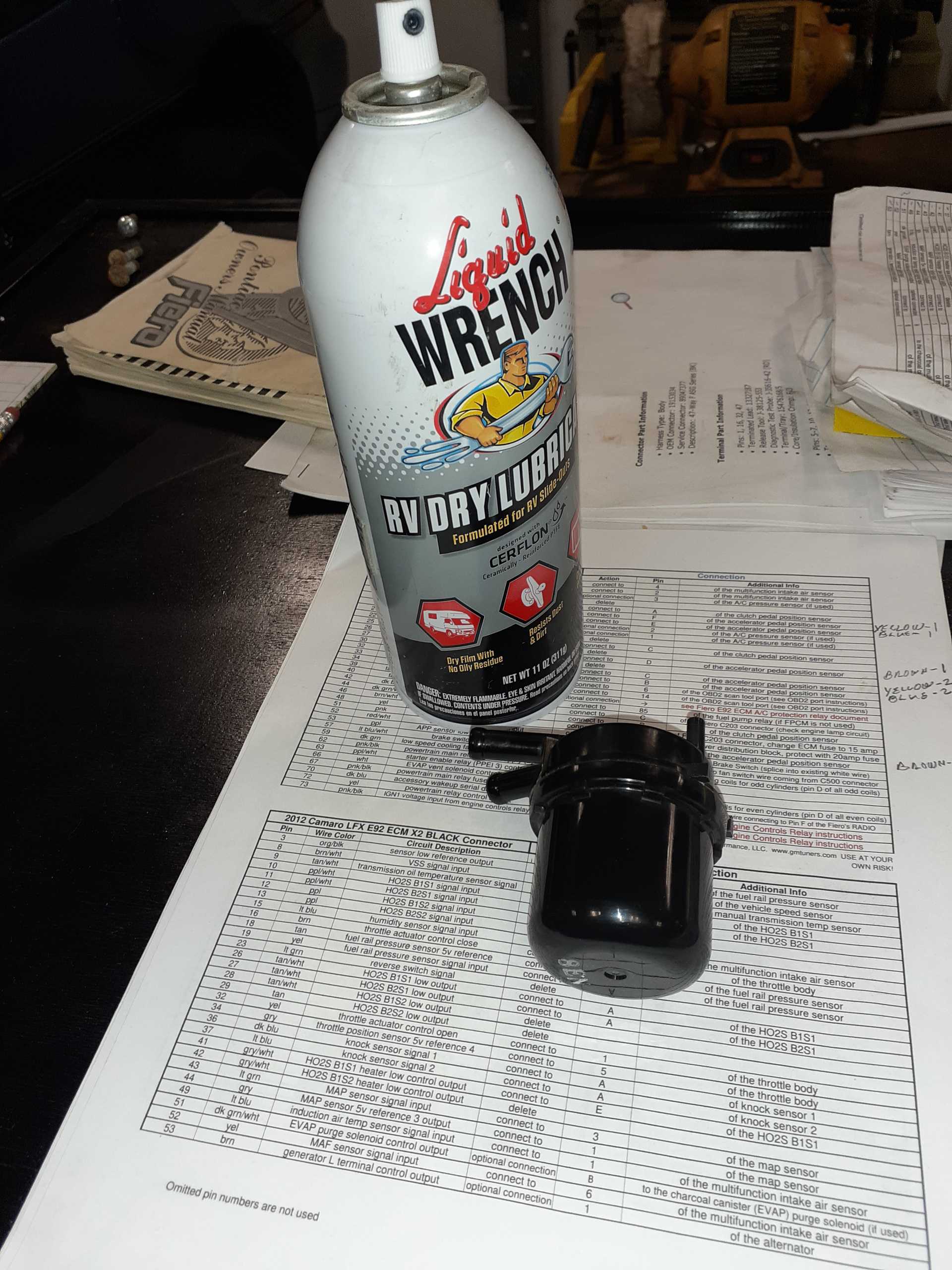 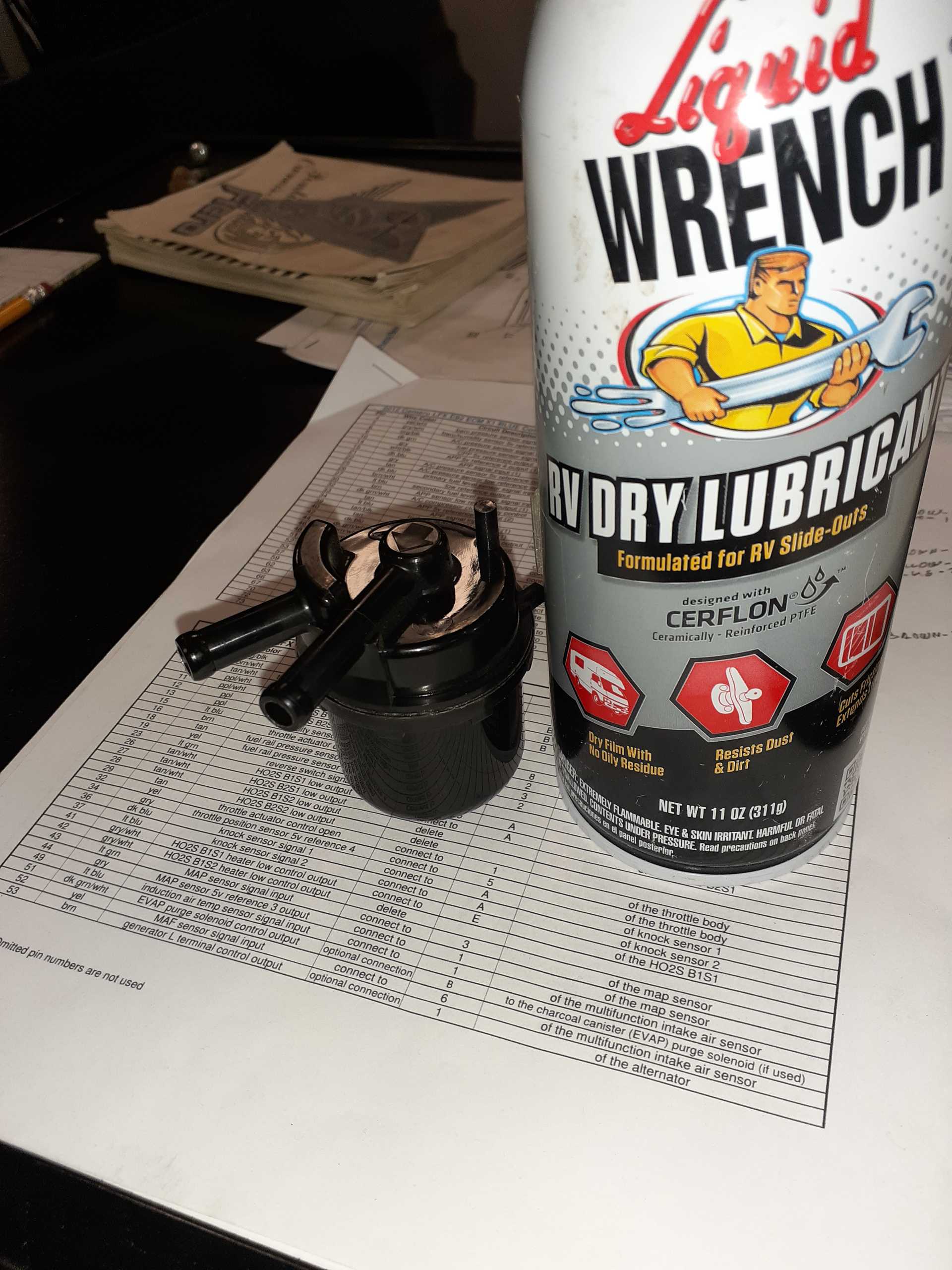
Photos of my new vapor canister. When I ordered this on Amazon, it didn't say exactly how big it was or what it was made to fit, but I am really short on space in the engine compartment, so I'm thinking of trying it. What are your thoughts on such a small carbon vapor canister?
|
|
|
|
Rickady88GT
|
JUL 29, 12:19 PM
|
|
| quote | Originally posted by Daryl M:
Photos of my new vapor canister. When I ordered this on Amazon, it didn't say exactly how big it was or what it was made to fit, but I am really short on space in the engine compartment, so I'm thinking of trying it. What are your thoughts on such a small carbon vapor canister? |
|
That looks like it is from a lawn mower?
I did not put my canister in the engine bay, I put it under the expansion tank. I can just barely see it through the side scoop.
|
|
|
|
Joseph Upson
|
JUL 29, 07:17 PM
|
|
When you consider the size of the original for the Fiero, and the typical size of what usually accompanies the 3.6L, I'd say it is severely under sized. There's a lot of expansion taking place in the tank, although not as much as in the donor vehicle because of the size of the tank. I'm recalling the amount of venting I observed in a Fiero upon removing the gas cap after the vent line clogged, it was quite a bit.
As for the tuning issue, it's real simple, two PCMs, an emissions PCM and a performance/edited PCM.[This message has been edited by Joseph Upson (edited 07-29-2020).]
|
|
|
|
Daryl M
|
JUL 29, 08:43 PM
|
|
|
I'm trying to wrap my head around what is going on in this system. It is a closed system, so flow can't be too much. The whole purpose of the system, as I understand it, is to allow for expansion and contraction due to temperature changes and to prevent a vacuum to form as fuel is used in a closed system. That is about 4 or 5 liters of air displaced every 30 minutes . If all it is doing is absorbing fuel vapors from air, that isn't much fuel, or am I missing something?
|
|
|
|
pmbrunelle
|
JUL 29, 10:27 PM
|
|
| quote | Originally posted by Daryl M:
If all it is doing is absorbing fuel vapors from air, that isn't much fuel, or am I missing something? |
|
On a traditional car with a vented cap, it smells like fuel all the time because evaporation continues non-stop. I suppose if there was enough time, the tank would evaporate until it became empty.
So given enough time parked, and a sufficiently warm fuel temperature, I think the charcoal canister would eventually become loaded with gasoline. At the point it can't adsorb any more gasoline, it will start to smell like fuel outside the car, as gasoline goes straight out the vent.
So, I think the size of the canister would depend on how long you wish the car to remain odour-free when parked.
Once you run the engine and purge the canister, then the clock is reset back to zero.
I don't really know, I'm just thinking out loud.[This message has been edited by pmbrunelle (edited 07-29-2020).]
|
|
|
|