
 
     |
| V8 vs V6 (Page 4/9) |

|
pmbrunelle
|
JAN 04, 07:36 PM
|
|
| quote | Originally posted by olejoedad:
The more bottom end torque available directly results in acceleration off of the line.
Torque = Acceleration
Horsepower = Top end |
|
I do feel that when we talk about bottom end torque, we should not be speaking about torque at a specific RPM, but we should be speaking about horsepower at some percentage of redline.
Car engine tachometers could be calibrated in %redline, like this Boeing 737-300 tach:
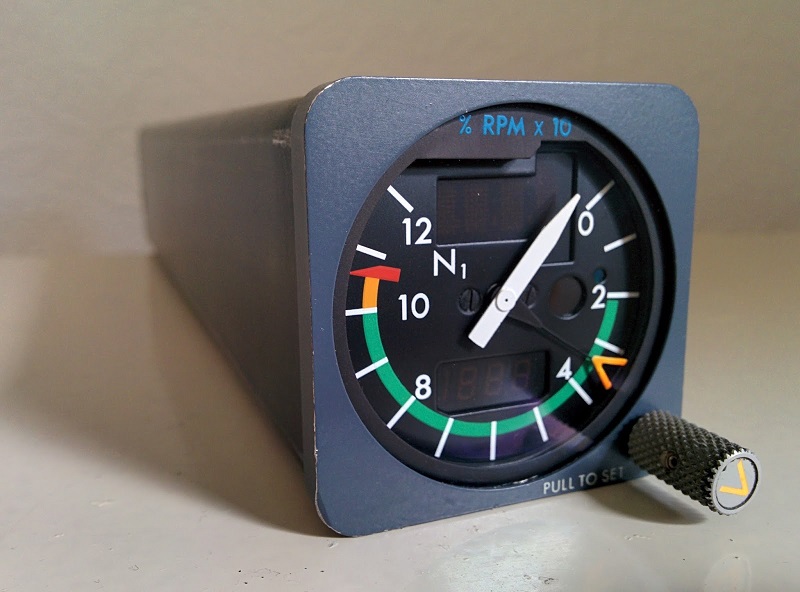
Is an 8000 RPM redline engine more fun than a 5000 RPM redline engine? If gearing compensates for different RPMs, the driver might not be able to tell the difference between both engines, if the instrument cluster doesn't have an RPM readout.
In my mind, it makes a lot of sense to normalize the horizontal axis of dyno graphs to %redline, for better comparison between engines.
|
|
|
|
Daryl M
|
JAN 05, 12:50 AM
|
|
|
Would this post be a good place to discuss the pros and cons of long stroke smaller bore engines vs short stroke larger bore engines? Bigger bore allows for larger valves and better breathing. Longer stroke allows for a longer time to more completely burn the air/fuel mixture making for better efficiency. [This message has been edited by Daryl M (edited 01-05-2022).]
|
|
|
|
Will
|
JAN 06, 09:53 AM
|
|
| quote | Originally posted by Patrick:
Thanks, I'll be crossing that engine off my list.  |
|
I wouldn't recommend it for a Fiero regardless. First: Diesel. Second: Even though it has an aluminum block, it still weighs >450#. It's built to haul 6000 kg (13,000 lbs) Sprinter vans and other similarly heavy vehicles and vans around Europe... it's built to be beat on constantly. Third: it makes 370-390 ftlbs stock with 450 torks as close as a tune.
| quote | Originally posted by Daryl M:
Would this post be a good place to discuss the pros and cons of long stroke smaller bore engines vs short stroke larger bore engines? Bigger bore allows for larger valves and better breathing. Longer stroke allows for a longer time to more completely burn the air/fuel mixture making for better efficiency.
|
|
Maybe you're thinking "long rod" vs "long stroke"?
|
|
|
|
Daryl M
|
JAN 06, 01:35 PM
|
|
| quote | Originally posted by Will:
Maybe you're thinking "long rod" vs "long stroke"? |
|
No, thinking long stroke.
|
|
|
|
Skybax
|
JAN 07, 11:14 AM
|
|
| quote | Originally posted by Dennis LaGrua:
The 2.8L has been road tested to be a 16 second car in the 1/4 mile
|
|
I realize its off topic, but throwing numbers around I just want to elaborate, the stock Getrag 5-speed V6 Fiero's are in the 16-second range, while the stock 85-86 Muncie 4-speed V6 Fieros are in the mid 15-second range. I realize that is splitting hairs, nobody cares, and not the purpose of the conversation, but the V6 Muncie 4-speed is just as quick as the stock 5.0 Mustang's from the same era which is impressive, considering they both weighed 2750 pounds and the 5.0 V8 had more power. (Fiero made up difference in aerodynamics and mid-engine layout, verses Mustang loss through driveshaft, solid rear axle, poor traction, etc).
| quote | Originally posted by Patrick:
If you love the sound of your engine, you get to revel in its glory from the moment it's started, right up until it's turned off. 
|
|
Yep, while I like the sound of many engine swaps in Fiero's, I still think the stock Fiero V6 sounds really good, especially for the era. My current stock GT sounds better and louder than my previously owned low-mileage GTs, because while it has the original exhaust system like the others, the higher mileage original muffler is probably all carboned up and not doing much sound muffling, combined with a universal high-flow cat, so it definitely gets the attention and quite a few people ask/comment about the exhaust and they can't believe its stock.[This message has been edited by Skybax (edited 01-07-2022).]
|
|
|
|
Skybax
|
JAN 07, 11:39 AM
|
|
| quote | Originally posted by pmbrunelle:
like this Boeing 737-300 tach:
|
|
Wooooooooooooooooo, nice.[This message has been edited by Skybax (edited 01-07-2022).]
|
|

|
Patrick
|
JAN 07, 02:22 PM
|
|
| quote | Originally posted by Skybax:
I still think the stock Fiero V6 sounds really good...
|
|
I agree. I quite like the sound of my '86 GT and '88 Formula. My '84 duke, not so much. 
|
|
|
|
Will
|
JAN 09, 05:53 PM
|
|
| quote | Originally posted by Daryl M:
No, thinking long stroke. |
|
A long stroke engine at 3000 RPM has the same time for combustion & power stroke as a short stroke engine at 3000 RPM.
A long *rod* engine has the piston moving slower around TDC, so it actually does allow (a little) extra time for combustion at high pressure before the piston starts down the bore. This usually manifests as less ignition advance required for best BMEP.[This message has been edited by Will (edited 01-09-2022).]
|
|
|
|
Daryl M
|
JAN 11, 03:14 PM
|
|
| quote | Originally posted by Will:
A long stroke engine at 3000 RPM has the same time for combustion & power stroke as a short stroke engine at 3000 RPM.
A long *rod* engine has the piston moving slower around TDC, so it actually does allow (a little) extra time for combustion at high pressure before the piston starts down the bore. This usually manifests as less ignition advance required for best BMEP.
|
|
You are correct about the time at a given rpm, but a long stroke smaller bore engine of the same displacement as a larger bore short stroke engine does not rev as high therefore there is more time for combustion.
|
|
|
|
pmbrunelle
|
JAN 11, 06:46 PM
|
|
The faster an engine revs, the more the contents of the cylinder swish around, so combustion is completed in less time.
So as engine RPM increases, combustion speed also increases; the two effects seem to balance each other, and often spark advance is constant above a certain RPM.
|
|
|
|