|
| My 1988 LFX F40 build. (Page 23/68) |

|
Daryl M
|
NOV 14, 06:46 PM
|
|
| quote | Originally posted by Joseph Upson:
That has not been my experience with mine and hence part of the reason I stopped putting premium in it. My 32 mpg hwy best over a common 80 mile trip that I make from time to time was not on premium fuel which I have not used in more than a year now. Doesn't mean it is not possible for an example to perform better with more octane, but I can no longer rationalize the use of premium for performance specs achieved on regular. I may mount up the acelerometer and fill up with it again for another try.
There is documentation in my owners manual that supports moving to 89 octane for better performance in like vehicles equipped with the LY7 port injected 3.6L, if spark knock is detected, but no such recommendation for the direct injected motor. The direct injection is that efficient, the LLT is 11.3:1 and the LFX 11.5:1 compression, both rated on 87 octane which should pretty much dampen the notion that there is any more to be had with premium except where the tune has been altered. If there were, I'd expect GM to have stated so in the owners manual.
As I mentioned previously, premium does tend to have an audible effect on cold starts if they are like what's heard in the video by decreasing and eliminating them altogether, but that's only masking the real issue.
|
|
Luckily, I live in Phoenix where there is no such thing as a cold start.😝😝😝
|
|
|
|
Daryl M
|
NOV 18, 02:05 PM
|
|
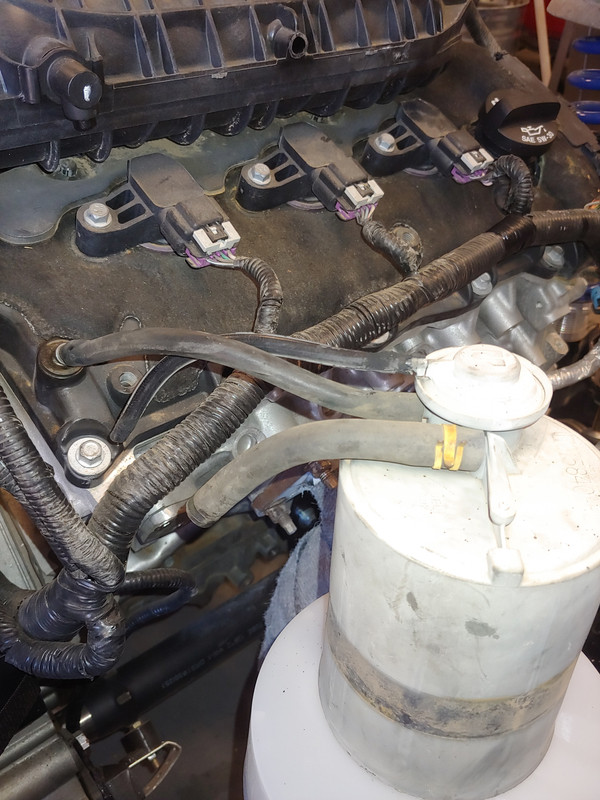
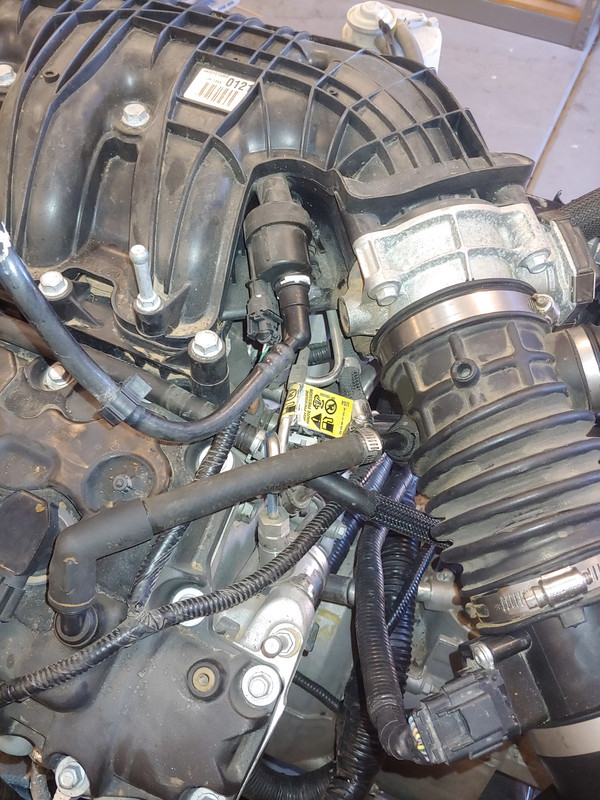
Hi All,
I am still working out the pvc system. I found the grey canister shown in the photo, in the pile of parts from the donor car (2013 Impala). One hose seems to fit as shown, but where do the other two go? This would be easier if I had taken photos before dismantling the Impala, but so is goes with amatures like me. Anyone willing to give more advice or know where i can get a schematic of the PVC system from a 2013 impala with an LFX? The other photo shows other hose routing I found in a photo on the web. Looks just like you guys discribed. Is this the line where a catch can would be added?
Thanks
Daryl[This message has been edited by Daryl M (edited 11-18-2019).]
|
|
|
|
Joseph Upson
|
NOV 18, 08:44 PM
|
|
|
That looks like the charcoal canister from the Fiero, You need the EVAP canister from the donor car which is likely somewhere near the fuel tank, unless you're able to disable the codes that are going to set as a result of it missing from the circuitry. That's not going to work for what you're attempting to use it for. Do a google search, you should find some good ideas on what you can do for an oil catch can. [This message has been edited by Joseph Upson (edited 11-18-2019).]
|
|
|
|
Daryl M
|
NOV 19, 03:01 AM
|
|
| quote | Originally posted by Joseph Upson:
That looks like the charcoal canister from the Fiero, You need the EVAP canister from the donor car which is likely somewhere near the fuel tank, unless you're able to disable the codes that are going to set as a result of it missing from the circuitry. That's not going to work for what you're attempting to use it for. Do a google search, you should find some good ideas on what you can do for an oil catch can.
|
|
Any idea where I can find a schematic of the PVC system of a 2013 Impala?
|
|
|
|
fieroguru
|
NOV 19, 06:50 AM
|
|
| quote | Originally posted by Daryl M:
Any idea where I can find a schematic of the PVC system of a 2013 Impala? |
|
Factory service manual.
I don't do any OBDII swap without one. It gives you a lot of details important to the swap and helps you avoid issues.
|
|
|
|
Daryl M
|
NOV 19, 12:12 PM
|
|
| quote | Originally posted by fieroguru:
Factory service manual.
I don't do any OBDII swap without one. It gives you a lot of details important to the swap and helps you avoid issues. |
|
Thanks Guru. Great tip.
|
|
|
|
Daryl M
|
NOV 19, 11:52 PM
|
|
| quote | Originally posted by fieroguru:
Factory service manual.
I don't do any OBDII swap without one. It gives you a lot of details important to the swap and helps you avoid issues. |
|
So any tips on where to get a factory service manual?
|
|
|
|
Will
|
NOV 20, 08:35 AM
|
|
| quote | Originally posted by Daryl M:
So any tips on where to get a factory service manual? |
|
https://www.helminc.com/hel...e=&selected%5Fmedia=
The paper manual set is a bit pricey at $300.
AllData and a couple of other services are available on a subscription basis with factory service info.
|
|
|
|
Joseph Upson
|
NOV 20, 11:14 AM
|
|
Ebay, craigslist and offerup for the best prices on GM shop manuals. I found a set for my car on ebay in like new condition for a small cry of what they cost. Four mid to large phone book size manuals. I prefer turning pages to looking at a computer screen on diagnostic issues.
On a different note, GM did some nice work on improving this motor. The DI motors have shorter piston wrist pins that are also tapered inside the ends for a weight reduction of 20 grams over the first design in the LY7. That along with increasing the connecting rod length from 5.9212" to 6.00" amounts to ~100 lb reduction in inertial load at peak rpm. The DI motors also have connecting rods that are also tapered on the small end for an additional reciprocating weight reduction. On my scale, LY7 rod 646 grams, DI rods 640 grams. The DI pistons are roughly 1 gram lighter in wt from my measurements.[This message has been edited by Joseph Upson (edited 11-20-2019).]
|
|
|
|
Will
|
NOV 20, 04:00 PM
|
|
Are LY7 and LLT parts the same in that regard?
The LFX makes more output in stock form than the LLT, but the LLT can have headers and the LFX can't.
|
|
|