
 
     |
| My 1988 LFX F40 build. (Page 22/68) |

|
Will
|
NOV 10, 06:40 PM
|
|
| quote | Originally posted by fieroguru:
On my LS4 swap I added a catch can on the dirty air line and it collects about 1" of oil ever y oil change (5000 miles). |
|
| quote | Originally posted by Daryl M:
Guru, I have read that a catch can does help with buildup on the intake valves. Is that true?
|
|
I'm going to change my position on this slightly.
For DI engines, run a catch can in between the PCV *OUTLET* and the manifold. IOW, the can will see manifold vacuum. Do *NOT* switch the flow direction. GM spends a lot of money designing oil separators that are highly efficient for the space available inside the valve cover. DI has made OEM level PCV oil separation requirements MUCH more stringent than port injection oil separation requirements were. The LFX, as a second generation DI engine, has the benefit of better PCV oil separation than older engines, including the LLT.
That being said, if you have extra space for a catch can, or gross overkill like a Mann & Hummel ProVent, using it to clean up the small amount of PCV oil that gets through GM's system will be beneficial for preventing valve deposits in the engine.
IOW, use the original PCV system, intact, in the original flow direction, but optionally add a catch can in between the valve cover outlet and the manifold vacuum connection.[This message has been edited by Will (edited 11-10-2019).]
|
|
|
|
Daryl M
|
NOV 10, 10:53 PM
|
|
| quote | Originally posted by Will:
I'm going to change my position on this slightly.
For DI engines, run a catch can in between the PCV *OUTLET* and the manifold. IOW, the can will see manifold vacuum. Do *NOT* switch the flow direction. GM spends a lot of money designing oil separators that are highly efficient for the space available inside the valve cover. DI has made OEM level PCV oil separation requirements MUCH more stringent than port injection oil separation requirements were. The LFX, as a second generation DI engine, has the benefit of better PCV oil separation than older engines, including the LLT.
That being said, if you have extra space for a catch can, or gross overkill like a Mann & Hummel ProVent, using it to clean up the small amount of PCV oil that gets through GM's system will be beneficial for preventing valve deposits in the engine.
IOW, use the original PCV system, intact, in the original flow direction, but optionally add a catch can in between the valve cover outlet and the manifold vacuum connection.
|
|
Great suggestion to add the can. I do have a question about location. Does it matter how high or low the can is in relation to the engine?
|
|
|
|
fieroguru
|
NOV 11, 06:34 AM
|
|
| quote | Originally posted by Daryl M:
Guru, I have read that a catch can does help with buildup on the intake valves. Is that true?
|
|
Sending an oil mist through the intake will leave oil deposits everywhere inside (plenum, runners, back side of valves, etc.)
Traditional port fuel injected engines point the injector at the back of the valves, which helps to rinse them off and keep them clean.
DI engines move the injector into the combustion chamber, so any oil deposits that end up on the back side of the valve will collect over time and cause some form of buildup.
I mounted my catch can as low as possible and away from the exhaust heat for 2 reasons.
1. It will keep the walls of the can cooler than the air coming out the PCV port, which will help condense and collect any vapors.
2. The return from the oil can is an up hill path, so any mist that makes it past the can, has a secondary chance of condensing and rolling back down the tube and into the can before being introduced into the intake manifold.
|
|
|
|
Will
|
NOV 11, 10:11 AM
|
|
| quote | Originally posted by fieroguru:
Sending an oil mist through the intake will leave oil deposits everywhere inside (plenum, runners, back side of valves, etc.)
Traditional port fuel injected engines point the injector at the back of the valves, which helps to rinse them off and keep them clean.
DI engines move the injector into the combustion chamber, so any oil deposits that end up on the back side of the valve will collect over time and cause some form of buildup.
I mounted my catch can as low as possible and away from the exhaust heat for 2 reasons.
1. It will keep the walls of the can cooler than the air coming out the PCV port, which will help condense and collect any vapors.
2. The return from the oil can is an up hill path, so any mist that makes it past the can, has a secondary chance of condensing and rolling back down the tube and into the can before being introduced into the intake manifold. |
|
EGR introduced into the manifold makes the problem MUCH worse than PCV vapors by themselves.
In a port injected engine, fuel is continuously washing any residue off the intake valves before it cokes.
Interestingly, Porsche's new DI engines position the injector such that it sprays the backs of the intake valves while they're open.
|
|
|
|
Daryl M
|
NOV 11, 10:43 AM
|
|
|
I love that you guys know so much about this stuff and are so willing to help . by the way, happy Veterans Day. [This message has been edited by Daryl M (edited 11-11-2019).]
|
|
|
|
Joseph Upson
|
NOV 13, 06:17 PM
|
|
Definitely install an oil catch can. The PCV valve changed for the LFX, but some of them use the same valve as the LLT and there is no baffling on the right side valve cover except for the partition with three small holes that is molded into the valve cover gasket for that side, so I wouldn't expect there to be much of a difference in oil passage into the intake between the motors, except where differences in the PCV effect it. The right side valve cover gasket molding enhancement, is a later design for the 3.6L that was implemented to help with baffling, but the old design without the partition is still available and some unwittingly purchase it.
Some have also proposed modifying the holes in the pcv valve, in an effort to reduce the tendency of the crankcase gasses from reversing at moderately high to wideopen throttle and flowing backward into the lower resistance clean side upstream of the throttlebody. Enlarging the holes results in more oil exiting the valve cover, giving a reason to need to check and empty the catch can recommended, along with the mod routinely, when you should want the oil to stay in the motor.
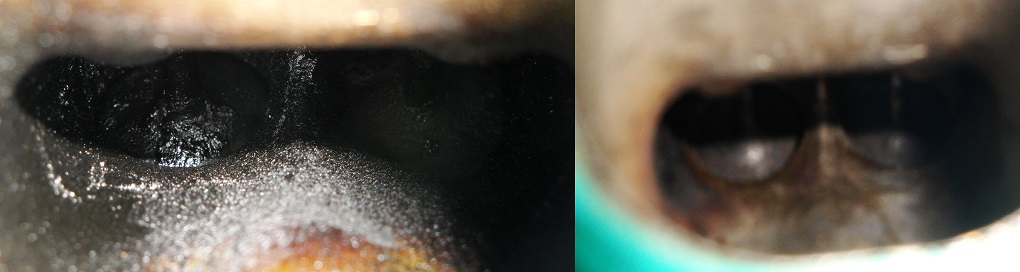
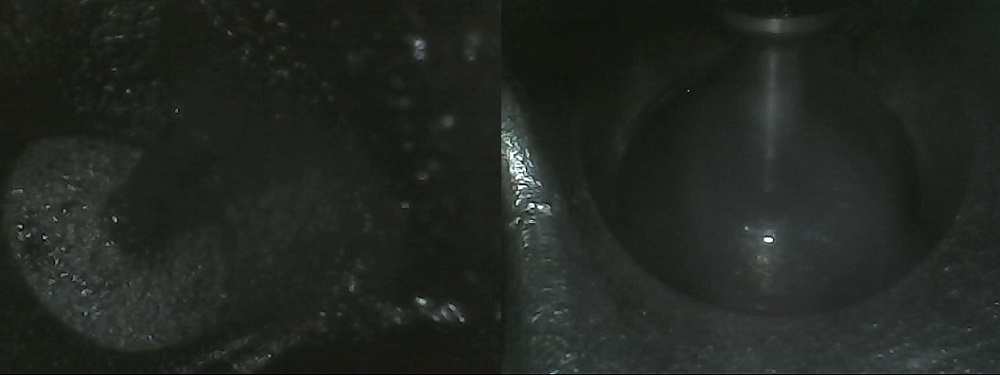
Below are some pictures of my intake valves, which I cleaned using the intake valve adjusting sequence for the cam in block motor, closing the target valves in groups of three. I used a cheap flexible camera and a digital camera that had difficulty negotiating the angle involved later in the day and couldn't get as good a picture of the clean valves as I did the dirty valves.
If the residue is bad enough, it has a tendency to interfere with cold startup and idle in the form of reversion and misfires that can to some degree be masked with premium fuel, which is a waste given the motor was rated on 87 octane. See the video link along with the thread of origin at the bottom.
https://www.youtube.com/watch?v=injo3XS5eJg
https://www.cadillacforums....cold-starts.1043882/
|
|
|
|
Daryl M
|
NOV 13, 07:24 PM
|
|
| quote | Originally posted by Joseph Upson:
Definitely install an oil catch can. The PCV valve changed for the LFX, but some of them use the same valve as the LLT and there is no baffling on the right side valve cover except for the partition with three small holes that is molded into the valve cover gasket for that side, so I wouldn't expect there to be much of a difference in oil passage into the intake between the motors, except where differences in the PCV effect it. The right side valve cover gasket molding enhancement, is a later design for the 3.6L that was implemented to help with baffling, but the old design without the partition is still available and some unwittingly purchase it.
Some have also proposed modifying the holes in the pcv valve, in an effort to reduce the tendency of the crankcase gasses from reversing at moderately high to wideopen throttle and flowing backward into the lower resistance clean side upstream of the throttlebody. Enlarging the holes results in more oil exiting the valve cover, giving a reason to need to check and empty the catch can recommended, along with the mod routinely, when you should want the oil to stay in the motor.
Below are some pictures of my intake valves, which I cleaned using the intake valve adjusting sequence for the cam in block motor, closing the target valves in groups of three. I used a cheap flexible camera and a digital camera that had difficulty negotiating the angle involved later in the day and couldn't get as good a picture of the clean valves as I did the dirty valves.
If the residue is bad enough, it has a tendency to interfere with cold startup and idle in the form of reversion and misfires that can to some degree be masked with premium fuel, which is a waste given the motor was rated on 87 octane. See the video link along with the thread of origin at the bottom.
https://www.youtube.com/watch?v=injo3XS5eJg
https://www.cadillacforums....cold-starts.1043882/ |
|
It is my understanding that the Cadillacs in the videos werenot the newer LFX motor, but were the LF1 3 liter. Is that what you understand too?
|
|
|
|
Will
|
NOV 13, 07:41 PM
|
|
| quote | Originally posted by Joseph Upson:
which is a waste given the motor was rated on 87 octane. See the video link along with the thread of origin at the bottom.
|
|
While being "rated" for 87, the LLT at least definitely performs better on 91+
|
|
|
|
Will
|
NOV 14, 09:35 AM
|
|
| quote | Originally posted by Daryl M:
It is my understanding that the Cadillacs in the videos werenot the newer LFX motor, but were the LF1 3 liter. Is that what you understand too? |
|
The LF1 and LLT are the same "generation" of DI engines... that is, first generation before these issues were well understood by OEMs.
|
|
|
|
Joseph Upson
|
NOV 14, 02:18 PM
|
|
| quote | Originally posted by Daryl M:
It is my understanding that the Cadillacs in the videos werenot the newer LFX motor, but were the LF1 3 liter. Is that what you understand too? |
|
That may be, but the same principles are at play. I chose that example because I encountered it recently while searching for something else. If the Camaro forum is any indication, there are more oil catch cans on LFX motors than any of the predecessors.
| quote | Originally posted by Will:
While being "rated" for 87, the LLT at least definitely performs better on 91+ |
|
That has not been my experience with mine and hence part of the reason I stopped putting premium in it. My 32 mpg hwy best over a common 80 mile trip that I make from time to time was not on premium fuel which I have not used in more than a year now. Doesn't mean it is not possible for an example to perform better with more octane, but I can no longer rationalize the use of premium for performance specs achieved on regular. I may mount up the acelerometer and fill up with it again for another try.
There is documentation in my owners manual that supports moving to 89 octane for better performance in like vehicles equipped with the LY7 port injected 3.6L 10.2:1 compression, if spark knock is detected, but no such recommendation for the direct injected motor. The direct injection is that efficient, the LLT is 11.3:1 and the LFX 11.5:1 compression, both rated on 87 octane which should pretty much dampen the notion that there is any more to be had with premium except where the tune has been altered. If there were, I'd expect GM to have stated so in the owners manual.
As I mentioned previously, premium does tend to have an audible effect on cold starts if they are like what's heard in the video by decreasing and eliminating them altogether, but that's only masking the real issue.[This message has been edited by Joseph Upson (edited 11-14-2019).]
|
|
|
|