
 
     |
| Biden admin looks at ways to shield Earth from sunlight, as mandated by Congress. (Page 3/4) |

|
Jake_Dragon
|
DEC 28, 03:26 PM
|
|
|
In an attempt to alter the weather the democrats set the sky on fire.
|
|
|
|
Notorio
|
JAN 05, 12:01 AM
|
|
|
This will be a boon for the solar power industry ...
|
|
|
|
Valkrie9
|
JAN 05, 08:08 AM
|
|
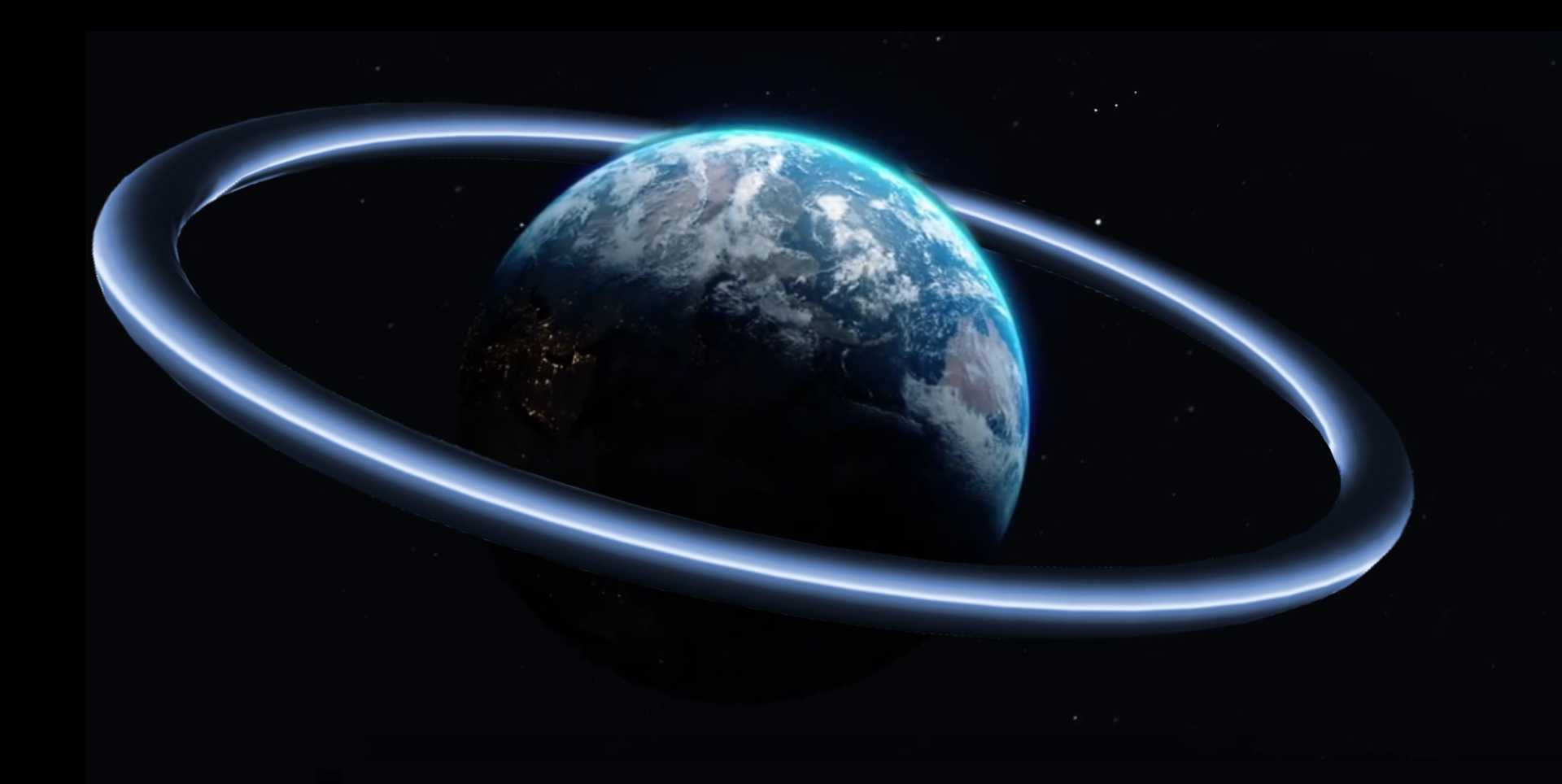

Well, here it is,
the Earth Orbiting Torus Space Station,
on a scale never before imagined, a habitat for humanity to evolve within long before travelling to distant exoplanets.
Millennial timeline, centuries of constant construction, the entire resource of the Solar system exploited, for humanity.
' Wheels ? Where we're going, we won't need wheels ! ' 

|
|
|
|
Zeb
|
JAN 09, 03:15 PM
|
|
We use Daylight Savings Time in the summer, when it's hot. We need to cool off the earth.
Why don't we just turn the clocks the other way, and get more night?
|
|
|
|
rinselberg
|
FEB 09, 01:00 PM
|
|
I don't know if this has any direct connection with the White House Office of Science and Technology's budgetary mandate, but some scientists are sizing up the idea of helping the Earth to keep its "cool" (so to speak) with moon dust.
Here's the science journal report itself:
| quote | | We revisit dust placed near the Earth–Sun L1 Lagrange point as a possible climate-change mitigation measure. Our calculations include variations in grain properties and orbit solutions with lunar and planetary perturbations. To achieve sunlight attenuation of 1.8%, equivalent to about 6 days per year of an obscured Sun, the mass of dust in the scenarios we consider must exceed 1010 kg. The more promising approaches include using high-porosity, fluffy grains to increase the extinction efficiency per unit mass, and launching this material in directed jets from a platform orbiting at L1. A simpler approach is to ballistically eject dust grains from the Moon’s surface on a free trajectory toward L1, providing sun shade for several days or more. Advantages compared to an Earth launch include a ready reservoir of dust on the lunar surface and less kinetic energy required to achieve a sun-shielding orbit. |
|
The Abstract, as they like to say.
"Dust as a solar shield"
Benjamin C. Bromley, Sameer H. Khan and Scott J. Kenyon for PLOS Climate; February 8, 2023.
https://journals.plos.org/c...journal.pclm.0000133
Here's a report for the public at large:
"Could Space Dust Help Protect the Earth from Climate Change?"
| quote | | Dust launched from the Moon’s surface or from a space station positioned between Earth and the Sun could reduce enough solar radiation to mitigate the impacts of climate change. |
|
Center for Astrophysics | Harvard & Smithsonian; February 8, 2023.
https://pweb.cfa.harvard.ed...earth-climate-change

From the Daily Mail.[This message has been edited by rinselberg (edited 02-09-2023).]
|
|
|
|
williegoat
|
FEB 09, 01:23 PM
|
|
Save the Earth! F(screw)k with the Moon instead.
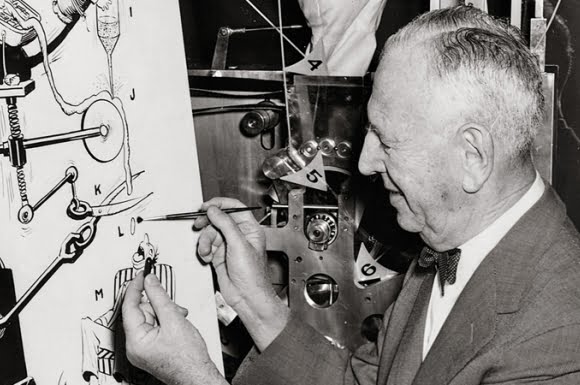
There was an old lady who swallowed a fly...(believe it or not, all of those old nursery rhymes were meant to teach us something important)
|
|
|
|
williegoat
|
FEB 09, 01:39 PM
|
|
|
|
|
rinselberg
|
FEB 09, 02:24 PM
|
|
| quote | The authors stress that their new study only explores the potential impact of this strategy, rather than evaluate whether these scenarios are logistically feasible.
"We aren't experts in climate change, or the rocket science needed to move mass from one place to the other. We're just exploring different kinds of dust on a variety of orbits to see how effective this approach might be. We do not want to miss a game changer for such a critical problem," says Bromley.
One of the biggest logistical challenges—replenishing dust streams every few days—also has an advantage. The Sun’s radiation naturally disperses the dust particles throughout the solar system, meaning the sunshield is temporary and particles do not fall onto Earth. The authors assure that their approach would not create a permanently cold, uninhabitable planet, as in the science fiction story, "Snowpiercer." |
|
"A little moon dust goes a long way."
Just a little something to help us get by while we work out other ways to stabilize and limit the Earth-warming greenhouse effect that is an unintended consequence of burning fossil fuels and all the other greenhouse gas emitting activities and processes.
"We'd be crazy not to do it."[This message has been edited by rinselberg (edited 02-09-2023).]
|
|
|
|
williegoat
|
FEB 09, 02:34 PM
|
|
| quote | Originally posted by rinselberg:
"A little moon dust goes a long way."
Just a little something to help us get by while we work out other ways to stabilize and limit the Earth-warming greenhouse effect that is an unintended consequence of burning fossil fuels and all the other greenhouse gas emitting activities and processes.
"We'd be crazy not to do it." |
|
So, we slowly dissipate the moon's mass, dispersing it into oblivion. The tides slowly wane, and with them all of their important work. The impact to marine life is incalculable. What have you got against our fishy friends?
|
|
|
|
rinselberg
|
FEB 09, 02:44 PM
|
|
I can only conceive of it as a (relatively) short term measure.
It can't be allowed if it's going to result in an orbitally and gravitationally significant decrease of the moon's mass.
It's interesting because the physics of gravity and rotation is gradually increasing the distance between the moon and the earth.
Remember, it's just an idea. A work in progress. It may look better to Arizonians when the current century is farther along. We Californians are already sold on it. After all, we are the state that elected a "Governor Moonbeam".[This message has been edited by rinselberg (edited 02-09-2023).]
|
|
|
|