 
     |
| Is it something in the air ? (Page 15/20) |

|
randye
|
DEC 14, 10:26 PM
|
|
|
|
|
rinselberg
|
DEC 15, 07:10 AM
|
|
“The United States has 13,000 miles of shoreline, which is a huge opportunity to lead the world in capitalizing offshore wind,” said [WHO?] “The ATLANTIS projects will help advance American offshore wind production and the accompanying job, manufacturing, and investment growth for the nation.”
Rick Perry, in his capacity as the U.S. Secretary of Energy. He's quoted in a DOE press release on February 1, 2019. Curiously, the obvious moniker "Father of ATLANTIS" never really caught as a recurring aspect of the media's coverage of Rick Perry's tenure at "Energy".

Click to show[This message has been edited by rinselberg (edited 12-15-2022).]
|
|
|
|
Hudini
|
DEC 15, 08:37 AM
|
|
|
Good luck. I hope they have a plan when the wind doesn’t blow. China is building more coal fired power plants than any other country. Seems we have half the solution.
|
|
|
|
rinselberg
|
DEC 15, 08:45 AM
|
|
|
|
|
rinselberg
|
DEC 15, 09:46 AM
|
|
| quote | Originally posted by Hudini:
Good luck. I hope they have a plan when the wind doesn’t blow. China is building more coal fired power plants than any other country. Seems we have half the solution. |
|
Not just "wind." Not just "offshore wind." It's "Floating Offshore Wind." What's floating is not the wind, but the wind turbines, which will be positioned farther offshore.
| quote | The appeal of floating wind is obvious. Somewhere around 60 meters deep (nearly 200 feet) it becomes impractical for developers to build what are called fixed wind foundations. But the winds above deep waters far off the coast are often ideal: strong and consistent.
Off Morro Bay and other potential California sites, the winds dip at midday but rise in the early evening, in nearly perfect sync with consumer demand—and in much the opposite pattern from the electricity generated by solar farms. |
|
China is not just taking a pass on Floating Offshore Wind.
"California’s coming offshore wind boom faces big engineering hurdles"
| quote | | The US is auctioning off its first floating offshore wind power sites this week, which could unlock a vast new source of clean electricity along the West Coast. |
|
James Temple for MIT Technology Review; December 5, 2022.
https://www.technologyrevie...engineering-hurdles/
Here's an excerpt:
| quote | The appeal of floating wind is obvious. Somewhere around 60 meters deep (nearly 200 feet) it becomes impractical for developers to build what are called fixed wind foundations. But the winds above deep waters far off the coast are often ideal: strong and consistent.
Off Morro Bay and other potential California sites, the winds dip at midday but rise in the early evening, in nearly perfect sync with consumer demand—and in much the opposite pattern from the electricity generated by solar farms.
Those characteristics will help the state’s grid operators draw more of their electricity from carbon-free sources through the evening, which will serve an increasingly crucial function as the California power sector moves off fossil fuels, says Alla Weinstein, chief executive of Trident Winds, which is a partner in the Castle Wind joint venture, which is bidding in the auction this week.
The state’s climate laws will require 90% of its electricity to come from such resources by 2035. That same year, California will mandate that all new passenger vehicles sold in the state must be zero-emissions, placing growing demands on the grid. |
|
| quote | | Research groups estimate that the costs [of floating offshore wind] could fall from around $200 per megawatt-hour to between $58 and $120 by 2030. That would leave floating offshore wind more expensive than solar and onshore wind, but it could still serve an important role in an overall energy portfolio. |
|
[This message has been edited by rinselberg (edited 12-15-2022).]
|
|
|
|
randye
|
DEC 15, 10:04 PM
|
|
|
|
|
olejoedad
|
DEC 16, 07:35 AM
|
|
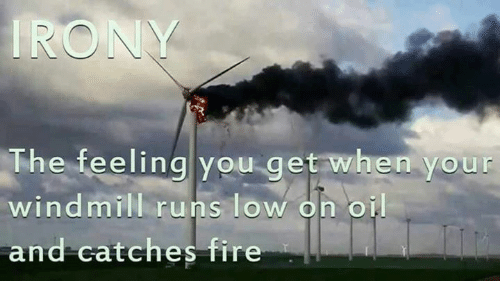
Oil floats on water, doesn't it?
Maybe they should use more oil in floating wind turbines to make them more bouyant.
Oil is organic, so maybe the fish will eat whatever oil spills when the floating turbines leak oil.
Maybe the reason that the Green energy people don't want more carbon dioxide in the air is because widespread famine would reduce world population levels, especially in resource rich developing countries.
Maybe one of the above ideas might be true..
It's up to you to determine which one.
|
|
|
|
rinselberg
|
DEC 16, 01:23 PM
|
|
"Despite the challenges, fans of floating [offshore] wind remain optimistic.
Walt Musial, who leads the research efforts on offshore wind at the National Renewable Energy Laboratory, predicts that costs will come down as the industry moves beyond the pilot scale and developers gain experience building more and bigger floating wind facilities."
James Temple for MIT Technology Review; December 5, 2022.
https://www.technologyrevie...engineering-hurdles/
Walt Musial
https://www.nrel.gov/resear...f/walter-musial.html[This message has been edited by rinselberg (edited 12-17-2022).]
|
|
|
|
Wichita
|
DEC 16, 05:07 PM
|
|
 [This message has been edited by Wichita (edited 12-16-2022).]
|
|
|
|
randye
|
DEC 16, 06:09 PM
|
|
 [This message has been edited by randye (edited 12-16-2022).]
|
|
|
|