
 
     |
| Is it something in the air ? (Page 13/20) |

|
williegoat
|
OCT 24, 12:48 PM
|
|
CARB can make all the economy destroying, quality-of-life reducing regulations it wants, but all it takes is one short sighted, ignorant environmental policy to make it all meaningless.
California wildfires reversed years of climate change progress in 2020 alone, study says
After 100,000 years of trying, we still cannot change the weather, but mother nature could wipe us all out in one day.
California, learn to live in harmony with nature. Not like a bunch of hippies, like adults.[This message has been edited by williegoat (edited 10-24-2022).]
|
|
|
|
jdv
|
OCT 24, 04:33 PM
|
|
| quote | Originally posted by rinselberg:
Florida is one of several states in the Southeast where wind energy is virtually nonexistent, which is one reason wind farms have not been an economically viable energy source in the region. But a new study from the FAMU-FSU College of Engineering shows how upcoming technological advances could make wind energy a hot commodity in the Sunshine State.
Sean Martin, a researcher in civil and environmental engineering, is working with an interdisciplinary team of scientists to examine wind resource characteristics at nine different locations in Florida. Their analysis will help the wind industry and policymakers know how viable wind energy production using developing technologies could be.
Their work was published in the journal Applied Energy.
“With advances in turbine technology, taller towers, larger rotor diameter and new control systems, we will be able to provide low-cost wind power to low-wind regions, such as Florida and the Southeast,” Martin said. “The increased hub heights and taller turbines can take advantage of greater wind speeds that occur higher up to harvest more wind power.”
Compared to states like Texas or Iowa, the wind in Florida is not something wind farms can profitably capture at the moment. Wind speeds are slower because of increased surface friction and turbulence caused by buildings, trees and other obstructions. Most utility-scale turbines installed in the United States are west of the Mississippi River, where more favorable wind speeds, greater than 13 miles per hour, are prevalent.
But using new tools that can capture wind energy at higher elevations, where wind speeds are faster, might make wind energy feasible.
So how tall are these turbines? The average height of most existing on-shore turbines from the ground to the top of the blades is more than 380 feet, similar to a 32-story building. The new, taller turbines are almost twice the height at 660 feet, close to the height of a 55-story building, and are the kind of wind turbines that will be most useful in Florida.
Martin is collaborating with Arda Vanli, an associate professor of industrial and manufacturing engineering, and Sungmoon Jung, an associate professor of civil and environmental engineering.
“I don't think anybody can predict the timing for wind energy,” Jung said. “We almost had it a few years ago. There was a private company that proposed a wind farm in Florida, but the company withdrew the plan because the technology at the time was not economical enough. I hope we will see wind energy in the future as technology improves.”
One of the things the researchers are looking at is the capacity of wind turbines to operate at different sites. Wind speed varies, so turbines must be able to spin at different velocities. Researchers want to know what percentage of time in a year that the turbine can operate at full capacity. In general, turbines that generate at least 30 percent of their total capacity are more economical for utility-scale wind power. The data will be able to predict the best areas in Florida to place the new turbines based on their ability to produce wind energy at specific sites.
“The key is finding and identifying characteristic patterns in the wind data,” Martin said. “Once we establish the patterns, the data can assist in site selection and can improve energy estimation measures to help industry and policymakers make decisions on where wind farms are most profitable.”
There are other factors the researchers must consider when choosing a site for a wind farm. Safety for birds, noise from rotors and the fact that some people may find wind turbines unsightly are all considerations.
When including some of these elements with wind speed data, the scientists found that the best locations for wind farms appear to be in rural areas of northwest, central and southern Florida.
“Site selection is an important decision, especially in low-wind power areas,” Vanli said. “Transporting huge wind turbines to these locations is a significant investment and having good data can eventually determine whether the investment will be successful or not.”
Wind energy is gaining significant attention both from academia and industry. New, affordable methods for generating renewable energy are on the horizon. Wind farms could be viable in Florida within this decade, and turbines even taller than the ones used for this research could be more prevalent in the future.
“The real question is whether factors such as public perception, acceptance and environmental factors will prevent this resource from being developed,” Martin said. “We hope the research will add additional renewables to the U.S. energy portfolio and can offset our reliance on a single fuel source, adding energy security to meet a growing need.”
A "Copy and Paste" from the online footprint of the Florida A&M University and Florida Statue University College of Engineering; dated July 31, 2020.
|
|
Florida gets the more hurricanes than any other state and you want to put 660' wind mills off the coast. Thinking not a strong point.[This message has been edited by jdv (edited 10-24-2022).]
|
|
|
|
rinselberg
|
OCT 24, 05:28 PM
|
|
| quote | Originally posted by jdv:
Florida gets the more hurricanes than any other state and you want to put 660' wind mills off the coast. Thinking not a strong point. |
|
I didn't say that I wouldn't want to examine questions like "What would happen to the wind turbines and other wind energy infrastructure that are being proposed for Florida in the event of a hurricane?" before voting to approve any such proposals... if that were my role.
That is a "Copy and Paste" from the online footprint of the Florida A&M University and Florida Statue University College of Engineering; dated July 31, 2020.
What I presented was their own summary of their analysis. I do not know if their research considered the effects of hurricanes. That was just their summary or blog post (essentially) for general readers who would (for whatever reason) go to their website. (It may also have been highlighted in some Florida local news reports.)
I have not seen hardly anything specific being reported about the risks that hurricanes and other violent wind storms pose to wind energy installations. But I have not specifically tried to find that kind of reporting online. It doesn't mean that I am not interested in it, or that I haven't already had that question come pop up in my own mind.
I can think of certain Pennock's forum members who might come up with a snarky, "wind energy dissing" meme to the effect of "Wind Turbines.... Hurricanes... What Are They Thinking?" But I wouldn't expect any of these same meme-addicted forum members to present anything of substance, like references to reports about what experts in the field have to say about hurricanes and wind energy infrastructure, and why they are saying it. Because "beef" is not one of their strong points... these particular forum members. As in "Where's the beef?" They're not like "Arby's". They don't "Have the Meats."
 [This message has been edited by rinselberg (edited 10-24-2022).]
|
|
|
|
MidEngineManiac
|
OCT 24, 05:44 PM
|
|
It dont take a rocket surgeon, or investigations, or reports, to figure out what happens to a wind farm in a hurricane.
Sheesh. 
|
|
|
|
rinselberg
|
OCT 24, 05:54 PM
|
|
| quote | Originally posted by MidEngineManiac:
It dont take a rocket surgeon, or investigations, or reports, to figure out what happens to a wind farm in a hurricane.
Sheesh. |
|
I don't think you know quite as much about that as you imagine.
Site selection (obviously) is very important when it comes to wind energy installations.
Maybe Florida isn't a good place for wind energy infrastructure, in any of its permutations. But it interests me that these people who were part of the Florida state university system were willing to say as much about it publicly, as they did. I would "drill down deeper" on it, but right now... I'm out of both drills and drill time.[This message has been edited by rinselberg (edited 10-24-2022).]
|
|
|
|
MidEngineManiac
|
OCT 24, 07:43 PM
|
|
You are correct. I dont know squat about building a wind farm.
HOWEVER, I live smack in the middle of S-W Ontario's "windfarm alley" and see what the storm winds off the lakes can do and do do to those things. Lake winds are nowhere near hurricane winds.
I'ts not edumacation and inductrunation....It's simple common sense.
See all that red on the left side of the map ????
I might have seen one or 2 over the years. Maybe. 
 [This message has been edited by MidEngineManiac (edited 10-24-2022).]
|
|
|
|
Raydar
|
OCT 24, 08:40 PM
|
|
| quote | Originally posted by rinselberg:
Lots of stuff.
Ad nauseum.
|
|
First... The so called "Inflation Reduction Act" is a piece of sh!t.
It will do anything BUT reduce inflation. This is well documented elsewhere. I'll leave it at at that.
Nuclear power?
I'm all for it. A consortium of the power companies in GA banded together almost a decade ago, and decided to build Plant Vogtle, Units 3 and 4.
As of last week, they're loading the fuel into Unit 3, I believe. Unit 4 will follow, shortly after.
Nuclear power is the only positive thing I can think of that is a part of this act. The fact that it is only recently recognized would be laughable, if it weren't so sad.
I'll mention this, as a bit of a tangent...
Before Covid became a thing, I was planning to transfer into the Grid Operators group. (Not really what they're called, but the most useful thing I can think of, to describe the responsibilities.)
I was given an intense "grand tour" of the jobs and work functions of the folks in that area, for a couple of days.
As part of that grand tour, I was introduced to a gentleman who tracked and monitored "alternative generation", aka wind and solar. Most all aspects of our company's involvement.
The predominant technology in our part of the country is solar.
I asked him, point blank, if it was worthwhile, from a financial perspective. He evaded the question.
I asked him, again, worded differently, allowing a bit of wiggle room. Again, he evaded the question.
Spoke volumes, as far as I'm concerned.
So... IMHO, the bottom line is that our tax dollars are subsidizing an effing boondoggle. In the real world, using real dollars, it's pretty much useless.
But it will satisfy the greenies. Bless their pointed little heads.
In the mean time, the taxpayers are taking it in the shorts, if not up... other places.
|
|
|
|
Valkrie9
|
OCT 25, 09:06 AM
|
|
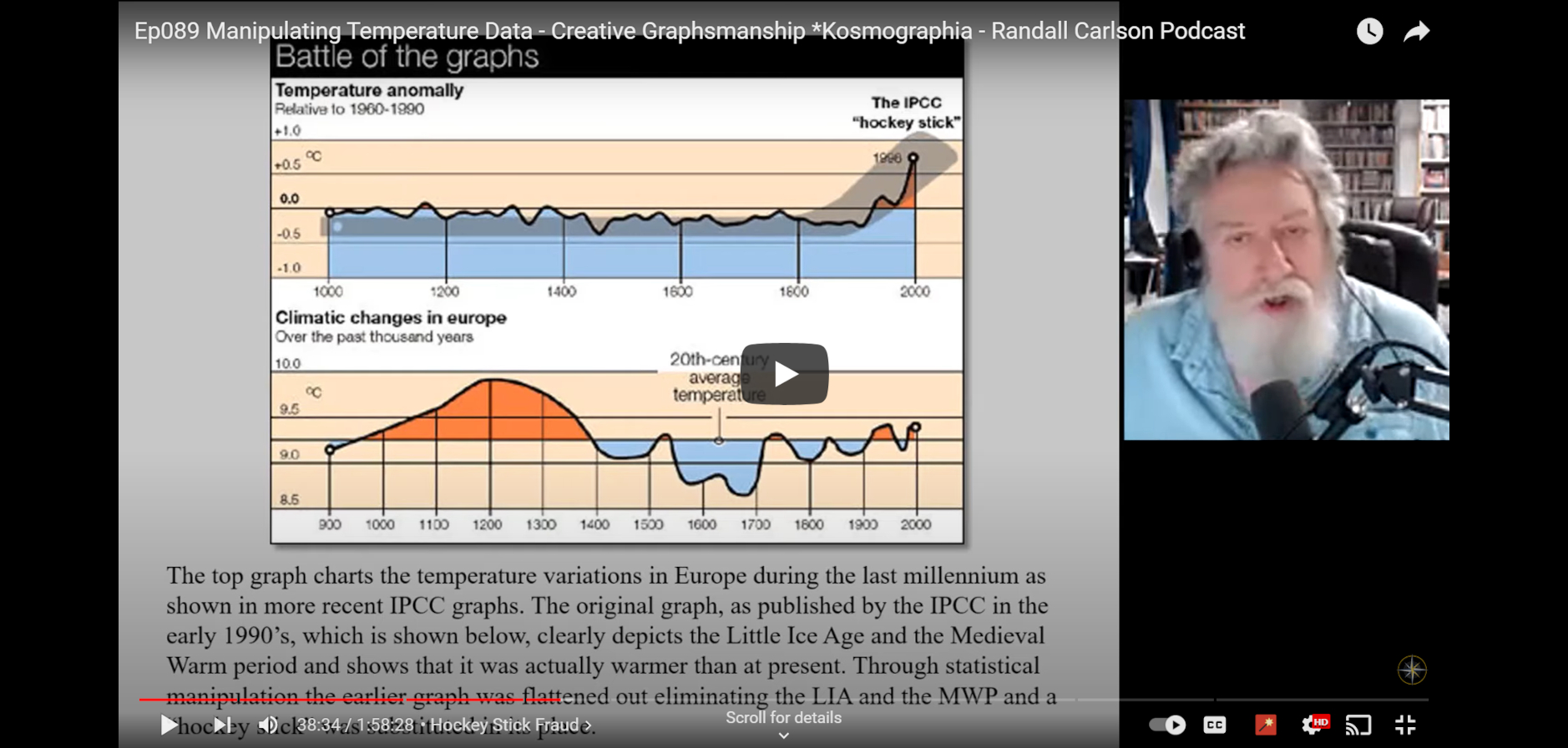
Manipulating Temperature Data - deranged marxists committing fraud scams. ' we promise, we're not lying, trust us. '

' Looking up, you will see that the sky is falling and it's, like, so green ! '

' Nah, you're making that sheet up, a fakery. '
' Yeah, a scam to scam blue sky suckers out of cash. '
' Yeah, the sky around here is yellow, and red, and orange ! '
' Yeah, the sky is all the colors around here, all of them '
[This message has been edited by Valkrie9 (edited 10-25-2022).]
|
|
|
|
rinselberg
|
OCT 25, 09:19 AM
|
|

The "green" slice of the pie, Renewable Energy, came to 12 percent of the entire U.S. energy sources portfolio over the entirety of 2021.
If we subdivide that Renewable Energy slice into its component slices, Wind came to just over 3 percent of the entire U.S. energy sources portfolio. Solar, between 1 and 2 percent.[This message has been edited by rinselberg (edited 10-25-2022).]
|
|
|
|
Valkrie9
|
OCT 26, 01:35 AM
|
|
Something big fell into the Sky, long, long, long ago.
|
|
|
|