
 
     |
| Valve seal placement without removing the heads (Page 2/2) |

|
theogre
|
NOV 16, 06:18 PM
|
|
| quote | Originally posted by Notorio:
Congratulations on your experiment! The 'proof is in the pudding!' as they say. Still, you'd think that the exhaust valve stem would be hotter than the intake and might, as Ogre mentioned, lead to cooking the seal over time. I wonder if anyone has measured the temperature difference? Is it significant? |
|
While can measure temps anywhere in the car w/ mod's to http://www.fiero.nl/forum/Forum2/HTML/141784.html Fiero Engine bay vs Heat. etc.
Because Thermal couples come in many types and fit in a lot off places even w/o mod'ing whatever to clear them But Doubt anyone would try that... More so w/ V6 because so hard to access the valves w/ valve cover and intake setup.
Might be "easier" w/ dukes and Felpro xxxT valve cover gasket (silicone w/ new hardware.) because that gasket is a bit reusable if installed carefully.
I'm "worried" more about E-side and oil.
Even w/ worm guides, "better" seals may starve the Exhaust stems and guides making worse problems and sooner. May never see smoke w/ "better" seals but added wear makes something breaks and dies on the highway often at the worse times.
Bad guide/stem wear can cause these Examples:
Valve burning because face can't close right. If found early maybe can rebuild the head and replacing some or all valves...
Stem breaking and drop the face in the cyl. Most times happens w/o warning and destroys the engine.
Oil leak for this is often blue smoke at cold start at first then can be most starts as parts wear more.
later smoke as hit the gas but that can be other things doing it or adding to smoke at that point.
|
|
|
|
zkhennings
|
NOV 17, 11:25 AM
|
|
|
When I did these on my 2.8, Felpro gave me two sets of seals, they looked similar but were different colors, the exhaust seals were supposed to be able to handle the heat as compared to the intake seals.
|
|

|
Patrick
|
NOV 17, 05:40 PM
|
|
| quote | Originally posted by zkhennings:
Felpro gave me two sets of seals... the exhaust seals were supposed to be able to handle the heat as compared to the intake seals.
|
|
Interesting. I'm curious about a valid point that the Ogre brought up. With oil seals installed on the exhaust valve guides (where there is no vacuum being exerted), just how do the exhaust valve stems/guides get lubricated? 
|
|
|
|
zkhennings
|
NOV 18, 10:05 AM
|
|
Well at least on all the engines from different manufacturers that I have worked on, there are always seals on both intake and exhaust valves, and they are always different from one another. My 2.8 also had seals on both sides even before I rebuilt it.
Looking into it it looks like the valve seals are designed for "controlled leaks", and the seals on intake and exhaust may have different rates of "controlled leak". Having no seal on the exhaust would probably allow too much oil to enter the guide and therefore the exhaust runner.
On my first 2.8 motor it used to puff smoke on startup and it smelled oily when engine braking. I replaced the seals and while it helped, the real issue was valve guide wear in my case. The point being though that even with new seals, the seals do let oil past in an amount calibrated for a non-worn valve guide. Otherwise my issues should have been solved. Getting the heads rebuilt did solve the issue.
|
|
|
|
theogre
|
NOV 18, 03:45 PM
|
|
| quote | Originally posted by Patrick:
Interesting. I'm curious about a valid point that the Ogre brought up. With oil seals installed on the exhaust valve guides (where there is no vacuum being exerted), just how do the exhaust valve stems/guides get lubricated? |
|
Likely several ways the E-side gets enough oil to work.
"Simple" tolerance of a seal to whatever can make a big dif.
Some seals or parts they work with can have intentional "defects" to make sure a little oil will get thru.
For Parts... Sim to Rear Axle knuckle "seals" w/ a drain hole at bottom. Those seals are mainly a dirt shield to protect the rest of axle and bearing assembly that has own seals to keep out water and grease in. (and is another reason to never drive most vehicles in water deeper then a few inches...)
For Seals... Things like Moog BJ w/ grease release at the stud so prevent boot blowout when greasing after install. 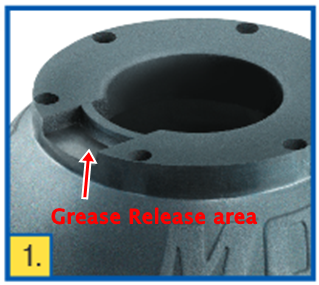 From Moog DYK11_102_ENG-R.pdf to install BJ boots. From Moog DYK11_102_ENG-R.pdf to install BJ boots.
(in the rear knuckle... most never see the drain hole at bottom of inboard seal even when they replace the seal. Is fairly small and hidden when you have the axle in the knuckle. I have spares w/ axle installed and the drain is nearly hidden by axle's shield/guard ring and tip of stud of the BJ when in the car. is nothing to take pictures w/ axle installed and don't have just a knuckle.)
|
|

|
Patrick
|
NOV 18, 05:02 PM
|
|
| quote | Originally posted by zkhennings:
Looking into it it looks like the valve seals are designed for "controlled leaks", and the seals on intake and exhaust may have different rates of "controlled leak".
|
|
| quote | Originally posted by theogre:
Some seals or parts they work with can have intentional "defects" to make sure a little oil will get thru.
|
|
Makes sense, I was thinking along the same lines. A "perfect" seal would definitely yield negative results!
|
|
|
|